
Copier Paper Buying Guide for Offices, Schools and Bulk Procurement
Buying copier paper looks simple until the wrong paper causes printer jams, poor image quality, high waste, or inconsistent results across an office, school, print room, or distribution business. This guide brings the site’s copy paper buying advice into one practical procurement hub. It explains the specifications that matter most, how to compare suppliers, how to choose between reams, cases and pallets, and how to avoid common mistakes when ordering copy paper in bulk.
Quick Buying Recommendation
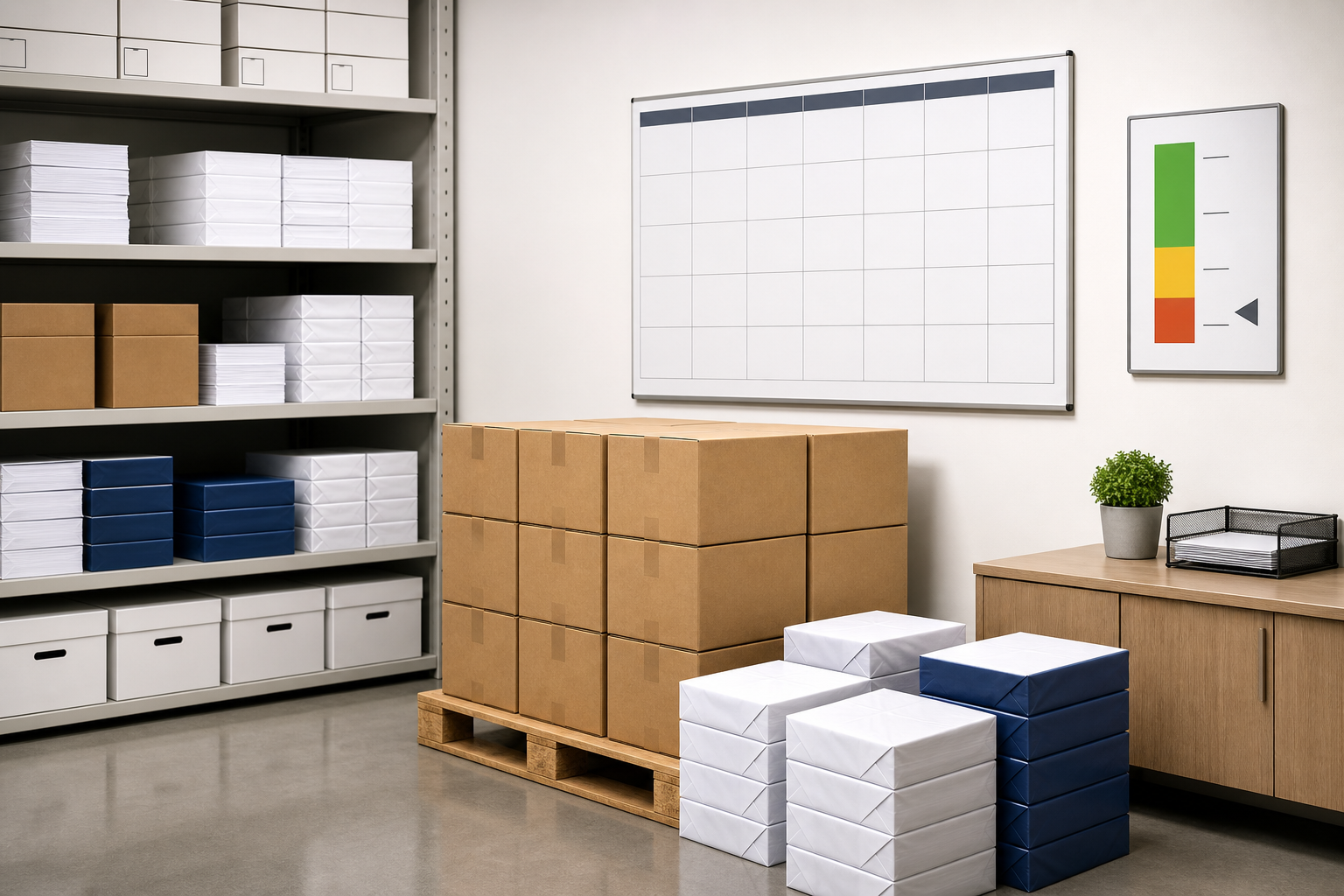
For everyday office printing, most buyers choose standard white copy paper in the correct regional size: A4 for most international markets or Letter for North America. For general office use, 75gsm or 80gsm A4 paper is common internationally, while 20 lb and 24 lb paper are common reference points in the United States. Choose the paper based on printer compatibility, print volume, document purpose, brightness, opacity, packaging, and landed cost per sheet.
Copier Paper Specifications That Matter
| 規格 | What It Means | Why It Matters for Buyers |
|---|---|---|
| Paper size | A4, Letter, Legal, A3, A5 or 11×17 | Wrong size creates print errors, layout shifts and unusable stock. |
| GSM / weight | Thickness and paper substance | Affects opacity, duplex printing, printer handling and freight cost. |
| 亮度 | How white and reflective the sheet appears | Higher brightness improves document contrast and presentation quality. |
| 不透明度 | How much text or image shows through the sheet | Important for double-sided printing and professional documents. |
| 平滑度 | Surface finish of the sheet | Affects toner transfer, ink behavior and printer reliability. |
| 包裝 | Ream, carton, case, pallet or container | Controls storage, handling, delivery and procurement cost. |
| Supplier reliability | Consistency, lead time and documentation | Critical for offices, distributors and repeat B2B purchasing. |
1. Choose the Correct Paper Size
The first buying decision is size. A4 is used in most international markets, while US Letter is standard in North America. Legal, A3 and 11×17 paper should be ordered only when the application requires those formats. If your team buys for more than one country, document the required size clearly in every purchase request and supplier quote.
For a detailed size comparison, see our Copy Paper Size Guide.
2. Select the Right Paper Weight or GSM
Paper weight affects print feel, opacity, cost, and printer performance. Lighter paper can reduce cost in high-volume internal printing, while heavier paper feels more substantial and is often better for reports, proposals, duplex printing and customer-facing documents.
- 70gsm: economical choice for draft printing and high-volume internal use.
- 75gsm: common balance for offices that need cost control and reliable daily printing.
- 80gsm: widely used everyday A4 office paper with stronger feel and better opacity.
- 20 lb: common everyday Letter-size office paper in the US market.
- 24 lb: smoother and more professional option for presentations and customer documents.
For deeper comparison, read the 20 lb vs 24 lb copy paper guide and the A4 80gsm vs 75gsm guide.
3. Check Brightness, Opacity and Print Quality
Brightness affects how sharp text and images look on the page. A higher brightness sheet can make black text appear more crisp and color graphics appear cleaner, but it may also cost more. Opacity matters when printing on both sides of the sheet. Low opacity can cause show-through, especially with dense text, charts or ink-heavy pages.
For basic internal printing, buyers can often choose a cost-effective brightness level. For reports, contracts, proposals or branded documents, choose paper with stronger whiteness, opacity and consistency.
4. Match Paper to Printer Type and Print Volume
Copier paper must run reliably through the devices your team uses every day. A paper that works well in one machine may not perform the same in another if moisture, curl, dust, smoothness or weight are inconsistent. High-volume offices should test samples before committing to large orders.
- For laser printers and copiers, check toner adhesion, curl control and jam rate.
- For inkjet printers, check ink absorption, drying time and show-through.
- For duplex printing, prioritize opacity and stable sheet handling.
- For high-speed equipment, choose consistent cartons from a reliable supplier.
5. Decide Between Reams, Cases, Pallets and Containers
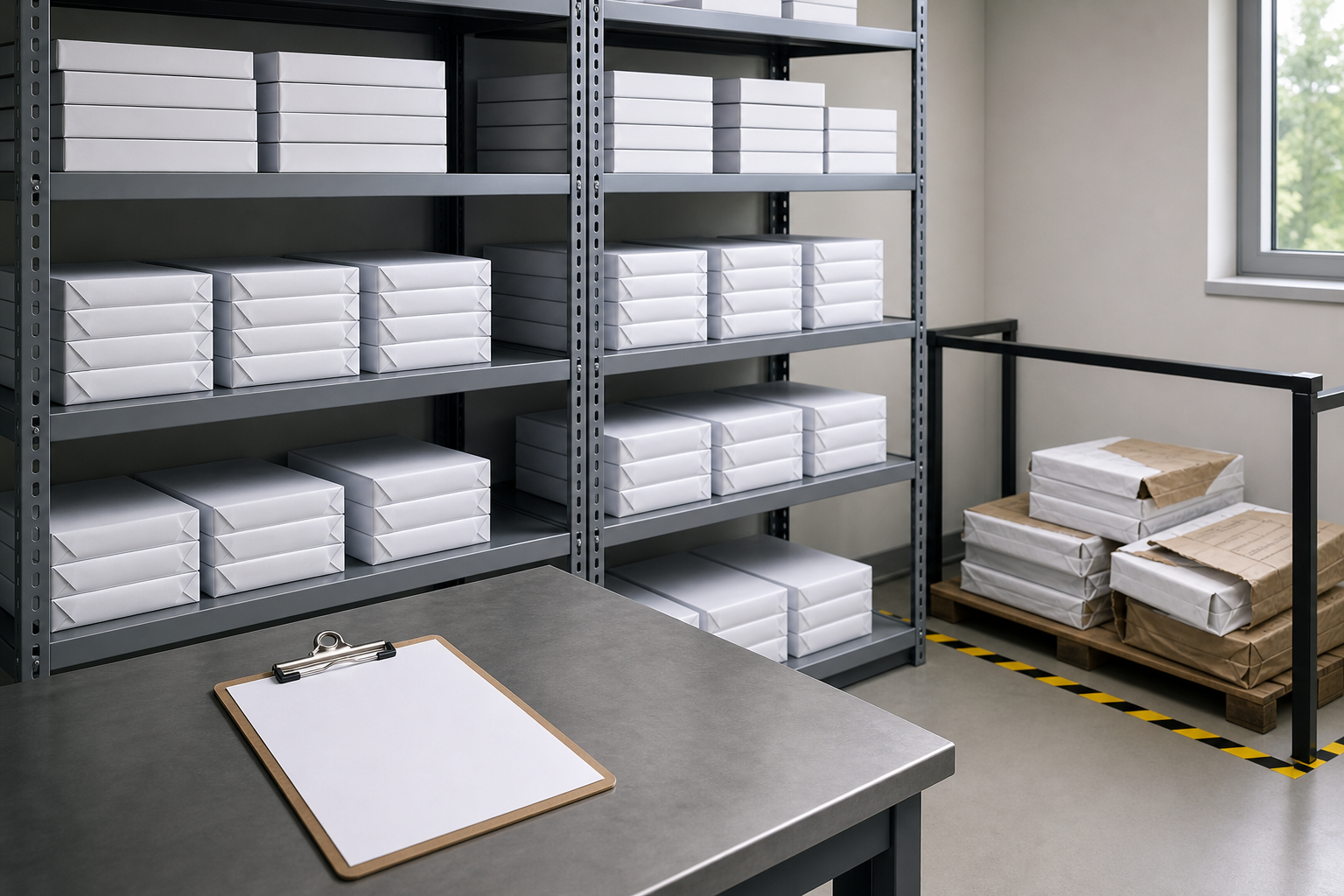
Small offices may buy by the ream or case. Schools, government offices, distributors, copy centers and corporate procurement teams often compare cartons, pallets or container-level supply. The correct buying unit depends on storage capacity, monthly consumption, delivery schedule and working capital.
| Buying Unit | 最適合 | Procurement Note |
|---|---|---|
| Single ream | Small or urgent office use | Convenient but usually higher cost per sheet. |
| Case / carton | Regular office replenishment | Good balance of price, storage and handling. |
| Pallet | High-volume offices, schools and print rooms | Lower unit cost but requires storage planning. |
| Container | Wholesalers, importers and distributors | Requires supplier verification, specs, packing details and shipping planning. |
For price, freight and supplier checks, use our Wholesale Copy Paper Buying Guide.
6. Compare Landed Cost, Not Only Ream Price
The lowest price per ream is not always the best deal. B2B buyers should compare landed cost per usable sheet. This includes sheet count, carton quantity, freight, storage, damage risk, printer jams, rejected stock, and reorder reliability. A slightly higher-quality paper may reduce machine downtime and waste, especially for high-volume departments.
7. Supplier Evaluation Checklist
Before buying copier paper in bulk, evaluate the supplier as carefully as the paper itself. Consistency matters more than a one-time low price.
- Can the supplier provide exact size, GSM, brightness and packaging specifications?
- Are samples available before bulk purchase?
- Is carton labeling clear for resale, warehouse control or distribution?
- Can the supplier support repeat orders with consistent quality?
- Are lead time, payment terms and delivery responsibilities clear?
- Can the supplier provide documents needed for import or procurement review?
- Does the supplier understand office, school, print shop or distributor purchasing needs?
Common Buying Mistakes
- Ordering “standard copy paper” without confirming A4 or Letter size.
- Comparing 70gsm, 75gsm, 80gsm, 20 lb and 24 lb paper as if they are identical.
- Choosing only by price per ream and ignoring freight, damage, jams or returns.
- Buying paper without testing it in the main printer or copier fleet.
- Ignoring brightness and opacity for customer-facing documents.
- Not checking carton labels, sheet count and packaging before resale.
Recommended Paper Choices by Use Case
| Use Case | Recommended Choice | Reason |
|---|---|---|
| Everyday office printing | A4 75gsm/80gsm or Letter 20 lb | Reliable balance of cost and performance. |
| Double-sided reports | 80gsm A4 or 24 lb Letter | Better opacity and more professional feel. |
| Schools and institutions | Cost-effective A4/Letter in cartons or pallets | Supports high-volume printing and replenishment. |
| Copy centers | Multiple sizes, stable quality, strong packaging | Serves mixed customer needs and reduces machine issues. |
| Distributors and importers | Wholesale cartons, pallets or container supply | Requires consistent specs, labels and repeat availability. |
Internal Buying Workflow for Procurement Teams
- Confirm required paper size and regional standard.
- Confirm weight or GSM requirement.
- Define acceptable brightness and opacity.
- Estimate monthly or quarterly consumption.
- Choose ream, case, pallet or container quantity.
- Request samples if switching supplier or specification.
- Compare landed cost per usable sheet.
- Confirm delivery schedule, packaging and reorder terms.
Related Paper Procurement Resources
- Copy Paper Size Guide: A4, Letter, Legal and 11×17
- Ream of Copy Paper: 500-Sheet Buying Guide
- Wholesale Copy Paper Buying Guide
- Copy Paper Brightness Guide
- Copy Paper Weight Guide
常見問題
What is the best copier paper for office use?
For most offices, standard white A4 or Letter paper in a common everyday weight is the best choice. The exact specification depends on region, printer type, print volume and document purpose.
Is copier paper the same as copy paper?
In everyday office purchasing, copier paper and copy paper often refer to the same type of multipurpose office paper. Buyers should still confirm size, weight, brightness and printer compatibility.
Should I choose 75gsm or 80gsm A4 paper?
Choose 75gsm when cost and high-volume internal printing are the priority. Choose 80gsm when you want stronger feel, better opacity and more reliable duplex printing.
Is 20 lb or 24 lb copy paper better?
20 lb paper is common for everyday office printing in the US. 24 lb paper feels heavier and smoother, making it better for reports, proposals and external documents.
What is the cheapest way to buy copy paper?
The cheapest reliable method is usually buying the correct specification in cases, pallets or wholesale quantities while comparing landed cost per usable sheet rather than only the shelf price.
How do I avoid printer jams caused by paper?
Use paper that matches the printer’s supported size and weight, store it in a dry environment, avoid damaged cartons, and test samples before placing large-volume orders.
What should I ask a copy paper supplier before ordering?
Ask for size, GSM or basis weight, brightness, sheet count, packaging, sample availability, lead time, freight terms and repeat supply capability.
Request a Bulk Copier Paper Quote
If you need copy paper for offices, schools, print shops, distributors or wholesale supply, contact our team for paper specifications, samples and bulk pricing. We can help compare A4, Letter, Legal, 11×17, GSM, brightness and packaging options for your buying requirements.
Request a bulk copy paper quote
Supply information
Specifying copier paper for a whole office?
GUANHE supplies copier and multipurpose grades that run on the machines described above.
| Trial minimum | 5 reams |
| Volume orders | 20GP full container |
| Port of loading | Qingdao, China |
| Lead time | 14 days |
Specifications: A4 copy paper range · 雷射印表機紙張 · Double A A4 Copy Paper