
Copy Paper Size Guide: A4, Letter, Legal, Tabloid and Global Standards
Choosing the correct copy paper size is one of the first decisions in office paper procurement. A small size mismatch can create printing errors, layout shifts, wasted sheets, and confusion between regional teams. This guide explains the most common copy paper sizes, how A4 compares with US Letter, when to use Legal or 11×17 paper, and what B2B buyers should check before placing bulk orders.
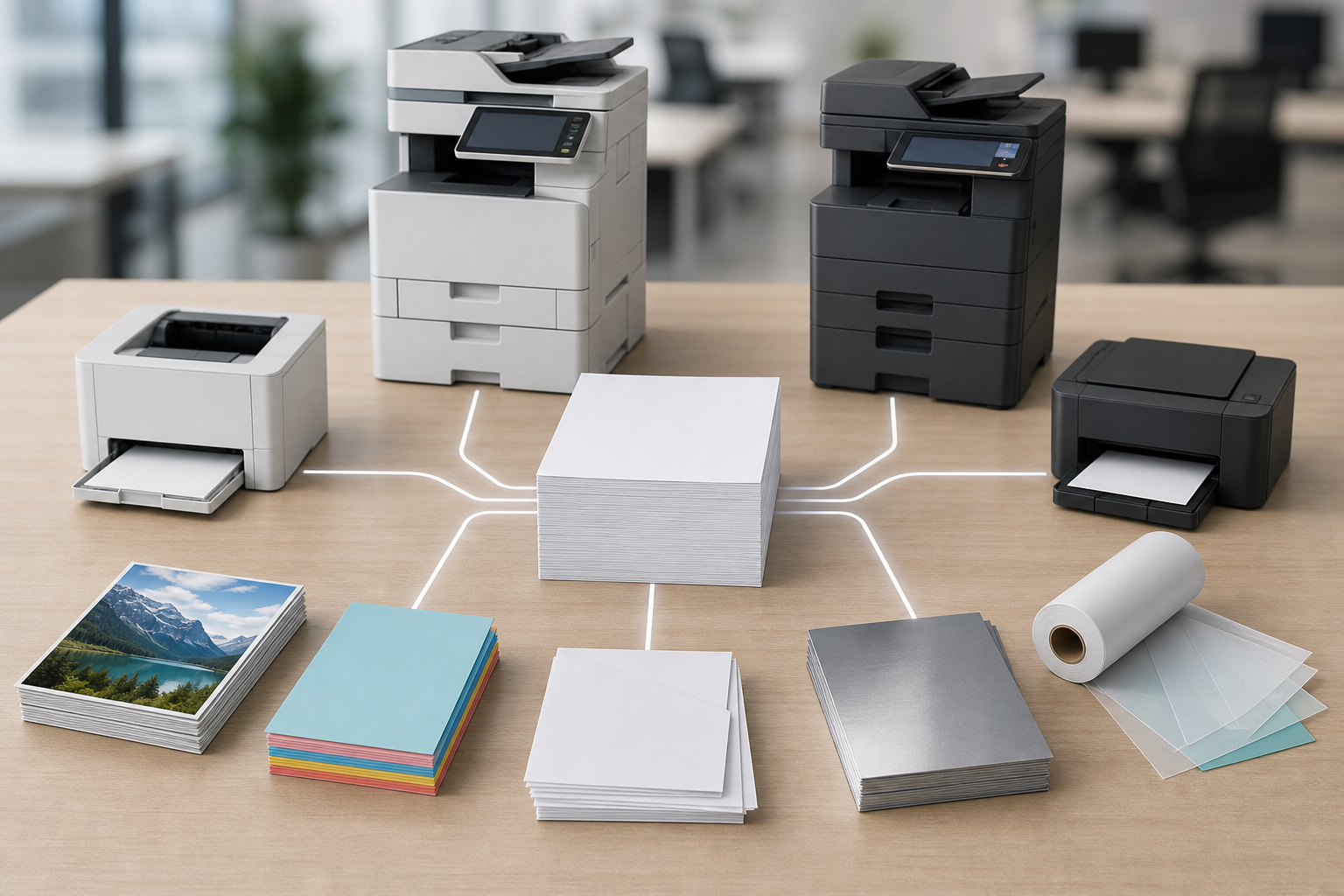
Quick Answer: What Is the Standard Copy Paper Size?
In the United States, standard copy paper is usually US Letter size, 8.5 x 11 inches. In most international markets, standard office copy paper is usually A4 size, 210 x 297 mm. Both sizes are common, but they are not exactly the same. A4 is slightly narrower and longer than Letter size, while Letter is slightly wider and shorter.
Copy Paper Size Comparison Table
| Paper Size | Dimensions in mm | Dimensions in inches | Main Markets | Common Use |
|---|---|---|---|---|
| A4 | 210 x 297 mm | 8.27 x 11.69 in | Europe, Asia, Middle East, Africa, most global markets | Office documents, invoices, school printing, general business use |
| US Letter | 216 x 279 mm | 8.5 x 11 in | United States, Canada, parts of North America | Business documents, office reports, everyday printing |
| Legal | 216 x 356 mm | 8.5 x 14 in | North America | Contracts, legal forms, agreements, official files |
| Tabloid / Ledger | 279 x 432 mm | 11 x 17 in | North America and print shops | Charts, posters, drawings, spreadsheets, visual reports |
| A3 | 297 x 420 mm | 11.69 x 16.54 in | International markets | Large-format printing, diagrams, posters, design proofs |
| A5 | 148 x 210 mm | 5.83 x 8.27 in | International markets | Notebooks, flyers, inserts, small manuals |
A4 vs Letter: Why the Difference Matters
A4 and Letter are close in size, but the difference can affect printed output. If a document is designed for A4 and printed on Letter paper, margins, page breaks, and tables may shift. If a Letter document is printed on A4 paper, the printer may scale the content or leave unexpected white space. For offices that work with international clients, choosing the right default size helps reduce reprints and formatting problems.
- A4 is the safer choice for international trade, export paperwork, schools, and offices outside North America.
- US Letter is the standard choice for North American office workflows.
- Legal should be ordered only when contracts or legal forms require extra length.
- 11×17 / Tabloid is best for larger visual documents, charts, and print-shop applications.
Visual Guide: How Common Paper Sizes Compare
For procurement teams, a visual comparison is often easier than dimensions alone. A4 and Letter look similar, but their width and height are different. Tabloid is roughly twice the size of Letter, while A3 is the larger ISO-format counterpart often used in international markets.
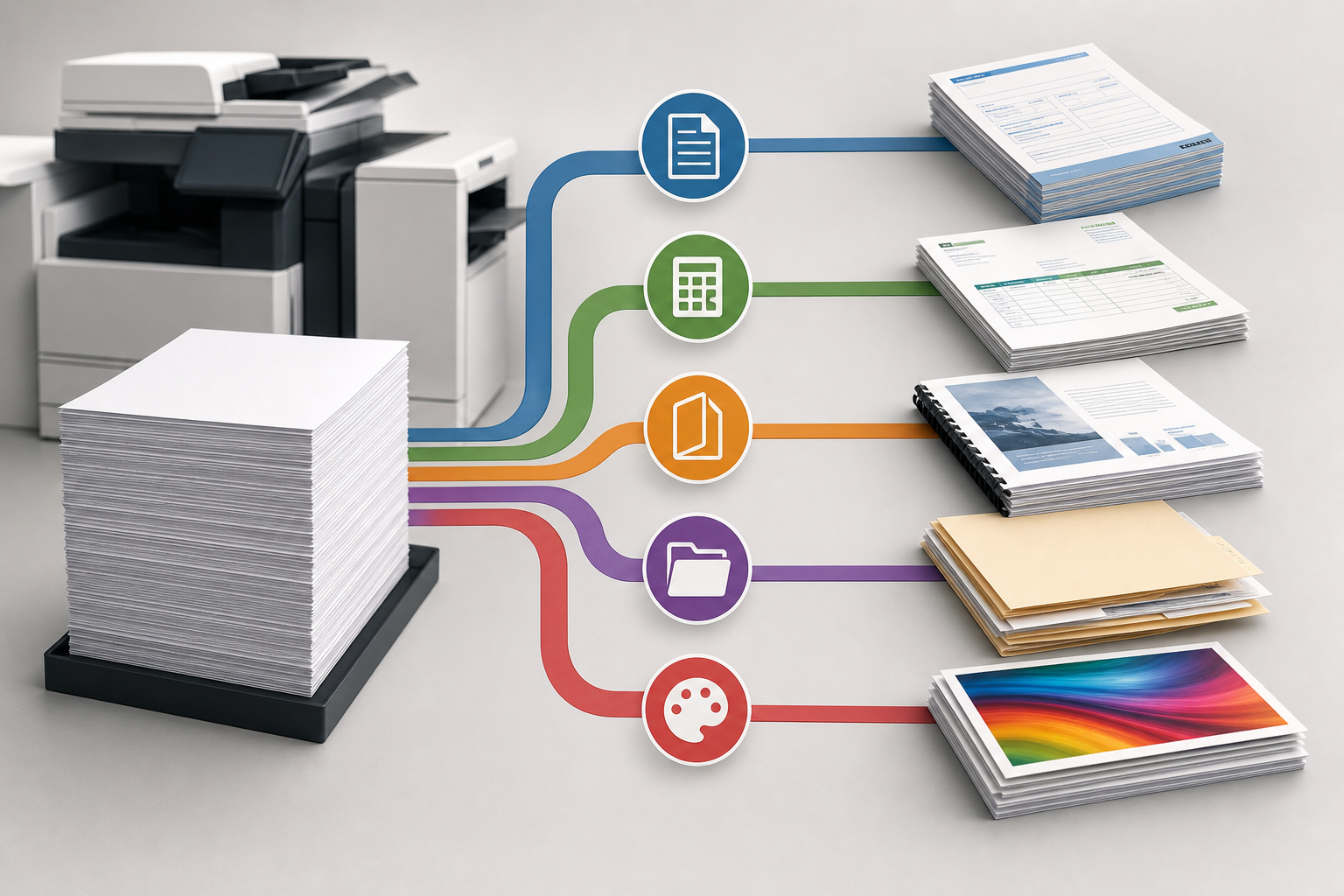
Which Copy Paper Size Should Your Business Buy?
The right size depends on your location, printer fleet, document type, and customer requirements. A company in the United States will usually standardize on Letter size, while an importer, distributor, school, or office outside North America usually buys A4. Print shops may stock several sizes because they serve mixed customer needs.
Choose A4 copy paper if:
- You supply international offices, schools, or government buyers.
- Your market follows ISO paper standards.
- You need a universal size for invoices, reports, and daily printing.
- You are buying wholesale copy paper for export markets.
Choose US Letter copy paper if:
- Your customers are mainly in the United States or Canada.
- Your office printers and templates are set to 8.5 x 11 inches.
- You print US business documents, forms, and internal reports.
Choose Legal or 11×17 paper if:
- You print contracts, legal documents, charts, plans, or large spreadsheets.
- Your buyers specifically request these sizes in cases or reams.
- You operate a print shop, copy center, legal office, or design department.
B2B Procurement Checklist for Copy Paper Sizes
Before placing a bulk order, confirm more than the sheet dimensions. In wholesale paper procurement, the wrong size specification can cause delayed shipments, rejected deliveries, or unusable inventory.
- Confirm whether the buyer needs A4, Letter, Legal, Tabloid, A3, or A5.
- Check the required paper weight, such as 70gsm, 75gsm, 80gsm, 20 lb, or 24 lb.
- Verify the number of sheets per ream and reams per carton.
- Confirm printer compatibility for laser, inkjet, copier, and multifunction devices.
- Check packaging labels so size, GSM, brightness, and sheet count are clear.
- Ask for samples before large-volume or container-level orders.
- Compare the landed cost per sheet, not only the price per ream.
Common Ordering Mistakes
Many paper ordering issues come from simple assumptions. A buyer may request “standard copy paper” without specifying whether they mean A4 or Letter. A distributor may compare prices between 75gsm A4 and 20 lb Letter paper without considering size, basis weight, or freight differences. These mistakes can make quotes look cheaper or more expensive than they really are.
- Do not assume A4 and Letter are interchangeable.
- Do not compare paper prices without checking sheet size and GSM.
- Do not order Legal or Tabloid unless the end user clearly needs those formats.
- Do not ignore carton labeling when buying for resale or distribution.
How Paper Size Affects Shipping and Storage
Paper size affects packaging, pallet arrangement, warehouse space, and freight cost. Larger paper sizes such as A3 and 11×17 require different cartons and may create different pallet stacking limits. For importers and wholesalers, these differences can affect container loading, storage efficiency, and final selling price.
Related Copy Paper Buying Guides
- Copier Paper Buying Guide for Offices and Bulk Procurement
- Wholesale Copy Paper Buying Guide
- Copy Paper Weight Guide: 20 lb vs 24 lb Paper
- A4 80gsm vs 75gsm Copy Paper
- 11×17 Copy Paper 5-Ream Case Buying Guide
常見問題
What is the most common copy paper size?
In the United States, the most common copy paper size is Letter, 8.5 x 11 inches. In most international markets, the most common size is A4, 210 x 297 mm.
Is A4 the same as Letter size?
No. A4 is 210 x 297 mm, while Letter is 8.5 x 11 inches. They look similar, but A4 is slightly longer and narrower.
What size is 11×17 paper?
11×17 paper is also called Tabloid or Ledger, depending on orientation. It is commonly used for charts, posters, diagrams, and large spreadsheets.
Which paper size is best for international offices?
A4 is usually the best choice for international offices because it follows the ISO standard used in most countries.
Which paper size is best for US offices?
US Letter is the default size for most office documents in the United States and Canada.
Does paper size affect printing cost?
Yes. Larger sheets use more paper, may require different cartons, and can affect freight, storage, and printer handling costs.
Can I use A4 paper in a Letter-size printer?
Many printers support both sizes, but the tray settings and document layout must match the actual paper size to avoid scaling or misalignment.
What should I confirm before buying copy paper in bulk?
Confirm size, GSM or paper weight, brightness, sheet count, packaging, printer compatibility, delivery terms, and sample availability.
Request a Bulk Copy Paper Quote
If you need A4, Letter, Legal, 11×17, or other office paper sizes for wholesale supply, contact our team for specifications, samples, and bulk pricing. We help offices, schools, distributors, and procurement teams compare paper size, GSM, packaging, and delivery options before ordering.
Request a bulk copy paper quote
Supply information
Need A4, Letter, Legal or A3 in bulk?
GUANHE supplies the full size range, including A3 for large-format printing, so mixed-size orders ship on one document set.
| Trial minimum | 5 reams |
| Volume orders | 20GP full container |
| Port of loading | Qingdao, China |
| Lead time | 14 days |
Specifications: A4 copy paper range · A3 打印機紙 · 雷射印表機紙張