

Turn a Purple Paper Request Into an Orderable Purple Copy Paper Spec
An internal request for purple paper is not enough to place a controlled business order. The buyer still has to confirm whether the requester needs ordinary purple copy paper for printing and copying, or a different purple paper product for covers, crafts, signage, or presentation materials. Treat the request as a short specification exercise before asking a supplier for availability or pricing.
Clarify the document job first
Start with the work the sheet must perform. A color-coded HR form, school notice, event packet insert, training handout, or facilities flyer may all require purple paper, but they do not require the same shade, weight, or quantity. Ask whether the document is text-heavy, whether it will be printed on one side or duplexed, whether it must pass through a copier or office printer, and whether recipients need to write on the page.
- Product type: purple copy or printer paper, not cardstock, craft paper, metallic paper, or specialty finish paper.
- Core specification: shade name, paper size, weight, sheets per pack or ream, and total quantity.
- Operational requirement: compatible with the intended printer or copier workflow.
- Controls: recycled content only if required and listed, plus clear substitution permissions.
If the original message is ambiguous, it helps to clarify paper copy request wording before the purchase request becomes a supplier quote. That step reduces avoidable back-and-forth and prevents a decorative purple sheet from being ordered for a routine office print job.
Map Lavender, Lilac, Orchid, and Dark Purple to Document Jobs
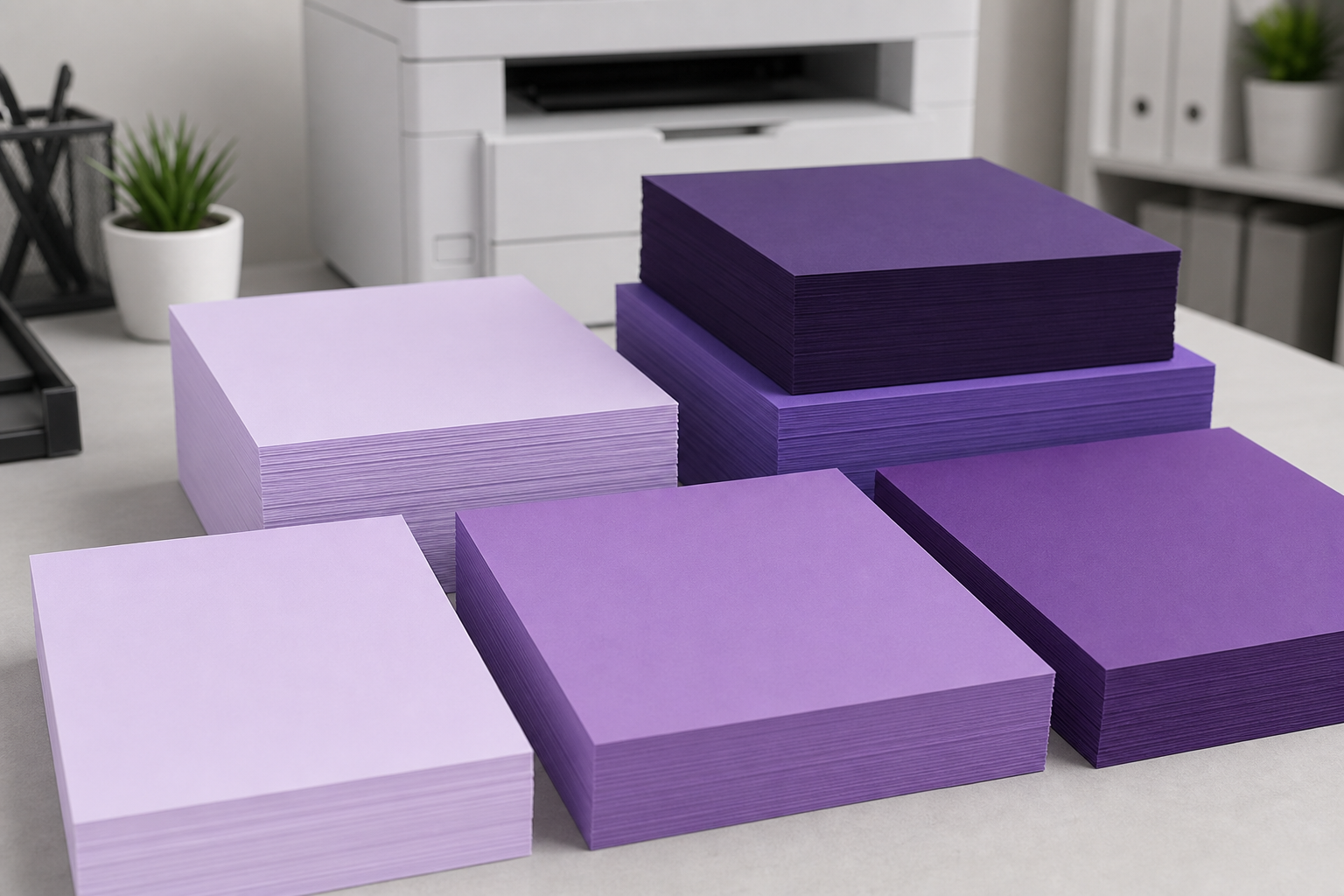
The right purple copy paper shade depends on the document job, not only on visual preference. Shade names also vary across suppliers and product lines, so terms such as lavender, lilac, orchid, medium purple, and dark purple should be treated as purchasing language to confirm, not universal color standards. When the document must be read quickly, lighter purple shades usually create less contrast risk than darker purple sheets.
Use shade as a workflow control
| Shade family | Best-fit document jobs | Procurement caution |
|---|---|---|
| Lavender or light purple | Memos, notices, forms, HR packets, classroom or office handouts | Best candidate when black text readability matters |
| Lilac | Color-coded packets, recurring administrative forms, event inserts | Confirm it is not too pale or too saturated for the intended print file |
| Orchid or medium purple | Dividers, visual handouts, event materials, department coding | Test dense text and logos before approving repeat use |
| Dark purple | Covers, separators, low-text signs, visual grouping sheets | Avoid for dense black text unless a readability test passes |
If the shade supports a recurring program, do not write only purple on the request. Specify the preferred shade family and whether nearby alternatives are acceptable. For example, lavender and lilac may be acceptable substitutes for a readable form, while orchid or dark purple may not be acceptable for the same document. If the paper is tied to a department color, event theme, or color-coding system, require approval before substitution.
Lock the Purple Copy Paper Defaults: Letter or A4, 20 lb or 24 lb, Pack or Ream
After shade, the most common wrong-order risks are size, weight, and sheet count. In the US, 8.5 x 11 letter size is often the default for office documents, binders, trays, and forms. Still, it should be written into the purple copy paper specification instead of assumed. If the workflow uses A4 for international, academic, or non-US document standards, specify A4 as a separate requirement. Size confusion can affect printer trays, document templates, folders, and finished packet assembly. For deeper size-control guidance, see this guide to 8.5 x 11 copy paper.
Convert listing attributes into purchasing terms
Weight should also be intentional. A 20 lb purple copy paper option is generally aligned with routine office printing and copying needs. A 24 lb option may be preferred when the handout needs a slightly more substantial feel, such as event packets, training materials, or notices handled by many recipients. It is not automatically better for every job; printer compatibility, document purpose, and budget controls still matter.
Sheet count should be stated in the same way the supplier lists the product. Small packs can support occasional projects or color trials. A 500-sheet ream is easier to plan for recurring notices or forms. Cases or bulk quantities should be requested only when the same shade, size, and weight will be used repeatedly. Ask quotes to state sheets per pack or ream, packs per case if applicable, and total sheet quantity so offers can be compared on the same basis.
Run a Print-Readability Check on Purple Sheets Before Approval
Purple copy paper can look suitable in a listing but fail once the actual document is printed. Before approving a repeat order or a large program quantity, test the intended file on the intended shade when possible. If a physical test is not available before quoting, at least make readability a required approval point before the order is released for a wider rollout.
Test the document, not just the paper
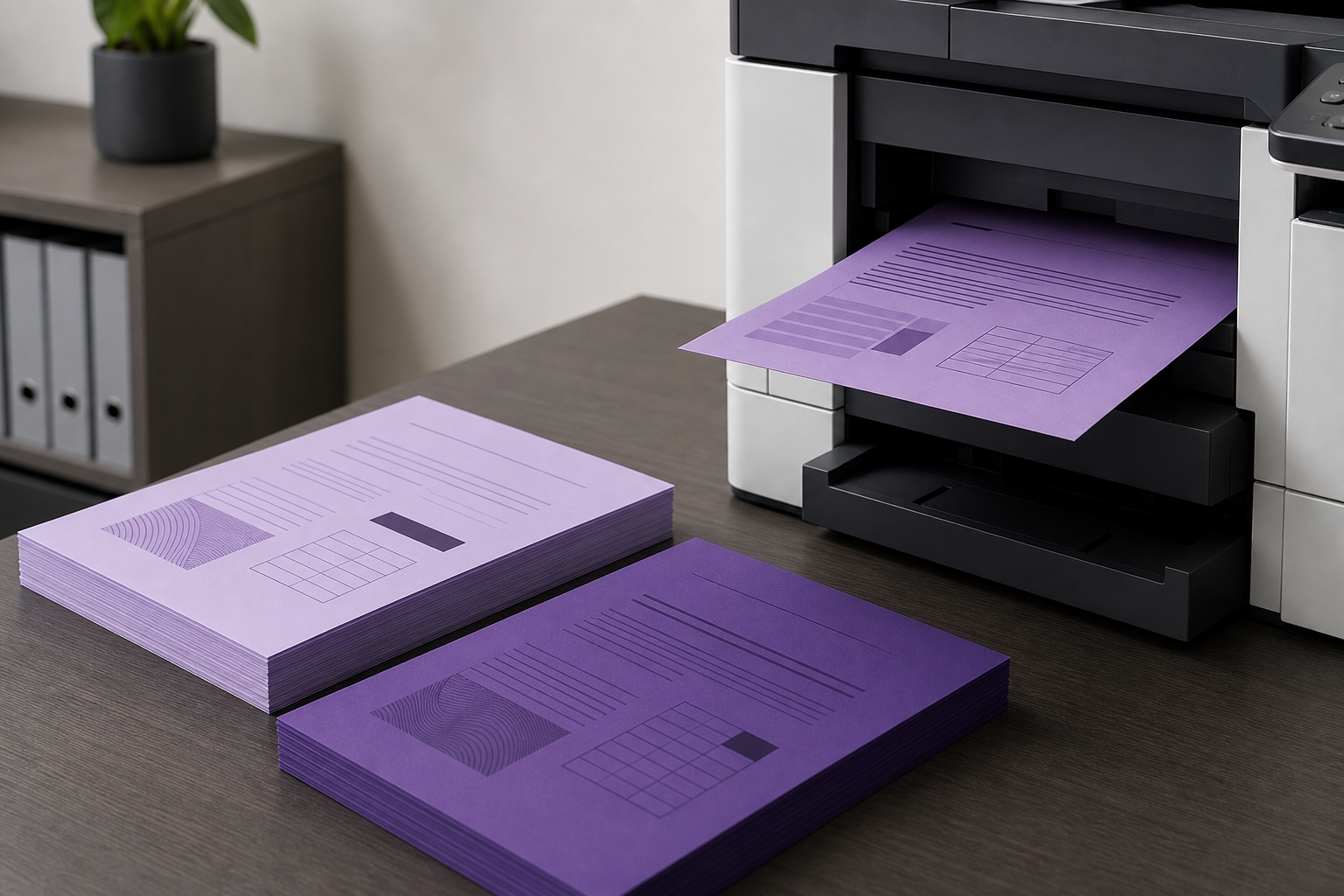
- Black text contrast: Print the smallest font size, dense paragraphs, tables, and form labels. Lavender or light purple is usually safer for text-heavy pages than darker purple.
- Logos and graphics: Check whether brand colors, icons, charts, or color-coded marks remain understandable on a purple background.
- Duplex use: If the page will be printed on both sides, check show-through, legibility, and whether the second side makes the first side harder to read.
- Copying workflow: If users will photocopy the printed sheet later, confirm whether the copied version remains usable for signatures, checkboxes, or recordkeeping.
Dark purple sheets are often better suited to covers, dividers, or low-text visual materials than dense office documents. A practical rule is to approve the shade only after the worst-case page passes: small text, black toner or ink, logos, tables, and any duplex requirements. Record the approved shade name, size, weight, and test document in the purchasing notes so future reorders do not restart the same debate.
Prevent Wrong-Product Substitutions: Copy Paper vs Purple Cardstock, Cover Stock, and Specialty Finishes
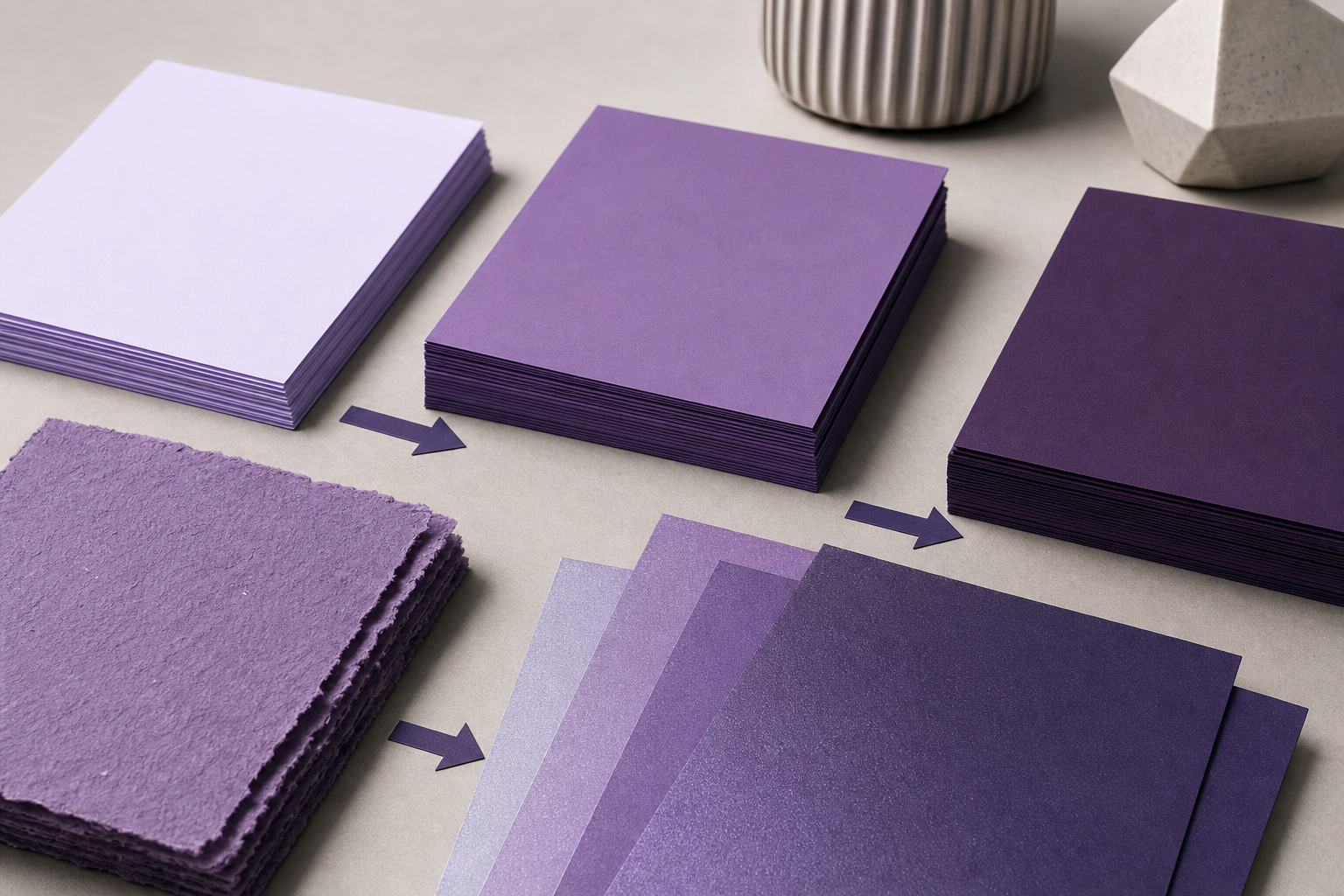
Many ordering errors start when the request says purple paper instead of purple copy paper. Copy and printer paper is intended for routine office printing and copying when the selected size, weight, and equipment compatibility are appropriate. If the request is for a thicker cover, a freestanding sign, a certificate, or a craft piece, ordinary purple copy paper may not be the right product. For a broader office-paper baseline, review this guide to copy and printer paper for office use.
Separate the product category before accepting a substitute
| Product type | Use when | Substitution concern |
|---|---|---|
| Purple copy or printer paper | Notices, forms, packets, flyers, routine office documents | Confirm printer/copier suitability, shade, size, weight, and sheet count |
| Purple cardstock or cover stock | Covers, tabs, signs, tent cards, more rigid handouts | Do not substitute for copy paper without confirming equipment and finishing needs |
| Craft or specialty paper | Decorative projects, displays, creative materials | May not match ordinary office printing requirements |
| Metallic, vellum, satin, or textured sheets | Presentation or design-driven pieces | Finish may affect feeding, print results, writing, or copying |
If the goal is ordinary printing, write no specialty finish and copy/printer paper in the request. If the supplier proposes a substitute, ask whether the product changes weight, stiffness, finish, equipment compatibility, or sheets per pack. A color match alone is not enough.
Plan Purple Paper Quantities Around One-Time Events and Recurring Programs
Quantity planning for purple copy paper should follow the usage rhythm of the document, not a generic bulk-buying habit. A one-time event flyer, limited school notice, pilot HR form, or small office color-coding test may justify a smaller pack so the buyer can confirm shade, print readability, and user acceptance without creating excess inventory of a color-specific item.
Match the unit to the repeat pattern
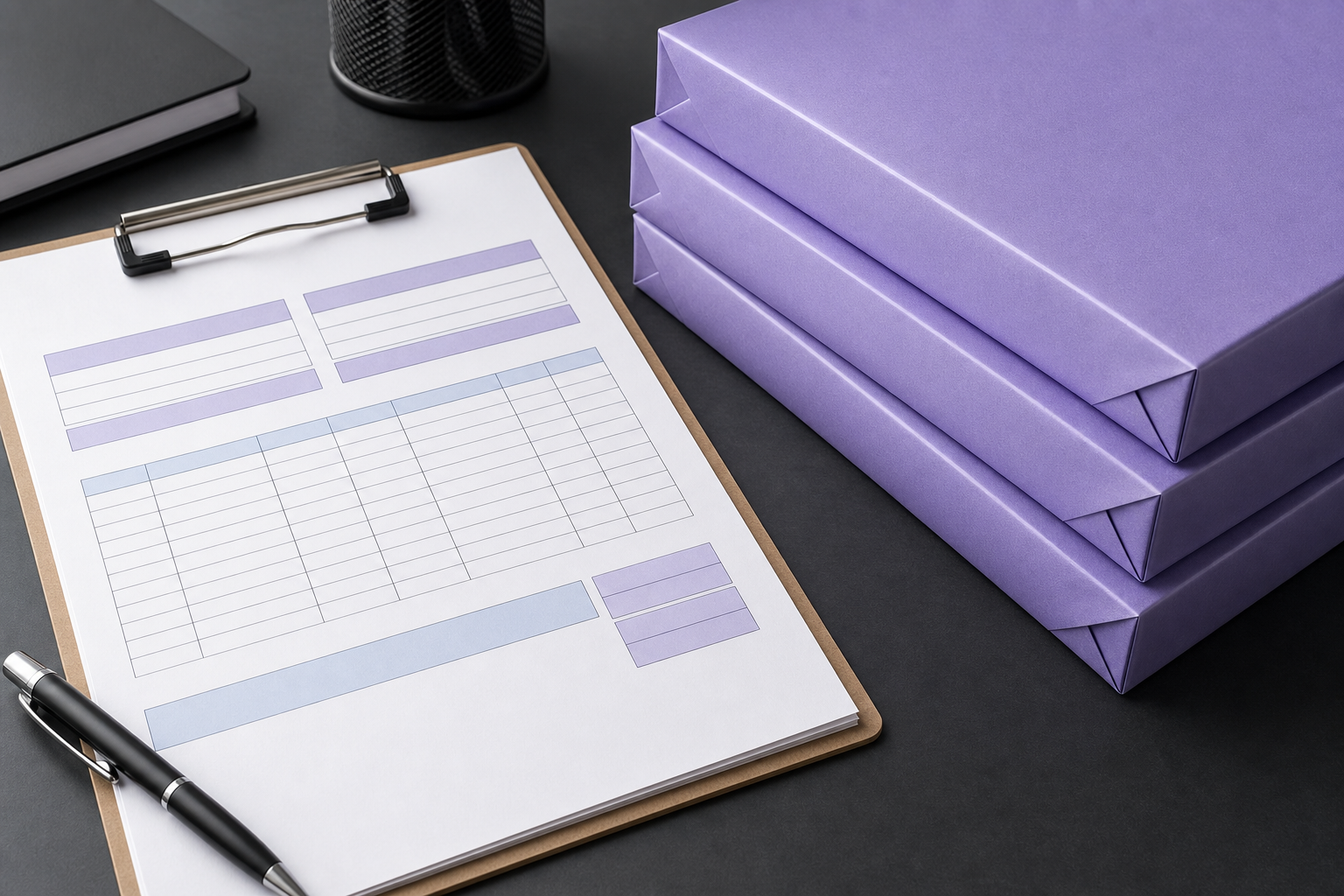
For recurring administrative workflows, a 500-sheet ream may be easier to manage than multiple small packs. Reams support repeat printing for notices, packets, forms, or internal handouts where the same purple shade is used over time. If several departments, campuses, or event teams use the same sheet, cases or other bulk quantities may be reasonable, but only after the shade and specification are approved.
The main risk with purple paper is not just running out. It is running out and then receiving a slightly different purple shade that breaks a color-coding system or makes a packet look inconsistent. Record the approved shade name, size, weight, sheet count, and supplier product description in the reorder file. If exact matching matters, keep a retained sample or reference sheet with purchasing records.
Coordinate quantity with receiving and distribution as well. A central office may want full reams, while an event team may need pre-assigned quantities by location. Specify whether the order should be counted by packs, reams, cases, or total sheets, so internal users and suppliers are working from the same quantity language.
Write the PO Line for Purple Copy Paper, Including Substitution Limits
The final purchasing step is to remove assumptions from the purchase order or RFQ line. A strong purple copy paper order line tells the supplier exactly what to match and where substitutions are allowed. It also gives internal approvers a clear record if the same shade needs to be reordered later.
Use a complete order-line format
Example format: Purple copy paper, lavender or light purple shade, 8.5 x 11 letter size, 20 lb, 500 sheets per ream, quantity to be stated by buyer, suitable for intended office printer/copier use, no specialty finish, recycled content only if required and listed, substitutions limited to approved lavender or lilac alternatives; no orchid or dark purple substitute without approval.
Adjust the line to fit the real job. If the document is an event cover or divider, 24 lb may be more appropriate than 20 lb, or the request may need to move to cover stock instead of copy paper. If A4 is required, do not bury it in notes; write A4 as the size field and avoid mixing it with letter-size requirements on the same line.
Substitution language is especially important for purple copy paper. If readability is the priority, allow only light purple alternatives such as lavender or lilac. If a department color or event identity must be matched, state no shade substitution without buyer approval. If any equivalent is acceptable, still require the supplier response to confirm shade name, size, weight, sheet count, pack unit, and printer/copier suitability.
Before contacting a supplier, prepare or share an order-ready purple copy paper spec with shade, size, weight, sheet count, quantity, and substitution limits. That lets the supplier conversation focus on matching the requirement instead of clarifying basic purchasing details.
Frequently Asked Questions
Can lavender paper be approved as a substitute for purple copy paper?
Yes, if the purchasing spec allows a light purple shade family and the printed document remains readable. If the color supports a department code, event identity, or recurring form workflow, require buyer approval before any shade change.
Is dark purple copy paper suitable for black toner documents?
Use caution. Dark purple sheets can reduce contrast for small fonts, dense tables, checkboxes, and form fields. They are usually safer for covers, dividers, or low-text pieces unless a sample print passes readability review.
Should A4 purple copy paper be ordered separately from letter-size paper?
Yes. A4 and US letter size can affect printer trays, templates, folders, and packet assembly. Use separate order lines so a supplier does not treat one size as an acceptable substitute for the other.
When should a buyer request purple cardstock instead of purple copy paper?
Request purple cardstock or cover stock when the piece needs stiffness, durability, covers, tabs, tent cards, or signage. Use purple copy paper for normal printer and copier sheets where flexibility and routine feeding are required.
How specific should the purple shade be on a purchase order?
Include the preferred shade family, supplier shade name if known, acceptable alternatives, and any no-substitution rule. For repeat programs, keep an approved sample or product reference with the purchasing record.