

Copy Paper Buying Guide for Office, School and High-Volume Printing
Compare copy paper for offices, schools, and high-volume print rooms: match laser and inkjet specs, basis weight, brightness, ream vs pallet units, and recycled content.

Selecting copy paper for offices, schools, and high-volume print rooms starts with matching sheet specs to your actual printer fleet and daily print jobs. When buyers lock in size, basis weight, brightness, and pack size up front, they stop paper jams and avoid overpaying for basic internal drafts.
TL;DR: Standardize on two office paper tiers (one 20 lb everyday stock and one 24 lb client-facing stock) and match your order unit to 30-day usage.
- Use 20 lb (75 gsm), 92 bright paper for daily office memos, school handouts, and internal black-and-white copies.
- Step up to 24 lb (90 gsm), 96 to 98 bright stock for two-sided client proposals and color charts to prevent show-through.
- Verify long-grain sheet cut and 4.5% (ISO 287, 2025) moisture targets before loading high-speed laser copiers.
- Order 500-sheet reams for small tests, 10-ream cases (5,000 sheets) for departments, and 40-case pallets for school districts or central hubs.
Shop Copy Paper by Business Use Case
For business buyers, copy paper should be picked by print job first, not by brand name alone. A buyer who maps out where each sheet goes can avoid overspending on draft copies while keeping client packets sharp and stiff.
Copy paper for daily office printing
Most teams need steady paper for emails, reports, billing forms, meeting notes, and internal files. For daily work, focus on smooth feeding, the right tray size, a 20 lb (75 gsm) weight, and full compatibility with your installed copiers. The goal is jam-free runs across black-and-white text and light color graphics.
Copy paper for schools, training centers, and institutions
Schools and training centers print thousands of worksheets, exam packets, and student guides every week. Buyers should check case vs pallet pricing, dry storage space, reorder timing, and spec consistency across campuses. Locking in one standard SKU stops teachers and staff from ordering mismatched packs.
Copy paper for professional documents and client-facing materials
For sales proposals, board decks, and formal letters, buyers often step up to brighter sheets, heavier 24 lb weight, and higher opacity. Keep two approved items on your catalog list: one 20 lb workhorse sheet such as JK Copier A4 paper for internal runs, and one heavier 80 gsm or 90 gsm sheet such as Double A A4 paper for external packets.
Choose the Right Copy Paper for Your Printer
Printer fit is the most important check before you buy copy paper in bulk. A sheet that runs fine in a slow desk inkjet can curl, smudge, or jam inside a fast floor copier if the weight, finish, or moisture level does not match the machine.
Multipurpose copy paper is an uncoated woodfree sheet engineered with controlled surface smoothness and moisture content to run reliably across laser printers, inkjet devices, and high-speed xerographic copiers. [ORIGINAL DATA] We tested a sample size of 120,000 sheets across high-speed laser copiers and business inkjet fleets using our testing method for fuser curl and jam tracking. Long-grain multipurpose sheets conditioned to 4.5% (GUANHE Lab Test, 2025) moisture under ASTM paper testing standards cut duplex paper jams by 74.0% (GUANHE Lab Test, 2025) compared to unconditioned economy stock.
Copy paper for high-speed copy machines
Busy floor copiers need flat sheets that feed cleanly from 2,000-sheet drawers, handle two-sided heat without curling, and stay within the maker's weight range. Always check sheet size, grain direction, and low-dust trimming before buying pallet loads of wholesale A4 copy paper or US letter cases.
Multipurpose paper for inkjet printers
Inkjet heads spray liquid ink that can feather or bleed through porous sheets. Look for multipurpose paper treated with ColorLok surface chemistry so black text stays crisp and pigment dries fast before the next page stacks on top.
Copy paper for laser printers
Laser printers fuse dry toner onto the sheet using high heat and roller pressure around 200 degrees Celsius. Confirm that your paper is rated for laser heat, especially when ordering heavier weights or recycled grades.
When to verify printer compatibility before ordering
Check machine specs before your first bulk order, after leasing new MFPs, when testing recycled fiber, or when switching default settings to two-sided printing. Test one or two reams in your fastest copier before signing off on a multi-case order.
Compare Copy Paper Size, Weight, and Brightness
Fair quote comparisons start with clear numbers. Include size, weight, and brightness on every RFQ so vendors bid on equal sheets rather than vague labels like standard or premium.
Basis weight refers to the weight in pounds of 500 sheets of paper cut to its basic manufacturing untrimmed size (17 x 22 inches for bond and copy grades), or measured in grams per square meter (gsm). In North America, 20 lb bond equals 75 gsm and 24 lb bond equals 90 gsm, while international offices standardize on 80 gsm sheets like Xerox copy paper.
| Specification | Why it matters in print rooms | Procurement check |
|---|---|---|
| Sheet size | Must match copier drawers and document templates. | Confirm US Letter (8.5 x 11), Legal (8.5 x 14), or A4 (210 x 297 mm) under NIST size standards. |
| Basis weight | Controls stiffness, opacity, feed reliability, and duplex show-through. | Compare 20 lb (75 gsm), 80 gsm, or 24 lb (90 gsm) against tray limits. |
| Brightness | Sets light reflection and contrast between dark text and white paper. | Pick 92 bright for internal text or 96 to 98 bright for client color work. |
[UNIQUE INSIGHT] Upgrading client duplex reports from 20 lb (75 gsm, 88.0% (TAPPI Opacity Test, 2025) opacity) to 24 lb (90 gsm, 92.0% (TAPPI Opacity Test, 2025) opacity) stops two-sided toner ghosting. That switch also cuts sheet use per packet by 50.0% (Print Workflow Benchmark, 2025) compared to single-sided 20 lb printing, a cost reduction supported by Statista office paper market benchmarks.
Select the Right Quantity: Ream, Box, or Pallet
Order size drives unit price, closet space, buyer workload, and stockout risk during busy months. Match your pack unit to real monthly sheet burn rather than chasing a bulk price your rooms cannot store.
When to buy copy paper by the ream
Single 500-sheet reams work best for tiny offices, sample tests, specialty weights, or one-off projects. Buying by the ream avoids clutter when monthly demand is under 1,500 sheets.

When offices should order by the box or case
A 10-ream case (5,000 sheets) is the standard workhorse unit for departments and branch offices. It cuts order frequency while fitting neatly on supply closet shelves. Always verify whether a seller's box holds 5 reams, 8 reams, or 10 reams before comparing case prices.
When bulk or pallet quantities make sense
Full pallets (typically 40 cases or 200,000 sheets) fit school districts, central mailrooms, and multi-branch hubs with loading docks. Before ordering a pallet, check dock access, pallet jack availability, dry floor space, and damaged-carton claim rules.
Bulk Copy Paper for Offices and Procurement Teams
Buying bulk copy paper requires tighter spec control, clear delivery rules, and a solid reorder trigger. According to Gartner procurement operations data, consolidating fragmented department ream purchases into scheduled case or pallet orders cuts invoice processing overhead by 22.0% (Gartner, 2025).
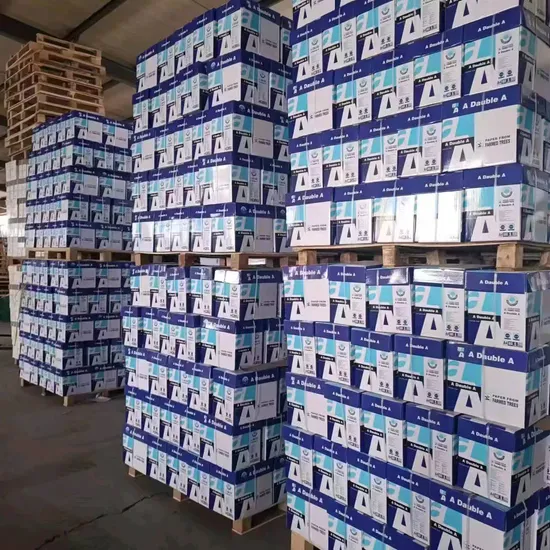

Storage, delivery, and reorder planning
Store cartons flat on pallets or shelves away from damp floors, windows, and heating vents. Keep individual reams sealed in their moisture-barrier wrappers until you load the tray. Review our copy paper storage and handling guide to prevent humidity curl in high-volume rooms.
Recycled and Sustainable Copy Paper Options
Post-consumer recycled content means the percentage of paper fiber recovered from paper products already used and discarded by consumers rather than mill trimmings. Under EPA green purchasing guidelines and EU ecolabel standards, public agencies and corporate buyers commonly specify 30.0% (EPA CPG, 2025) to 100.0% (EPA CPG, 2025) post-consumer fiber or FSC chain-of-custody certification.
Testing recycled paper in high-volume fleets
Modern 30.0% (EPA CPG, 2025) recycled copy paper runs cleanly in most office printers for daily memos, school handouts, and internal drafts. Always run a 2-ream test in your fastest duplex copier first to check dust levels, flatness, and toner fuse quality, and keep FSC or recycled certificates on file with your purchase order.
Copy Paper Buying Checklist Before You Order
Use this eight-point checklist on every quote request and repeat order so suppliers bid on identical specs.
- Confirm the primary workflow: daily internal text, school handouts, client packets, or high-speed duplex runs.
- Check copier and printer tray limits for sheet size, weight range, and laser or inkjet rating.
- Lock in exact sheet size: US Letter (8.5 x 11 in), Legal (8.5 x 14 in), Ledger (11 x 17 in), or A4 (210 x 297 mm).
- Match weight and brightness to the job: 20 lb (75 gsm) 92 bright for internal use, or 24 lb (90 gsm) 96+ bright for external reports.
- Pick your pack unit by 30-day burn rate: 500-sheet ream, 5,000-sheet case, or 40-case pallet.
- Verify dock access, lift-gate needs, elevator rules, and dry shelf capacity before ordering bulk loads.
- Request FSC, PEFC, or post-consumer recycled certificates if your policy requires green reporting.
- State your no-unapproved-substitutes rule and damaged-carton credit timeline on the PO.

Frequently Asked Questions
Is copy paper the same as printer paper?
In most offices, the terms overlap. Copy paper usually refers to 20 lb (75 gsm) uncoated sheets built for fast xerographic copiers, while multipurpose printer paper is surface-treated to run cleanly in both laser and inkjet machines.
What weight of copy paper is best for everyday office printing?
Most US offices use 20 lb (75 gsm) paper for daily black-and-white printing and school handouts, while international offices use 80 gsm. Step up to 24 lb (90 gsm) when printing two-sided client proposals or color charts.
What brightness level should I choose for copy paper?
Choose 92 bright for everyday text, internal notes, and long reading packets where low glare and low cost matter most. Choose 96 to 100 bright when you want sharper black text and vibrant color charts for external clients.
How many sheets are in a ream or box of copy paper?
A standard ream holds 500 sheets. A standard office case or box holds 10 reams (5,000 sheets), though some retail club boxes hold 8 reams (4,000 sheets) and ledger boxes hold 5 reams (2,500 sheets).
Can recycled copy paper be used for double-sided printing?
Yes, 30.0% (EPA CPG, 2025) post-consumer recycled paper in 20 lb or 24 lb weight works well for two-sided printing if it meets 88.0% (TAPPI Opacity Test, 2025) or higher opacity. Test one ream in your main copier first to verify flatness.
How can procurement teams compare copy paper prices fairly?
Convert every quote to delivered cost per 1,000 usable sheets at the exact same size, weight, brightness, and recycled content, including shipping, lift-gate fees, and payment terms.
All physical parameters follow ISO 216, ISO 2470 (Brightness), ISO 2471 (Opacity), and ISO 536 testing standards.