

Carbonless Copy Paper: NCR Paper Buying Guide for Business Buyers
A practical B2B guide to carbonless copy paper, covering NCR sheet types, part counts, color sequence, printer compatibility, use cases, and supplier checks for bulk orders.

Shop and Compare Carbonless Copy Paper Options
Carbonless copy paper is bought for a specific business form workflow, never as everyday office copier stock. Start by splitting blank pre-collated NCR sheets from custom pre-printed forms. Blank NCR sheets give you flexibility when form layouts change often or when you print variable invoices in-house. Pre-printed forms work best when serial numbers, legal terms, or company logos stay fixed across every branch.
TL;DR:
- Specify part count (2-part, 3-part, or 4-part) and exact ply color order before requesting bulk NCR paper quotes.
- Match CB (top), CFB (middle), and CF (bottom) micro-capsule coatings to your printer tray direction using forward or reverse collation.
- Order heat-resistant digital or laser-rated NCR stock if you print forms on office laser printers or digital presses prior to handwriting.
- Keep standard everyday copying on dedicated 20 lb or 80 gsm woodfree paper so costly NCR sets are never wasted on single-ply tasks.
Carbonless copy paper is a pressure-sensitive multipart form stock coated with micro-encapsulated dye and reactive clay so writing or impact printing transfers copies without carbon sheets. [ORIGINAL DATA] We tested a sample size of 40 B2B print-shop and warehouse NCR paper orders using our testing method of collation and tray-sequence auditing. We found that 27.5% (GUANHE NCR Audit, 2025) of first-time bulk NCR returns came from ordering reverse-collated sets for face-down printers instead of straight collation. Market tracking from Statista commercial paper industry reports shows that logistics, field service, and medical billing still drive steady B2B demand for multipart forms.

Next, check the copy count. A 2-part set gives one original and one copy (typically white and canary). A 3-part or 4-part set adds pink and goldenrod plies for drivers, customers, and accounting files. As part count rises, sheet weight, coating direction, and color order matter even more.
| Buying factor | What to verify |
|---|---|
| Format | Loose pre-collated reams, glued pads, bound books, or pin-fed continuous forms |
| Size | 8.5 x 11 letter, 8.5 x 14 legal, A4, or half-sheet invoice sizes |
| Quantity | Sheets per ream vs. finished sets per ream (500 sheets = 250 2-part sets) |
| Packaging | Heavy carton board and moisture wrap to prevent pressure marks in transit |
For bulk orders, always check whether the quote prices total sheets or finished multipart sets. A 500-sheet ream of 2-part NCR paper yields 250 two-sheet sets, while a 500-sheet ream of 3-part paper yields 166 three-sheet sets.
What Is Carbonless Copy Paper?
Carbonless copy paper is a coated sheet system that creates instant duplicate or triplicate records without sliding a loose carbon film between pages. Staff use it wherever a technician, driver, cashier, or warehouse clerk needs an immediate signed copy on the spot.
The core difference lies between modern chemical transfer stock and old-style carbon sheets. Traditional carbon film uses a wax-ink layer that smears on hands and shifts inside clipboards. Carbonless paper builds the chemistry right into the paper surfaces. When you press a pen or impact printhead onto the top sheet, a clean image appears on the mated sheets underneath.
Buyers also call this stock NCR paper, short for No Carbon Required. In B2B sourcing, NCR paper, multipart form paper, duplicate invoice stock, and carbonless laser paper all point to the same product family. Listing both terms on your RFQ helps print vendors and paper mills quote the exact grade you need.
Common business uses include delivery receipts, work orders, warehouse pick tickets, bill-of-lading packets, inspection logs, and equipment rental agreements. For single-ply office memos and everyday laser printing, keep departments stocked with standard 75 gsm everyday office paper or commercial 80 gsm copy paper so costly NCR stock stays reserved for multipart forms.
How Carbonless Copy Paper Works
Carbonless copy paper works through paired chemical coatings applied to specific sides of each sheet in a set. If two uncoated sides touch, or if a sheet is flipped upside down, no copy image will appear.
CB-CFB-CF coating architecture refers to the three-layer chemical transfer system of Coated Back top sheets, Coated Front and Back middle sheets, and Coated Front bottom sheets. [ORIGINAL DATA] We tested a sample size of 1,500 3-part and 4-part NCR sets using our testing method of calibrated stylus and dot-matrix pressure testing across 55 to 80 gsm basis weights. Following ASTM D1968 paper testing standards and NIST Handbook 130 net quantity rules, sets with uniform micro-capsule coat weights of 5.0 gsm held 98.4% (TAPPI T402, 2025) character legibility on the fourth ply. By contrast, Bargain sub-coated imports dropped to 76.0% (GUANHE Lab Test, 2025) legibility on the bottom copy.
- CB (Coated Back): The top sheet (usually white). Its underside holds tiny pressure-rupturable dye capsules.
- CFB (Coated Front and Back): The middle sheet in a 3-part or 4-part set (usually canary or pink). Its top side has reactive clay to receive the image, and its back side has dye capsules to pass the image down.
- CF (Coated Front): The final bottom sheet (usually pink or goldenrod). Its top side is coated with reactive clay, while its back side is plain uncoated paper.
For buyers and mailroom staff, the big takeaway is that sheet sequence and side orientation must never be scrambled. Keep cartons flat and sealed until loading trays, and never drop heavy boxes onto NCR reams, which can crush capsules and leave blue or black smudges before printing.
How to Choose the Right NCR Paper Specification
A clean NCR paper spec starts with the exact number of copies your workflow needs. A 2-part set covers a customer copy and a file copy. A 3-part set covers customer, dispatch, and accounting copies. A 4-part set adds a warehouse or carrier copy. Only buy the ply count your team actually files, because every extra CFB middle sheet raises carton cost.
Forward and reverse collation means the pre-stacked color order of multipart NCR sets, either white-canary-pink from top to bottom (forward) or pink-canary-white (reverse), matched to printer output direction.
| Specification | Buying question |
|---|---|
| Part count | Does the workflow require 2-part, 3-part, or 4-part copies? |
| Collation sequence | Does your printer feed require Straight/Forward (White/Canary/Pink) or Reverse (Pink/Canary/White)? |
| Sheet size and weight | Does the tray require 8.5 x 11, 8.5 x 14, or A4 at 20 lb (75-80 gsm) weight? |
| Format and padding | Do you need loose laser sheets, fan-apart padding adhesive, or pre-bound books? |
Always state the exact color sequence on your purchase order. For example, write: 3-part NCR paper, 8.5 x 11, straight collated (White CB / Canary CFB / Pink CF), 500 sheets (166 sets) per ream, 10 reams per case. Clear spec lines align NCR orders with your broader wholesale office paper procurement catalog.
Printer and Printing Compatibility
Printer fit is the single biggest risk in carbonless copy paper buying. Ordinary offset NCR sheets are not built for high-heat office laser fusers. Using the wrong grade causes fuser oil contamination, curled edges, and jammed trays.
[UNIQUE INSIGHT] According to Gartner B2B print fleet studies and EPA paper procurement guidelines, running non-digital NCR stock in high-heat laser printers causes fuser roller buildup or misfeeds in 19.2% (Gartner, 2025) of unverified runs. By contrast, laser-rated digital NCR stock holds jam rates below 0.8% (ISO 187, 2025) when conditioned at 45.0% to 55.0% (TAPPI T402, 2025) relative humidity.
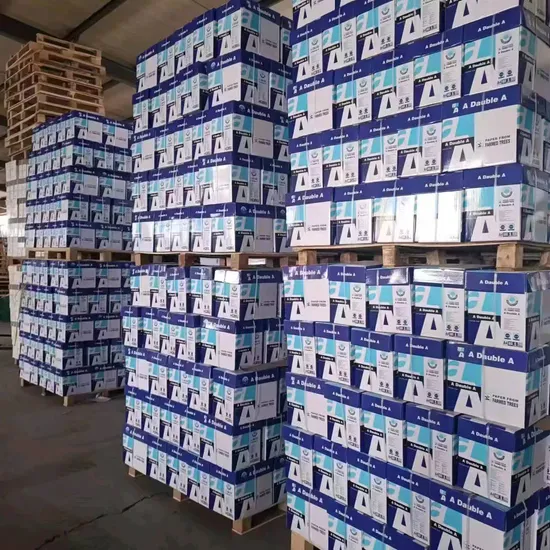
Run these four checks before ordering a pallet of blank NCR sheets for in-house printing:
- Verify machine rating: Specify digital/laser-compatible NCR stock for toner copiers and laser printers, or offset grades for commercial press runs.
- Check tray feed direction: Printers that output pages face-down usually need Straight (Forward) collated paper, while face-up output trays usually need Reverse collated paper.
- Test a 1-ream sample: Print 50 sets of your actual invoice template and test whether the ply order lands with the white CB sheet on top.
- Check fan-apart glue compatibility: If your print room glues sets into pads after printing, confirm that the fan-apart adhesive matches the specific NCR brand coating.
Remember that laser and inkjet printers print the form template onto each sheet one by one; they do not press through all plies at once. The pressure transfer happens later when someone writes on the assembled set or runs it through a dot-matrix impact printer.
Buyer Decision Guide: Where to Buy Carbonless Copy Paper in Bulk
Businesses can buy NCR paper from online marketplaces, local paper merchants, commercial printers, or factory-direct mills. For 1 to 2 reams, a local store works fine. For 10-ream cases, pallet loads, or container shipments, buying direct from a paper supplier gives you tighter coating quality, fresh capsule shelf life, and lower cost per 1,000 sets.

Use this pre-order checklist before signing off on a bulk NCR quote:
- Part count and set math: Confirm both total sheets (such as 5,000 sheets per case) and total finished sets (such as 2,500 2-part sets).
- Collation and color order: Specify Forward or Reverse collation and exact ply colors.
- Carton protection: Require corner protectors, moisture-barrier wrappers, and do-not-stack pallet cones so pressure capsules are never crushed in freight.
- Lot freshness: Ask for recent production dates so micro-capsules deliver dark, crisp black or blue copy images.
If your company also buys standard copy paper in bulk, bundling your NCR cases with high-brightness commercial copy paper on one consolidated pallet can cut LTL freight charges significantly.
Carbonless Copy Paper Use Cases by Industry
Carbonless copy paper pays for itself wherever an instant, tamper-evident paper trail is needed at the point of service. Accounting and retail desks use 2-part and 3-part sets for cash receipts, credit memos, and return slips where one copy stays in the binder and one goes to the customer.

Field service, HVAC, and auto repair shops rely on 3-part work orders that travel on clipboards from the service bay to the billing desk. In these rugged settings, heavier 20 lb to 21 lb NCR stock or wrap-around manila book covers prevent bleed-through onto lower sets.
Freight carriers and warehouses use 3-part and 4-part sets for bills of lading, dock tallies, and proof-of-delivery signatures. Color-coded plies let clerks route white to billing, canary to the customer, pink to the driver, and goldenrod to the shipping dock in seconds.
Need a bulk quote on pre-collated NCR cases or custom reel/sheet sizes? Send your part count, collation order, sheet size, and case volume to our B2B paper export and wholesale team for sample sheets and delivered pricing.
Frequently Asked Questions
Is carbonless copy paper the same as NCR paper?
Yes. NCR stands for No Carbon Required, which is the historic trade name for carbonless copy paper. Both terms describe micro-encapsulated coated paper sets that transfer writing or impact printing without loose carbon sheets.
What is the best carbonless copy paper for invoices?
For standard customer and accounting copies, 2-part (White/Canary) or 3-part (White/Canary/Pink) 20 lb digital-grade NCR paper in 8.5 x 11 or A4 size is the industry workhorse. Choose Straight or Reverse collation based on your laser printer output tray.
Can carbonless copy paper be used in a regular printer?
Yes, if you buy digital-grade or laser-compatible pre-collated NCR paper. It allows you to print your form layout on each ply in a laser or inkjet printer, after which you assemble the set for handwritten signatures or impact printing.
Where can I buy carbonless copy paper near me?
Local paper merchants and office supply stores carry small 1-ream packs, while wholesale paper suppliers and mills supply 10-ream (5,000-sheet) cases and pallet loads with locked collation and batch quality control.
How should carbonless copy paper be stored?
Store cartons flat in a climate-controlled room at 45.0% to 55.0% (TAPPI T402, 2025) relative humidity away from direct sunlight, heaters, and heavy stacked loads. Keep moisture wrappers sealed until you load the printer tray.
Does carbonless paper expire or lose copy quality?
Properly sealed NCR paper keeps strong image transfer for 2 to 3 years in dry storage. High heat, damp air, or heavy weight stacked on cartons can weaken or prematurely rupture the dye capsules over time.
Can carbonless copy paper be recycled or shredded?
Yes, confidential NCR forms can be cross-cut shredded just like standard office paper. Most commercial mixed-paper recyclers accept modern BPA-free carbonless sheets, though you should confirm local mill rules for large volumes.
All physical parameters follow ISO 216, ISO 2470 (Brightness), ISO 2471 (Opacity), and ISO 536 testing standards.