

What Buyers Usually Mean by Staples Copy Paper
When business buyers search for “staples copy paper,” the intent is usually practical: find paper that can keep printers, copiers, and shared multifunction devices running without avoidable jams, mismatches, or emergency orders. A smaller share of searchers may be looking for document copy and print services. Procurement teams should separate those needs before comparing options, because the buying criteria are different.
Product purchase vs. print service
If your organization prints in-house, the decision is about paper as a consumable: size, basis weight, brightness, finish, sheets per ream, reams per case, equipment compatibility, storage space, and repeat availability. If you need an outside provider to print files for you, the decision is about service scope, file handling, finishing, pickup or delivery choices, and turnaround terms. Do not compare them only by the word “copy.” The cost drivers and ordering risks are not the same.
Common search paths
- Single reams for low-volume use, testing, or department-specific needs.
- Cases and 10-ream cartons for offices that want fewer purchase orders.
- Bulk or pallet-style orders for schools, facilities teams, and centralized purchasing.
- Multipurpose paper when the same sheet must support routine printer, copier, and office workflows.
Before placing an order, define the document types printed most often, the devices that will use the paper, acceptable substitutes, and who approves spec changes. That helps buyers evaluate Staples copy paper listings, office-supply alternatives, and supplier quotes on suitability rather than only on the first visible price.
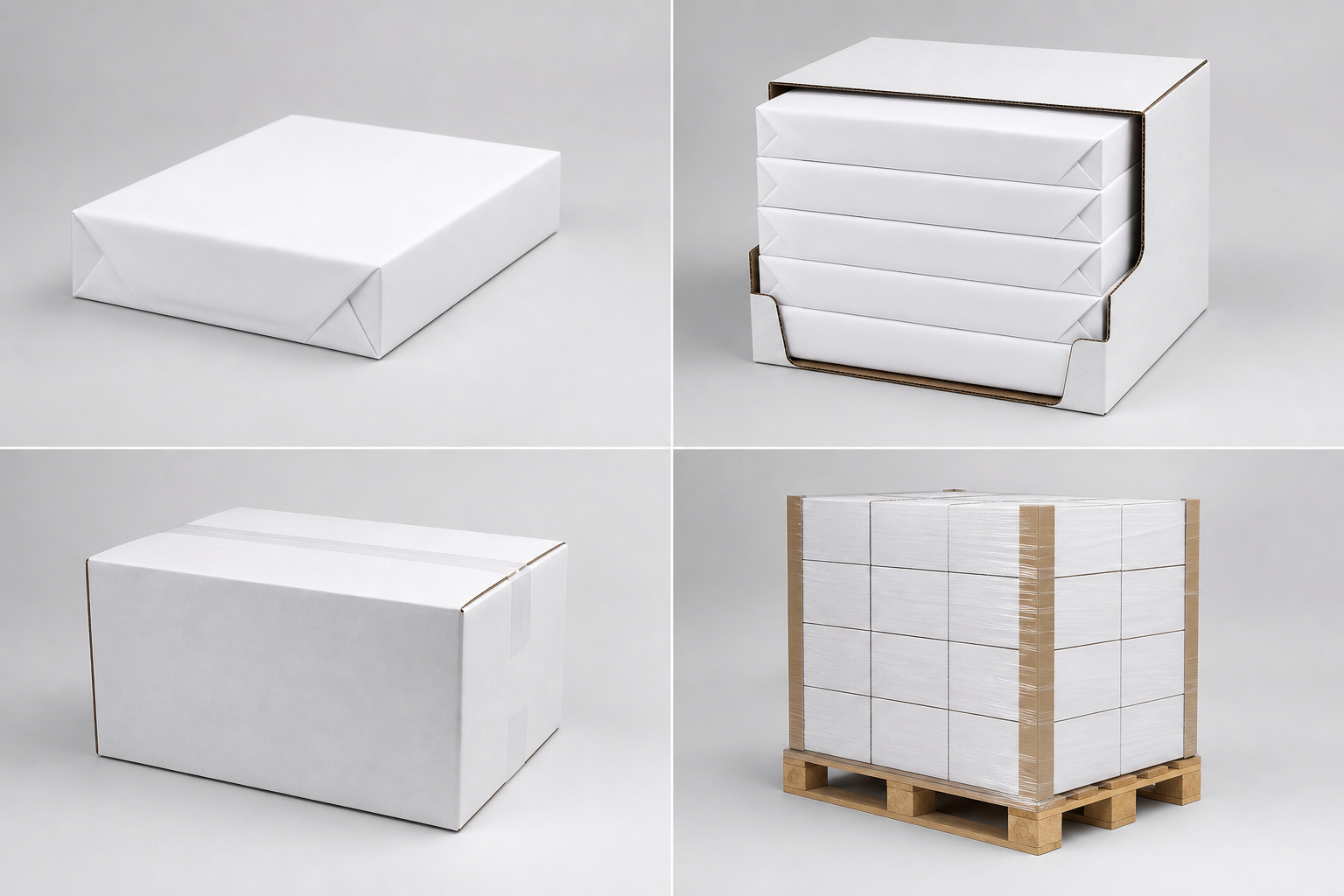
Popular Staples Copy Paper Formats and Quantities
The right purchase format depends on print volume, storage capacity, and how much ordering administration your team wants to absorb. A single ream can solve an immediate need, but it often creates repeat buying work. A case or 10-ream carton is usually easier for shared office areas, while bulk ordering may suit organizations that can forecast usage across multiple departments or locations.
| Buying format | Best fit | Procurement watchout |
|---|---|---|
| Single ream | Small teams, trials, low-use devices | Higher reorder frequency and inconsistent substitutes |
| Multi-ream case | Shared office printing and routine replenishment | Confirm sheets per ream and reams per case |
| 10-ream carton | Departments with predictable paper use | Check storage space and carton handling needs |
| Bulk or pallet order | Schools, facilities teams, multi-site buyers | Review receiving, damage reporting, and reorder timing |
When reviewing copy paper at Staples or any office-supply catalog, verify the actual sheet count, reams per carton, and packaging condition on arrival. Similar listings can look interchangeable but differ in carton quantity or paper specification. Multipurpose paper is useful when departments print a mix of internal documents, drafts, forms, and routine correspondence; however, external-facing work may still justify a separate paper grade.
For recurring buyers, standardize the format as well as the paper spec. If accounting buys single reams, facilities buys cases, and branch locations buy substitutes, usage data becomes harder to track. A preferred case size, approved backup item, and reorder point can reduce urgent purchases without locking the organization into a product that no longer fits demand.
Specifications to Check Before Choosing Copy Paper
Product pages for Staples copy paper can appear similar, so buyers should compare specifications in a consistent order. Start with paper size. Letter-size 8.5 x 11 in. is common for US office printing, while legal or other dimensions may be needed for contracts, forms, or department-specific workflows. If teams use mixed devices or templates, confirm copy paper dimensions before approving a substitute.
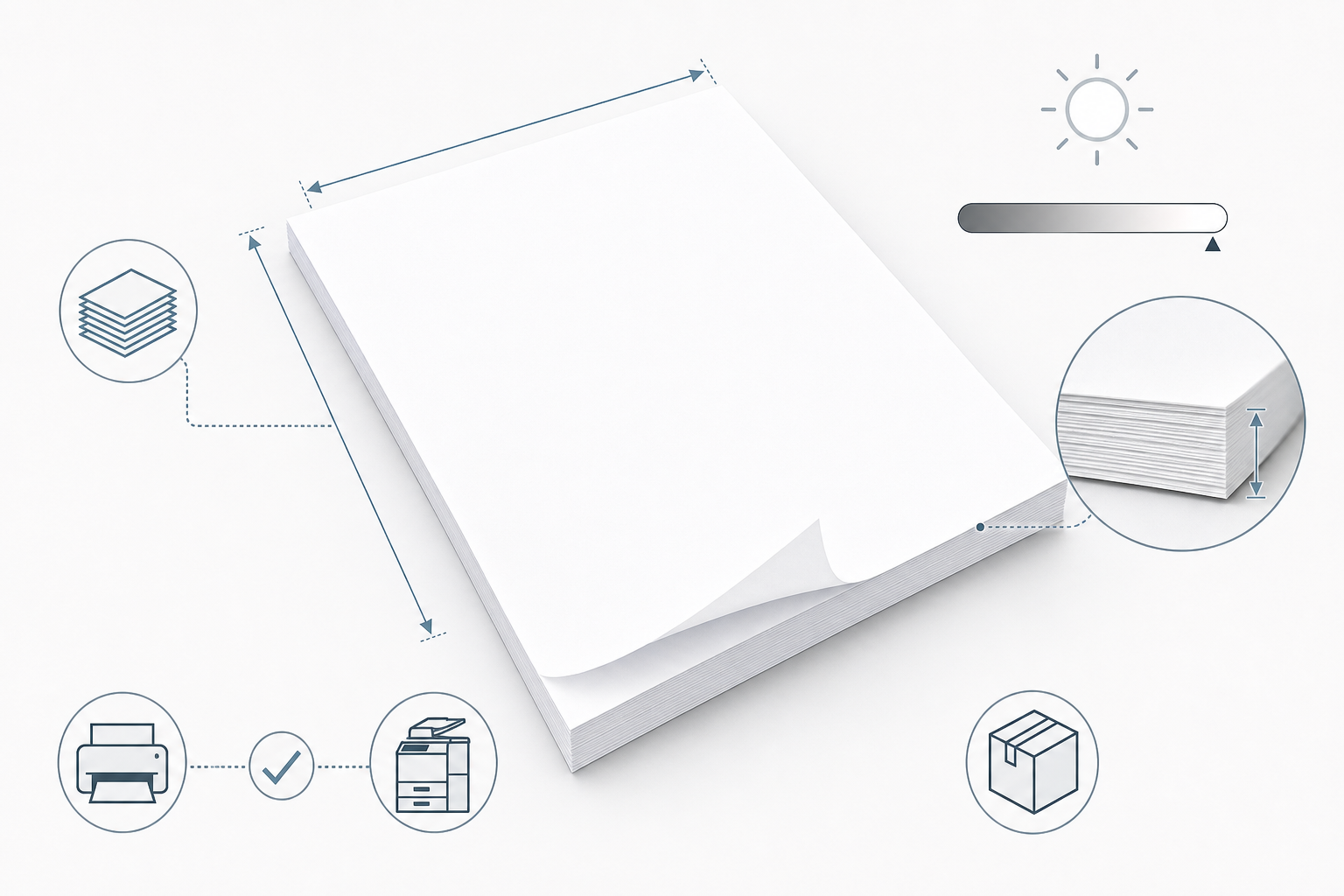
- Weight: 20 lb copy paper is common for everyday office use, but heavier options may feel more substantial for customer-facing documents. Check device limits before changing basis weight.
- Brightness, finish, and opacity: These affect readability, color appearance, and show-through on duplex jobs. Match the level to the document purpose rather than assuming higher is always necessary.
- Sheet and carton count: Confirm sheets per ream, reams per case, and carton labeling so receiving teams can verify orders quickly.
- Compatibility: Look for stated suitability for laser printers, inkjet printers, copiers, or multifunction devices. Do not assume every paper is appropriate for every machine or print speed.
A procurement file should include the approved size, weight, brightness range if relevant, carton format, and compatible equipment category. This prevents staff from ordering a near-match that looks fine in a catalog but performs differently in high-speed copiers or duplex printing. If quality problems occur, note the exact SKU, device, humidity or storage condition, and print job type before deciding whether the issue is paper, equipment, or handling.
Match Paper to Business Printing Use Cases
A low-risk paper choice starts with the work being printed, not with the brand name alone. Everyday memos, invoices, internal forms, drafts, meeting agendas, and general office documents usually need consistent feeding, readable output, and a specification that matches the devices already in use. For these jobs, standard multipurpose or copy paper with the right compatibility statement is often adequate.
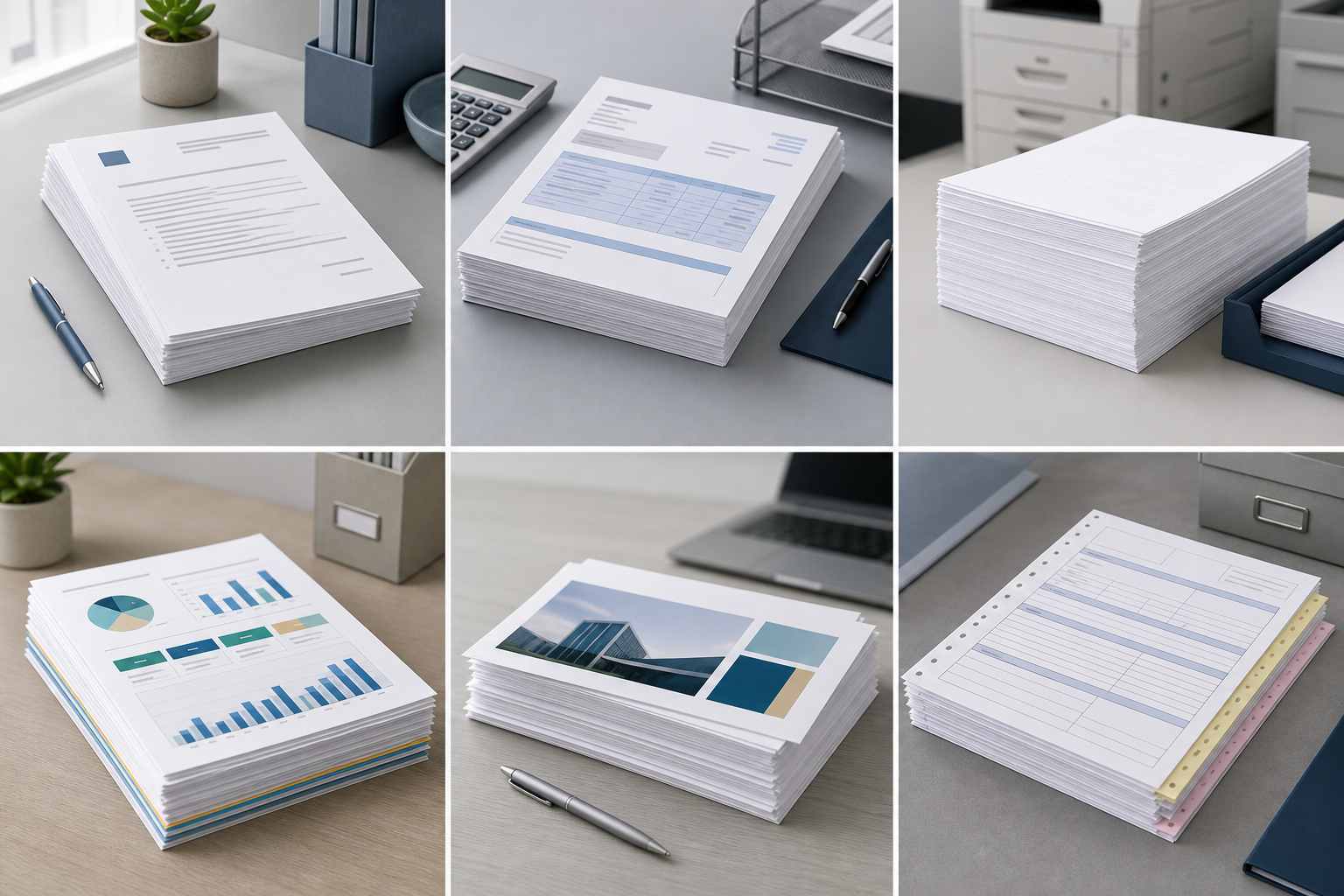
- High-volume administrative printing: Prioritize feeding consistency, carton uniformity, storage conditions, and approved substitutes.
- Color reports and charts: Review brightness, opacity, and finish so colors remain legible and duplex pages do not show excessive show-through.
- External-facing documents: Consider whether a slightly heavier or brighter paper is justified for proposals, packets, or board materials.
- Routine classroom or office output: Focus on dependable supply, practical carton size, and cost control rather than premium presentation attributes.
Do not treat every duplicate document as a standard copy-paper job. Multi-part handwritten or impact-printer forms may require specialty media such as carbon copy paper, rather than ordinary printer paper. For purchasing teams, this distinction matters because substituting standard paper for form media can disrupt workflows, while using premium paper for internal drafts can inflate spend without improving business outcomes.
Before approving Staples copy paper or an alternative, ask department managers to identify their highest-volume and highest-risk documents. A two-tier paper standard can work well: one specification for routine internal output and another for client-facing or color-intensive work. Keep exceptions documented so staff do not create informal purchasing habits outside the approved list.
Compare Price, Availability, and Fulfillment Options
For branded retail searches, price and availability can change by item, quantity, location, and fulfillment method. Procurement teams should avoid building a budget around screenshots or outdated remembered prices. Use live product data when reviewing Staples copy paper, then normalize each option to cost per ream and, when necessary, cost per sheet.
| Comparison point | What to verify | Why it matters |
|---|---|---|
| Displayed item price | Current product page or approved quote | Prevents budget assumptions based on old pricing |
| Case quantity | Reams per carton and sheets per ream | Makes cost-per-ream comparisons accurate |
| Local availability | Store, pickup, delivery, or shipping status at order time | Reduces emergency purchasing risk |
| Large-order handling | Freight terms, receiving constraints, and damage process | Protects bulk purchases from hidden operational costs |
Availability requires the same discipline. A “near me” result may be useful for emergency replenishment, but it does not replace a planned supply process. Check whether the selected item is actually available for the chosen fulfillment method at the time you order, and confirm whether cartons can arrive in packaging your storage area can handle.
Total landed cost may include freight terms, internal receiving time, dock constraints for large orders, damage handling, and the labor of repeated small purchases. For multi-location organizations, a convenient local case purchase may solve today’s problem while creating inconsistent specs across branches. Compare short-term convenience with the cost of maintaining a stable paper standard across the buying cycle.
Bulk Procurement Checklist for Offices, Schools, and Facilities Teams
Bulk copy paper purchasing should be managed as a recurring supply category, not an occasional office errand. The goal is to keep devices supplied while avoiding overstock, inconsistent substitutes, and rushed orders. Use the same checklist whether you are comparing Staples copy paper cases, wholesale cartons, or supplier quotations.
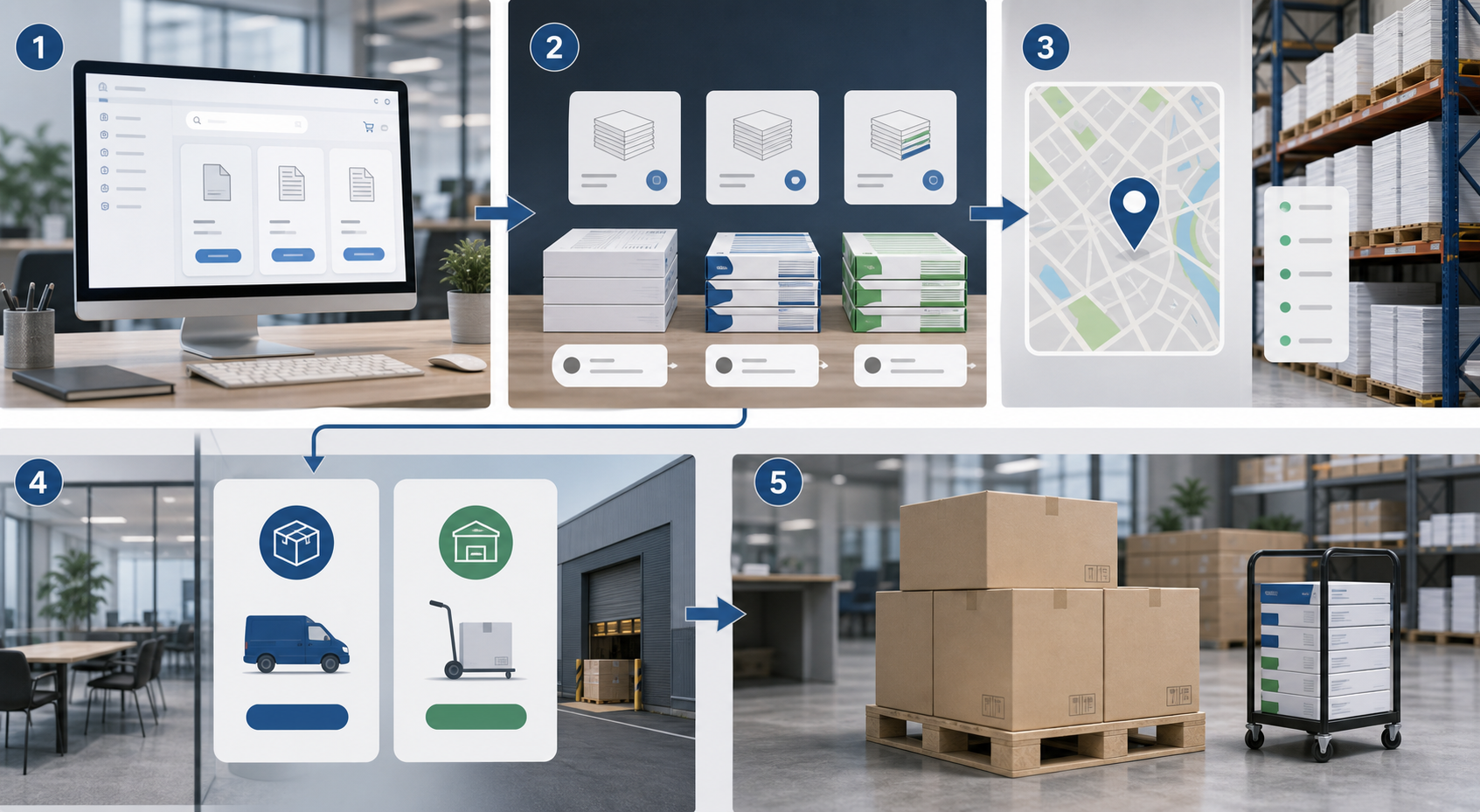
- Estimate demand: Track monthly print volume by site, department, or device group. Separate routine printing from seasonal projects and enrollment, audit, billing, or reporting cycles.
- Set reorder points: Define when to reorder based on average use, available storage, supplier lead time, and acceptable safety stock.
- Standardize specifications: Record approved size, weight, brightness or finish, sheets per ream, reams per case, and device compatibility.
- Control substitutions: Pre-approve acceptable alternatives so staff do not choose an untested product during a stockout.
- Review commercial terms: Ask vendors about order minimums, lead times, packaging, pallet configuration, delivery scheduling, shortage reporting, and damage documentation.
- Assign ownership: Clarify who approves spec changes, who places orders, and who verifies received cartons against the purchase order.
For a broader framework, use this copy paper buying guide for office procurement when building a repeat-purchase standard. It can help teams separate technical requirements from commercial terms before asking vendors for comparable quotes.
A good procurement checklist also reduces communication errors. Instead of asking for “regular copy paper,” buyers can issue a clear request that includes the required paper attributes, expected monthly quantity, preferred carton format, delivery location requirements, and acceptable backup products.
When to Consider Alternatives to Staples Copy Paper
Retail copy paper purchasing can be appropriate for occasional orders, urgent replenishment, or small teams that value simple catalog access. However, business buyers should consider alternatives when paper becomes a managed spend category. The signal is not only volume; it is the need for repeatable specifications, predictable ordering, and fewer disruptions across departments or locations.
Decision points for supplier comparison
- Recurring high-volume demand makes frequent small orders inefficient.
- Multiple locations need the same approved paper standard.
- Procurement wants quotes based on identical size, weight, brightness, and carton configuration.
- Facilities teams need packaging and delivery coordination that fits receiving constraints.
- Operations teams need documented substitutes before stockouts occur.
When comparing alternatives, do not evaluate only the product name. Request the same specification from each supplier: size, basis weight, brightness or finish, compatibility statement, sheets per ream, reams per carton, pallet or carton packaging, order minimums, lead-time expectations, substitution process, and damage reporting procedure. This makes the quote comparison more objective and helps avoid buying cheaper paper that increases waste, handling issues, or printer interruptions.
If your team is planning recurring copy needs, create a standard paper specification and share it with prospective suppliers. Ask them to quote the same copy and printer paper options and identify acceptable substitutes in writing. A documented comparison gives procurement, facilities, and finance a cleaner basis for choosing between Staples copy paper, other retail sources, and dedicated paper suppliers.
Frequently Asked Questions
How much is Staples copy paper per ream or case?
Pricing can vary by brand, sheet count, case quantity, paper weight, brightness, location, and fulfillment method. For an accurate comparison, check the current product price or approved quote and divide by the number of reams or sheets.
Does Staples sell copy paper in 10-ream cases?
Staples copy paper listings may include single reams, multi-ream cartons, 8-ream cases, 10-ream cases, or bulk formats depending on inventory. Always verify the exact reams per carton and sheets per ream before ordering.
What size is standard Staples copy paper?
For most U.S. office printing, letter-size 8.5 x 11 inch copy paper is the standard choice. Some workflows may require legal-size or other dimensions, so buyers should confirm device settings, templates, and product filters before purchase.
Can I buy Staples copy paper near me for pickup?
Local pickup depends on the selected product, store inventory, quantity, and time of order. Use the product page or store availability tool to confirm whether the exact paper and case quantity are available nearby.
Is Staples multipurpose paper the same as copy paper?
Multipurpose paper is often suitable for everyday copying, printing, and general office documents when its specifications match your equipment. It is still important to check weight, brightness, finish, and laser, inkjet, or copier compatibility.
What paper weight should offices choose for everyday printing?
Many offices use 20 lb copy paper for routine internal documents, forms, memos, and invoices. Heavier paper may be useful for proposals or external-facing materials, but buyers should confirm printer and copier limits first.
What is the difference between buying copy paper and using Staples document printing?
Buying copy paper means purchasing paper for your own printers or copiers. Document printing is a service where files are printed for you, often with options for finishing, pickup, delivery, or project-specific handling.