

Shop Reams of Copy Paper by Pack Size
For a business buyer, reams of copy paper are not just a product name. Pack size affects purchase approvals, storage space, internal distribution, and reorder timing. A standard copy paper ream is commonly sold as 500 sheets, but procurement teams should still verify the sheet count on the product listing, quote, or packaging because specialty packs and supplier bundles can differ.
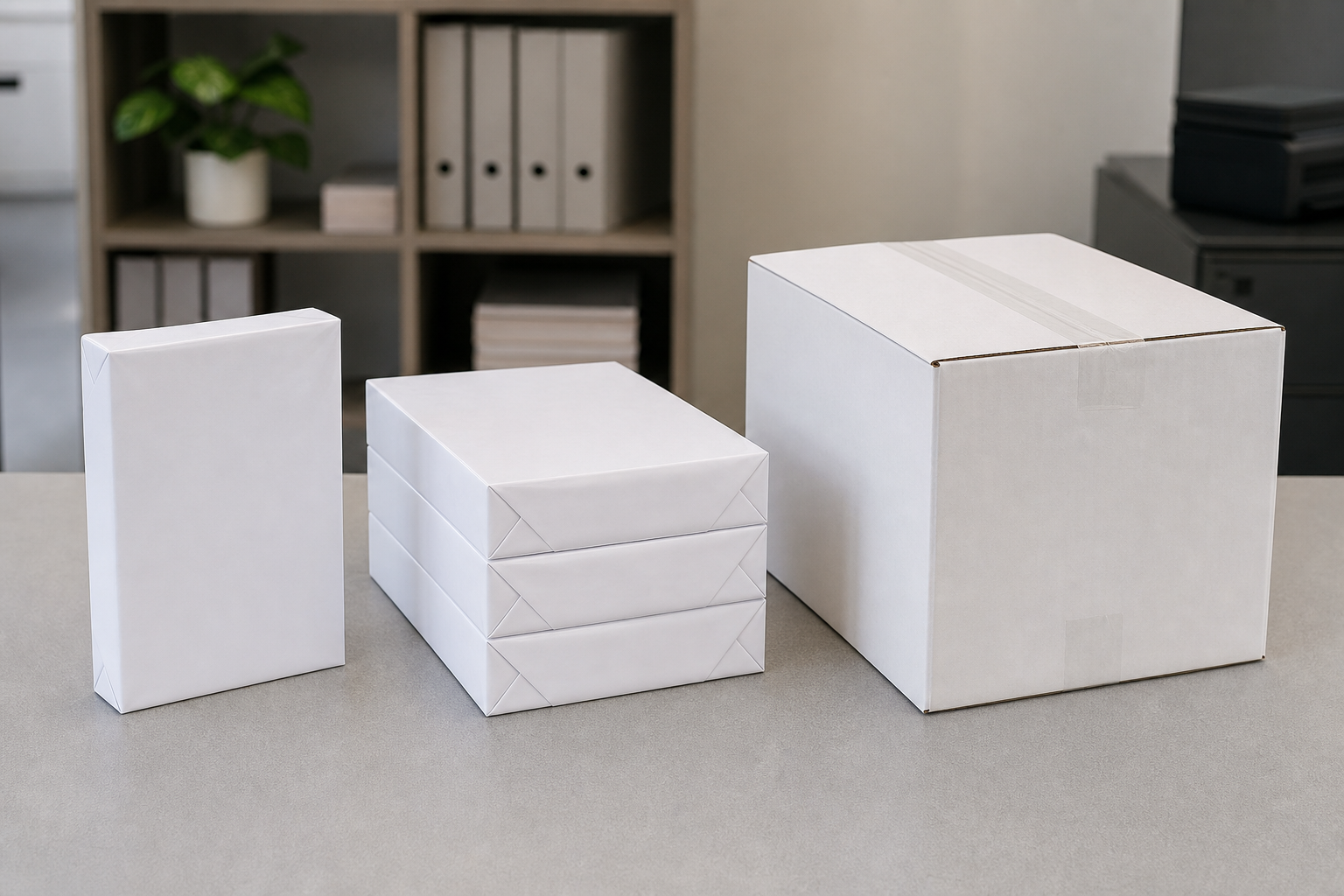
Match pack size to usage pattern
- 1-ream packs: Useful for low-volume teams, small departments, sample orders, or temporary locations that cannot store a case.
- 3-ream packs: A practical middle option when usage is steady but storage is limited, such as administrative offices, classrooms, or shared work areas.
- 10-ream cases: Commonly associated with 5,000-sheet bulk ordering, suitable when consumption is predictable and receiving teams can store cartons properly.
Also clarify terminology before buying. Copy paper reams, printer paper reams, and multipurpose paper are often used interchangeably for everyday office printing, copying, and internal documents. The safer buying approach is to compare actual specifications: size, paper weight, brightness, sheet count, and equipment compatibility.
If multiple departments order paper independently, standardizing approved pack sizes can reduce mismatched products and simplify reorder tracking. It also makes supplier quotes easier to compare because each quote can be evaluated against the same number of sheets, rather than against broad package descriptions. This is important for offices, schools, and facilities where paper is issued across departments rather than consumed by one user.
Check Copy Paper Specs Before You Order
The most common business default in the US is letter-size paper, 8.5 x 11 inches, but buyers should not rely on assumptions. Verify the paper size against printer trays, copier defaults, forms, binders, and document templates before approving a purchase. If your team uses non-letter formats for records, mailings, or reports, confirm the required copy paper dimensions before mixing those needs into a standard ream order.
Core specifications to compare
- Size: Letter-size 8.5 x 11 paper is the common option for US office printing, but legal, tabloid, and specialty sizes require separate buying controls.
- Weight: 20 lb copy paper is widely used for everyday internal printing, drafts, forms, and routine documents.
- Яркость: Brightness ratings, such as 92 bright or high-brightness options, affect contrast and how crisp printed text appears.
- Color and finish: White multipurpose paper is typical for general use; colored or heavier paper should be treated as a separate specification.
These specs should be written into the purchasing request, not left as informal preferences. A quote for general white copy paper may not be equivalent across suppliers if brightness, basis weight, or sheet count is missing. For recurring office supply contracts, ask suppliers to identify acceptable substitutes in advance and confirm whether substitutes must match the original size, weight, brightness, and equipment compatibility. That reduces the risk of receiving paper that works for internal drafts but not for customer-facing documents or high-volume shared machines.
Compare Ream Quantities and Sheet Counts
Quantity comparison is where many office paper purchases become unclear. One ream of copy paper is commonly 500 sheets, while a 10-ream case is commonly 5,000 sheets. However, procurement should confirm the exact total sheets, number of reams, and whether the package is sold as individually wrapped reams, a bundled multi-pack, or a carton intended for storage.
Use sheet count, not package names alone
| Buying unit | Common sheet count | Typical procurement use |
|---|---|---|
| 1 ream | 500 листов | Low-volume use, testing, small teams |
| 3 reams | 1,500 sheets | Moderate use with limited storage |
| 10-ream case | 5,000 sheets | Recurring office, school, or facility supply |
Comparing by sheet count helps buyers calculate value without relying on promotional wording. Request or record three numbers: total price before tax and freight, number of reams, and total sheets. From there, calculate price per ream and price per sheet for each option. Freight can change the comparison for heavy paper orders, so evaluate landed cost where shipping or handling is separately charged. Do not compare a three-ream promotional pack with a full case until both are normalized to the same unit of measure.
Also consider how paper is issued internally. A facilities team may prefer cases for central storage, while departments may prefer wrapped reams that can be distributed and tracked. For higher-volume environments, a 10-ream case can reduce reorder frequency, but it should only be selected when storage conditions are suitable and consumption is predictable.
Printer and Copier Compatibility
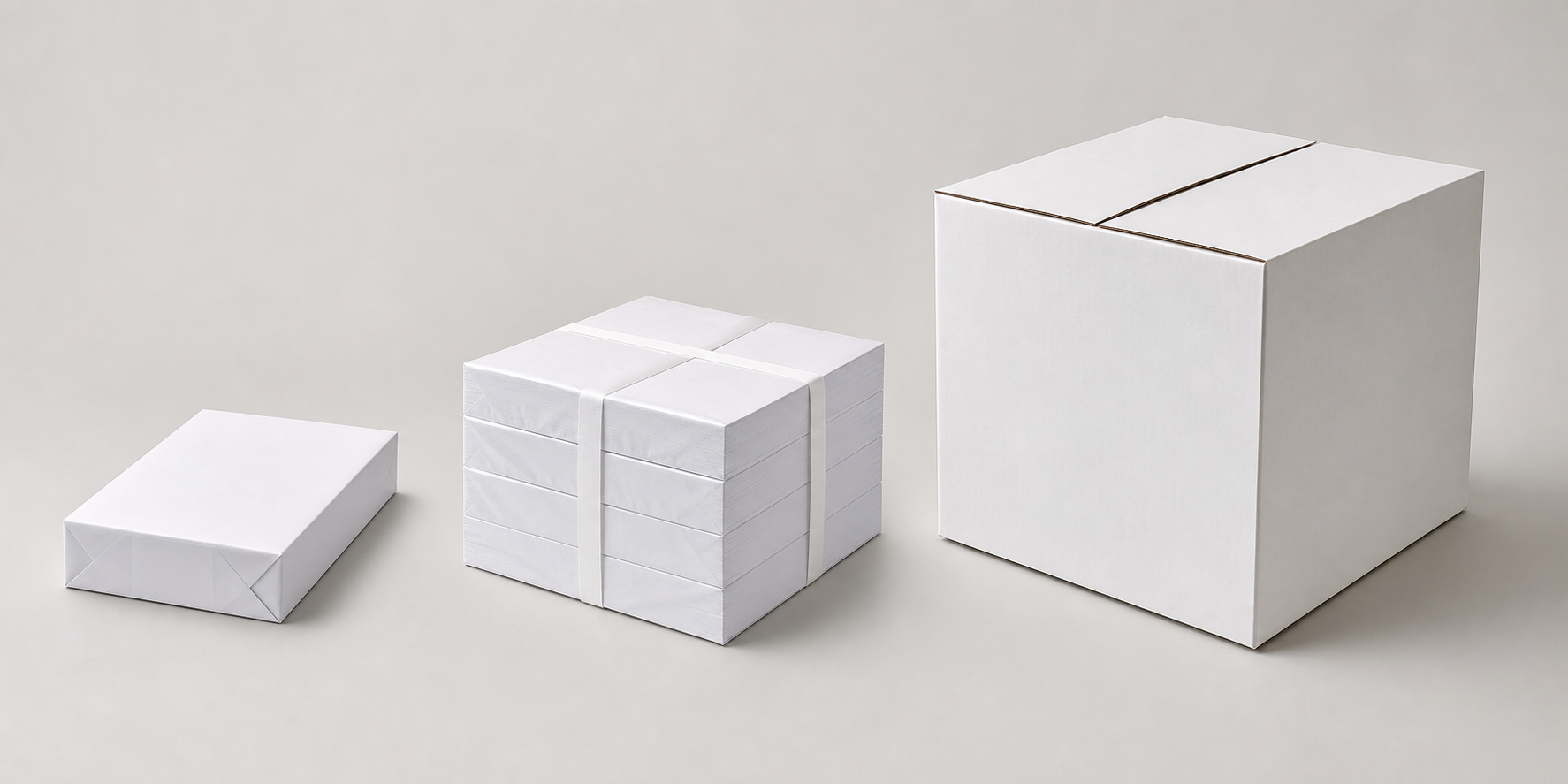
Paper that is acceptable for one device may create feeding, curl, moisture, or print-quality issues in another, especially when a workplace uses a mix of desktop printers, shared copiers, and multifunction devices. Before ordering copy paper reams in volume, match the product details to the equipment fleet and the documents your teams print most often.
Compatibility points to verify
- Laser printers: Confirm the paper is suitable for the heat and speed of laser printing, especially for duplex jobs and high-page-volume batches.
- Inkjet printers: Check whether the paper is positioned for inkjet use if teams print graphics, color documents, or ink-heavy pages.
- Copiers and multifunction devices: Confirm the recommended paper weight and size align with copier settings, trays, and finishing equipment.
- Daily document types: Internal drafts, invoices, forms, training packets, and customer-facing documents may not all need the same paper quality.
For copier-heavy offices, review a broader copier paper buying guide before locking in a standard, especially if you run high-page-volume jobs, duplex printing, or shared machines used by many departments.
Compatibility checks should also be part of supplier communication. Ask whether product substitutions will maintain the same printer and copier suitability, and require the quote or order confirmation to list the key specifications. This protects teams from receiving a visually similar paper that does not perform the same way in daily equipment. If a new paper is being evaluated, order a controlled quantity first and test it in the most demanding devices before moving to bulk purchasing.
B2B Buying Factors for Offices, Schools, and Facilities
For organizations that buy reams of copy paper repeatedly, the best choice is rarely based on the lowest visible price alone. Procurement should connect pack size, usage volume, delivery timing, storage capacity, and specification consistency. A single low-cost ream may be convenient for occasional printing, but a bulk case may better support departments that print forms, handouts, reports, or internal documentation every week.
Evaluate the full procurement impact
- Monthly print volume: Estimate consumption by team, location, or device rather than relying on last-minute restocking requests.
- Reorder frequency: Decide whether the business benefits more from smaller orders or fewer, larger replenishment cycles.
- Storage conditions: Keep paper dry, flat, and protected from humidity, excessive heat, and carton damage.
- Specification consistency: Maintain the same size, weight, brightness, and sheet count where standard documents need a consistent look and feel.
Standardization is especially important when multiple locations or departments place orders. If one team buys 20 lb, 92 bright letter-size paper and another buys a different weight or brightness, printed materials may vary and device performance may be less predictable. A documented specification also helps suppliers quote comparable products. For a broader framework, review this copy paper buying guide for office procurement when building an approved office paper list.
Procurement teams should also decide how exceptions are handled. Specialty paper for presentations, forms, color documents, or external proposals may need separate approval rather than being substituted for everyday copy paper. This keeps routine purchasing simple while allowing departments to request higher-grade paper when the document purpose justifies it.
Delivery, Pickup, and Supplier Availability
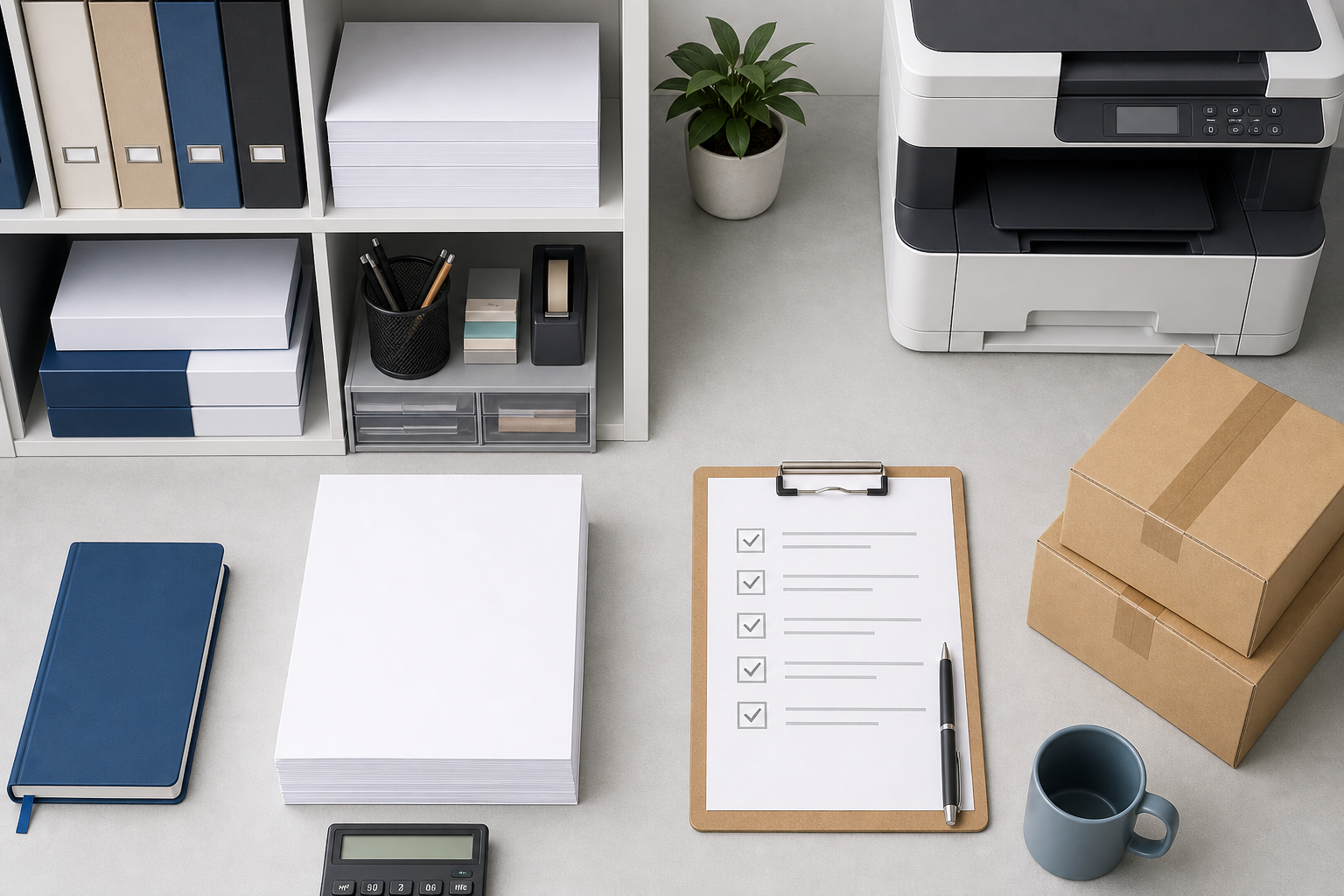
Paper is heavy, bulky, and consumed steadily, so logistics can matter as much as the ream specification. When comparing suppliers, confirm how orders are packed, how delivery windows are communicated, and whether minimum order quantities or freight charges affect the real cost of copy paper reams. Do not assume that a visible product listing reflects the timing or quantity your location needs; confirm availability during the quote or order process.
Plan around operational risk
- Online ordering: Check case quantity, total sheets, shipping terms, and whether the item description matches the approved specification.
- Local pickup: Useful for urgent gaps, but it may not support standardization if buyers substitute products under time pressure.
- Receiving requirements: Clarify delivery location, liftgate or dock needs where relevant, carton labeling, and who will inspect the shipment.
- Business continuity: Set reorder points so teams are not forced into emergency purchases when paper runs low.
For multi-site organizations, ask whether each location can order against the same specification and whether invoices identify pack size and total sheets clearly enough for internal tracking. Documenting this information helps purchasing teams compare supplier performance over time without relying on informal feedback from end users.
If your business is preparing recurring copy paper orders, standardize the size, weight, brightness, pack size, and delivery requirements before contacting suppliers. Sharing the same spec sheet with each supplier makes comparisons cleaner and reduces the risk of ordering paper that does not match daily printing needs.
Quick Ordering Checklist for Reams of Copy Paper
Use a short procurement checklist before approving any order for reams of copy paper. It helps purchasing, facilities, and department managers align on the same product requirements and makes supplier quotes easier to compare. The checklist is also useful when an urgent buyer is tempted to order whatever paper is available first.
Procurement checklist
- Confirm the buying unit: 1 ream, 3 reams, 10-ream case, or another pack configuration.
- Confirm total sheet count and whether individual reams are wrapped for storage or department distribution.
- Confirm paper size, especially 8.5 x 11 letter size for standard US office printing.
- Confirm paper weight, brightness, color, and finish against the approved specification.
- Confirm laser, inkjet, copier, and multifunction device compatibility where relevant.
- Confirm landed cost, including freight or handling when separately charged.
- Confirm delivery timing, receiving instructions, storage space, and reorder point.
- Confirm substitute rules before the supplier replaces a quoted product with an alternative.
After the order is placed, keep a record of the approved specification, supplier item description, pack size, and acceptable substitute rules. If print quality, jams, or storage damage appear after a new order, compare the received product against the original checklist before assuming the issue is caused by the printer or copier.
A disciplined checklist does not make paper purchasing complicated; it prevents small specification gaps from becoming daily workflow problems. For organizations that print regularly, this is the difference between buying paper as a commodity and managing it as a reliable operational supply. Assigning checklist ownership also supports consistent reorders when purchasing staff, department administrators, or supplier contacts change.
Frequently Asked Questions
How many sheets are usually in a ream of copy paper?
A standard office ream usually contains 500 sheets. Buyers should still confirm the sheet count on the product listing, carton, or supplier quote because specialty packs and promotional bundles can vary.
How many reams are in a case of copy paper?
Many office copy paper cases contain 10 reams, commonly totaling 5,000 sheets. Some suppliers sell different carton sizes, so compare the total sheet count rather than relying only on the word case.
Is it cheaper to buy copy paper by the ream or by the case?
Bulk cases often reduce the unit cost for high-volume users, but the best value depends on freight, storage capacity, order minimums, and usage rate. Calculate price per sheet before selecting a pack size.
What specs should be checked before ordering copy paper reams?
Check paper size, sheet count, basis weight, brightness, color, finish, and printer or copier compatibility. For business orders, include these requirements on the purchase order to avoid mismatched substitutions.
Can the same copy paper reams work in laser printers, inkjet printers, and copiers?
Many multipurpose copy papers are designed for everyday laser, inkjet, copier, and multifunction use. However, high-speed machines, duplex printing, and ink-heavy documents may require checking device-specific recommendations.
What does 20 lb copy paper mean?
20 lb refers to the paper basis weight, not the weight of one ream. It is a common everyday office paper weight used for internal documents, forms, drafts, and routine printing.
How should businesses store bulk reams of copy paper?
Store paper flat, dry, and protected from humidity, heat, floor moisture, and carton damage. Good storage helps reduce curling, feeding problems, and paper waste in shared office equipment.
Where can I buy reams of copy paper near me?
Check local office-supply inventory, pickup options, and business delivery availability. If your organization uses a standard paper specification, confirm the local product matches the approved size, weight, brightness, and sheet count.