
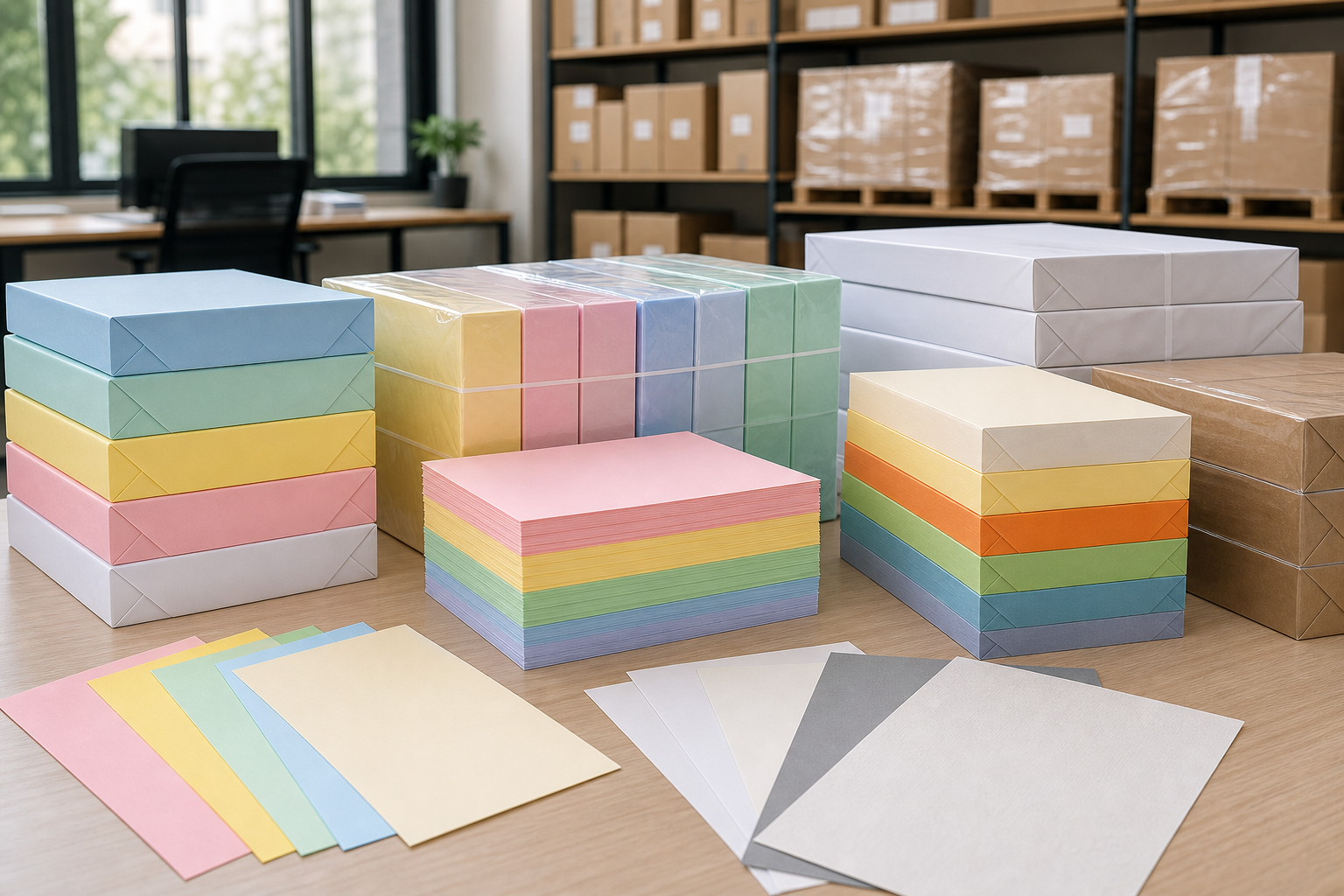
Shop Colored Copy Paper by Buying Criteria
For B2B purchasing, colored copy paper should be selected as a defined office paper specification, not as a generic color preference. Start with the work it must support: color-coded forms, classroom handouts, internal notices, event flyers, or department packets. From there, narrow the search by color family, sheet size, sheet count, paper weight, finish, and pack format.
If your team already has standards for copy on paper, use those as the baseline for colored sheets as well. The colored product should fit the same printers, filing systems, mailroom processes, and approval workflows unless a specific project requires an exception. Procurement teams can then compare similar items instead of mixing school paper, construction paper, cardstock, and true copier-friendly colored paper in one request.
Useful buying filters include single-color reams, assorted color packs, 500-sheet units, multi-ream cartons, letter or legal size, 20 lb or 24 lb weight, smooth finish, and any stated copier, laser, or inkjet compatibility. If a listing does not show these details, ask before issuing a purchase order.
For repeat ordering, build a short specification sheet with approved colors, acceptable substitutions, preferred pack format, internal department codes, and receiving instructions. This reduces mismatched shades across departments, helps avoid ordering small retail packs when cartons are needed, and gives suppliers a clearer basis for quote comparison.
Colored copy paper is simple to buy in small quantities, but recurring office or school use benefits from the same discipline as any other consumable: defined specs, clear packaging expectations, and a documented reorder process.
Choose Colored Copy Paper by Color and Readability
Color selection should be driven by readability and workflow, not only by preference. Pastel colored copy paper is often easier to read with standard black text, which makes it suitable for forms, classroom packets, schedules, and everyday notices. Bright or fluorescent colors can improve visibility for announcements, routing sheets, event signs, and urgent internal communications, but they should be tested with the actual font size and print coverage used by the organization.
Assorted packs are useful when departments, classrooms, inventory stages, or document types need to be separated without purchasing a full ream of every color. Before ordering assorted colored copy paper in bulk, check whether the pack identifies the included colors and approximate sheet distribution. A pack labeled assorted may not provide equal quantities of each color, so buyers should confirm the mix when one color will be used more heavily.
Readability checks before ordering
- Use high contrast: black toner on pale yellow, blue, green, pink, or similar pastel colors is usually easier to read than on dark sheets.
- Avoid heavy background colors for dense text, small tables, barcodes, QR codes, or forms that will be scanned.
- Confirm whether color naming is consistent between product pages, packing lists, and internal purchasing records.
- Request a sample or small initial quantity when brand color matching, event presentation, or department standardization matters.
Procurement teams should also define substitute colors in advance. If light blue is acceptable when pastel blue is unavailable, state that in the order notes. If color accuracy is mandatory, do not leave substitutions open-ended.

Select Size, Ream Count, and Bulk Pack Format
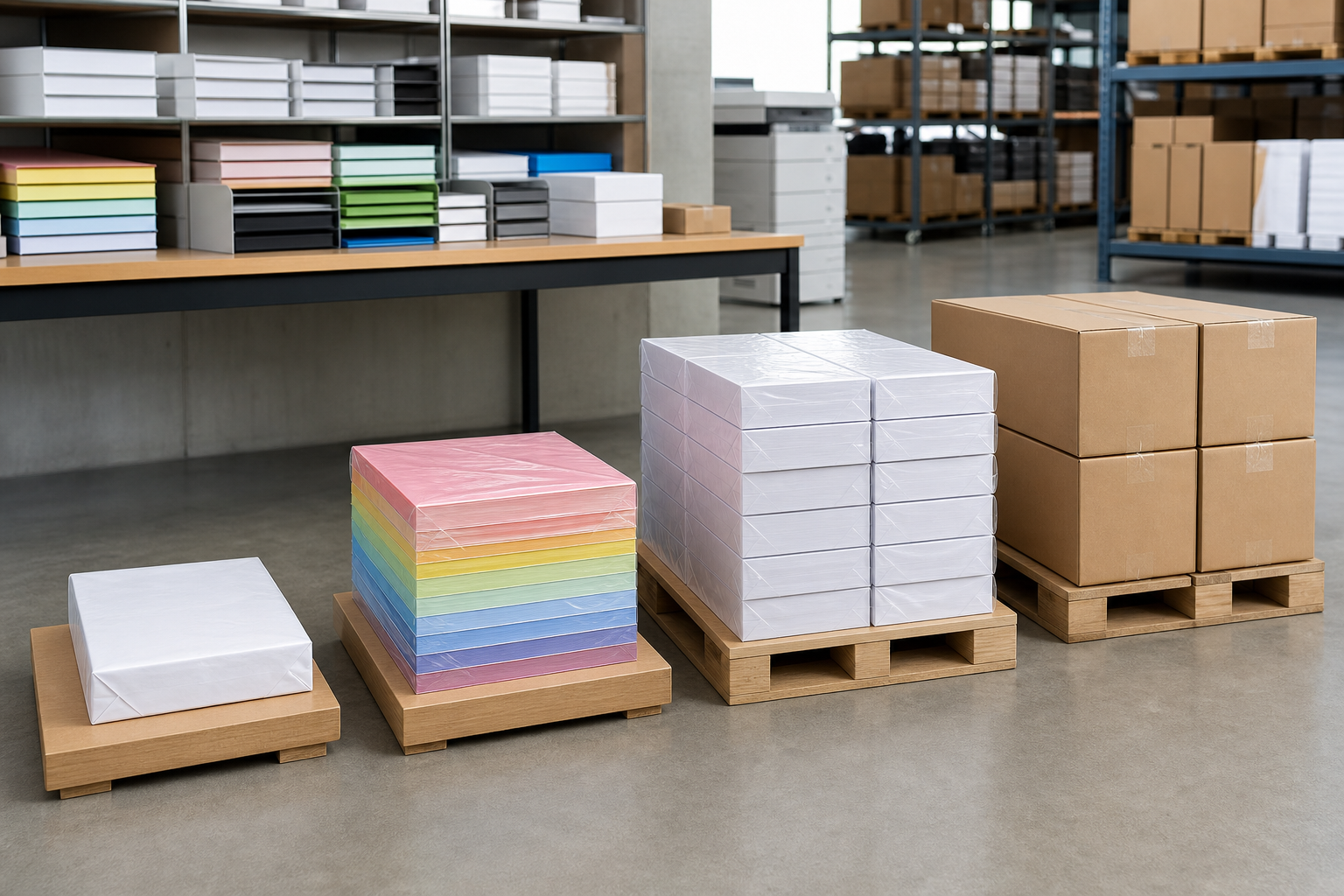
Size and pack format determine whether colored copy paper fits the printer fleet, storage area, and usage rate. Letter-size paper is the standard choice for most office documents in the US, while legal-size paper may be needed for longer forms, agreements, or specialized administrative packets where available. If teams are unsure which sheet dimensions fit a process, verify copy paper dimensions before approving a bulk order.
500-sheet reams are a common buying unit for routine printing because they are easy to issue by department and simple to count during inventory checks. Multi-ream cartons are better suited to schools, shared offices, facilities teams, and centralized purchasing groups that consume colored paper regularly. Assorted packs can be efficient for low-volume color coding, but they may create imbalances if one color is used faster than the others.
| Format | Best fit | Check before ordering |
|---|---|---|
| Single-color ream | Standard forms or one department color | Color name, sheet count, and reorder code |
| Assorted pack | Multiple colors for coding or projects | Included colors and quantity mix |
| Bulk carton | High-volume recurring use | Carton configuration, storage space, and receiving process |
For larger orders, compare cost per sheet rather than package price alone, but also account for freight terms, damage risk, storage constraints, and the cost of running out mid-cycle. Ask suppliers to identify inner pack counts and carton labeling so receiving teams can verify the order quickly. Clear pack-format selection reduces last-minute substitutions and prevents buyers from over-ordering colors that move slowly.
Compare Paper Weight, Finish, and Printer Compatibility
Paper weight and finish affect both document feel and printer performance. Many everyday colored copy paper products are offered around 20 lb, which is generally intended for routine copying and printing. A 24 lb option may feel smoother or more substantial and can be appropriate for notices, newsletters, presentation handouts, or documents handled repeatedly. Buyers should confirm the stated basis weight on the product listing instead of assuming all colored paper is equivalent.
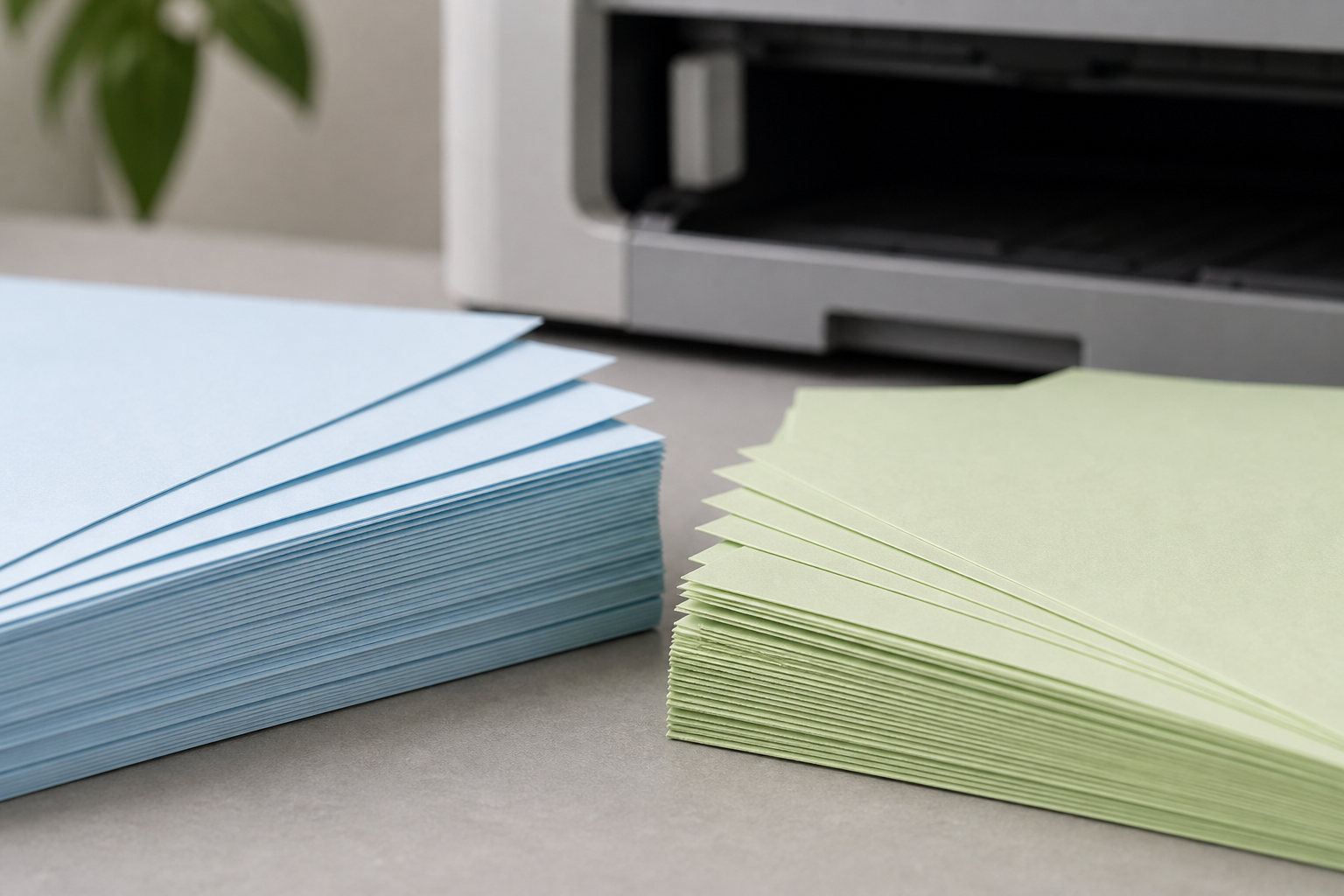
Finish matters because very rough or craft-oriented paper may not feed like copier paper. A smooth finish supports cleaner feeding and a more document-ready appearance, but the actual result depends on the printer, coverage, humidity, and handling. For broader technical criteria, use a copier paper buying guide when comparing colored sheets with standard office paper.
| Criterion | What to verify | Risk reduced |
|---|---|---|
| Вес | 20 lb, 24 lb, or other stated basis weight | Wrong feel, opacity, or handling performance |
| Finish | Smoothness and intended printer use | Feeding issues or poor document appearance |
| Совместимость | Copier, laser, inkjet, or multi-use listing | Printer jams, toner issues, or rejected orders |
| Archival needs | Acid-free language where required | Unsuitable paper for stored documents |
Printer compatibility should be checked at the SKU level. Confirm whether the paper is listed for copiers, laser printers, inkjet printers, or general multi-use printing. For high-volume workflows, test a small quantity before ordering cartons, especially if documents include duplex printing, heavy toner coverage, scanning, folding, or mail insertion. If documents need to resist yellowing during storage, look for acid-free language in the actual product description rather than assuming it applies to every color or pack.
Best B2B Uses for Colored Copy Paper
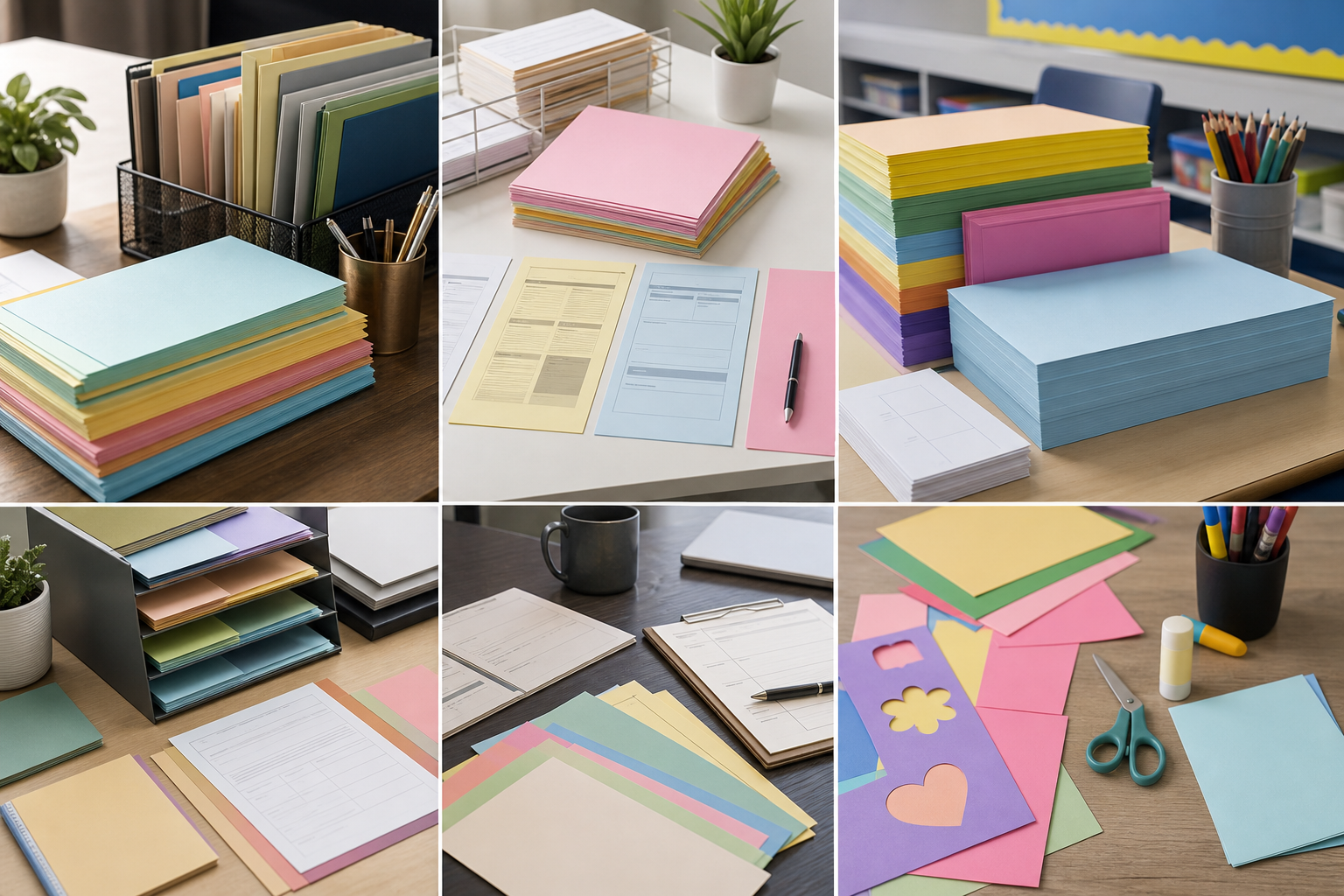
Colored copy paper is most valuable when color helps users identify, route, or prioritize documents faster. In offices, different colors can distinguish HR forms, finance approvals, inventory sheets, visitor notices, safety updates, or meeting packets. The goal is not decoration; it is reducing sorting time and making document handling more consistent.
In schools and training environments, colored sheets can separate classroom handouts, administrative notices, activity packets, permission documents, and project materials. For newsletters, event notices, and internal flyers, brighter colors can improve visibility on bulletin boards or in shared spaces, while pastel colors may be better for longer reading.
Common B2B applications
- Department-coded forms for HR, finance, operations, and facilities.
- Classroom packets, school office notices, and training materials.
- Schedules, routing sheets, inventory tags, and internal reminders.
- Event notices, flyers, sign-in sheets, and temporary announcements.
- Craft, DIY, and creative projects where copier-friendly sheets are still needed.
Buyers should also identify where colored paper is not the right product. If a workflow requires duplicate or multi-part forms, colored sheets alone will not create copies; a different form or paper type may be required. If a piece must look premium, cardstock or heavier specialty paper may be more suitable than standard copy paper. If documents will be scanned, barcoded, or archived, prioritize contrast and paper specifications over color preference.
Documenting use cases by department helps procurement forecast demand. A school office may need assorted packs, while facilities may prefer one high-visibility color. Matching pack format to use case avoids leftover slow-moving colors.
How to Evaluate Suppliers for Bulk Colored Copy Paper Orders
Bulk colored copy paper orders create different risks than one-time retail purchases. A buyer must evaluate not only the product, but also whether the supplier can support repeatable specifications, clear communication, and practical logistics coordination. Start by asking how products are identified on quotes and invoices: color name, manufacturer item number if available, sheet count, size, weight, pack type, and carton configuration should be visible enough for approval and receiving teams to check.
Availability should be discussed carefully without assuming permanent stock. Ask the supplier how they communicate backorders, color substitutions, discontinued items, and partial shipments. For recurring orders, define whether substitutions are allowed and who must approve them. A low-contrast substitute color can disrupt forms, routing systems, classroom plans, or inventory workflows.
Supplier evaluation points
- Minimum order quantities and whether cartons can be mixed by color.
- Lead-time communication, order cutoffs, and documentation required for approval.
- Packaging strength, palletization needs, and protection from moisture or crushing.
- Labeling that lets receiving staff separate departments, buildings, or cost centers.
- Sample availability when color, texture, or printer feeding must be verified before a larger purchase.
Logistics planning should include receiving hours, dock access, lift-gate needs, delivery location, and internal storage. Paper is heavy, sensitive to moisture, and awkward to move if cartons arrive without a handling plan. For multi-site organizations, standardize the specification but allow shipping instructions by location. This makes purchasing more consistent while giving operations teams the details they need to receive and distribute paper correctly.
Finally, review supplier responsiveness. Clear answers before the order are a good indicator of lower risk after the order.
Colored Copy Paper Buying Checklist Before You Order
Before placing an order, convert preferences into a specification that can be approved, purchased, received, and reordered. This is especially important when colored copy paper is used across departments or locations, because small differences in color, size, or pack format can create confusion after delivery.
Use this checklist before issuing a purchase order or quote request:
- Color: confirm the exact color name, acceptable substitutes, and whether assorted packs are appropriate.
- Readability: test black text, small fonts, tables, barcodes, and scanned documents where relevant.
- Size: verify letter, legal, or any other required sheet size against printer and filing requirements.
- Sheet count: confirm whether the item is a ream, assorted pack, multi-pack, or bulk carton.
- Weight and finish: compare 20 lb, 24 lb, smooth finish, and any acid-free requirement listed for the item.
- Printer compatibility: check copier, laser, inkjet, duplex, and high-volume use requirements before bulk ordering.
- Упаковка: confirm carton count, inner packs, labeling, receiving location, and storage conditions.
- Supplier communication: document substitution rules, backorder updates, quote details, and reorder process.
For recurring use, set reorder points based on actual consumption, not only the last purchase quantity. Slow-moving colors should be reviewed separately from high-use colors so storage space is not tied up unnecessarily.
When your organization is ready to compare colored copy paper options, share a standardized specification with your supplier or procurement contact. A clear spec makes it easier to compare paper quality, pack format, and recurring copy needs without relying on incomplete product descriptions.
Frequently Asked Questions
Where can businesses buy colored copy paper online or in bulk?
Businesses can source colored copy paper through office paper suppliers, procurement distributors, and online office supply catalogs. Compare color availability, sheet count, carton quantity, shipping terms, lead time, and reorder consistency before placing a bulk order.
What is the difference between colored copy paper and construction paper?
Colored copy paper is typically designed for copiers and office printers, with smoother surfaces and standard office weights. Construction paper is usually thicker, rougher, and more craft-focused, so it may not feed reliably in office printers.
Can colored copy paper run through laser printers and high-speed copiers?
It can if the specific product is rated for laser printers, copiers, or multi-use printing. For high-speed or duplex workflows, test a small quantity first to confirm feeding, toner adhesion, and jam-free performance.
Are 500-sheet reams standard for colored copy paper?
Many colored copy paper products are sold in 500-sheet reams, but assorted packs, specialty colors, and retail packs may use different counts. Always verify sheets per pack, color mix, and carton configuration before ordering.
Which colored paper is best for scanned forms or barcodes?
Light pastel colors usually provide better contrast with black print and are safer for scanning, barcodes, and QR codes. Dark, neon, or heavily saturated colors should be tested before use in automated document workflows.
How should bulk colored copy paper be stored?
Store bulk colored copy paper flat, dry, and away from direct sunlight, moisture, and extreme temperature changes. Keep cartons sealed until use to reduce curling, edge damage, color fading, and feeding issues.
Is colored copy paper recyclable?
Most lightly colored office paper can be recycled in standard paper streams, but rules vary by location and facility. Check local recycling guidance, especially for dark colors, coated sheets, adhesives, or contaminated paper.