

What Is the Standard Copy Paper Size?
In the United States, the standard copy paper size is US Letter: 8.5 × 11 inches. This is the everyday sheet size used for most office documents, internal memos, invoices, forms, classroom handouts, and general printer or copier output. If a US supplier, office manager, or printer setting refers simply to standard copy paper, it usually means Letter size.
The terms copy paper, printer paper, and letter paper often overlap in daily office purchasing. Copy paper usually emphasizes high-volume copier and multifunction-printer use; printer paper may also include inkjet or laser-specific options; letter paper identifies the sheet size. For a procurement specification, use both the size and the paper attributes, such as Letter size, ream count, basis weight, brightness, opacity, finish, and packaging format. For a broader size reference, see this guide to copy paper size.
The answer can change by country. Many international offices use A4 as the default business paper size, so global teams should avoid writing only standard paper in purchase requests. Specify US Letter, 8.5 × 11 inches, or A4, 210 × 297 mm, to reduce ordering errors, printer tray mismatches, and document scaling issues. This is especially important when teams exchange templates, contracts, or PDF files across US and non-US locations.
Standard Copy Paper Size in Inches, CM, and MM
US Letter paper is specified as 8.5 × 11 inches. In metric terms, that equals 21.59 × 27.94 centimeters, or 215.9 × 279.4 millimeters. Some catalogs and printer menus round the millimeter value to 216 × 279 mm, so buyers should read the specification carefully when matching paper to equipment settings, templates, or document standards.
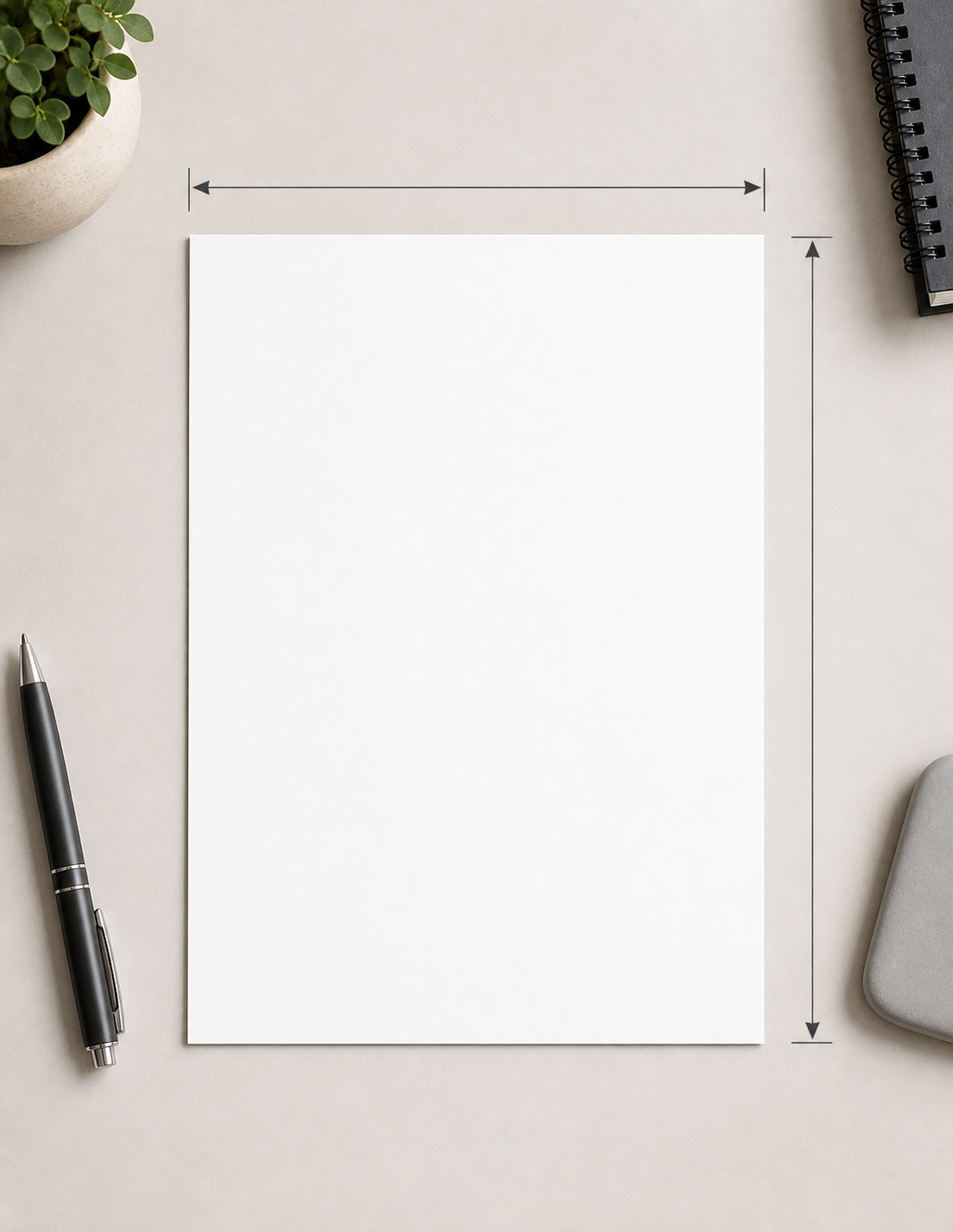
For office paper, dimensions are usually written as width × height in portrait orientation. Landscape printing uses the same sheet turned sideways; it does not require a different paper purchase. This distinction matters when requesters describe a document by layout rather than by sheet size.
These conversions are useful when a purchasing team compares domestic and international paper listings. They also help print coordinators confirm page setup in design files, PDF templates, and copier menus. For a more detailed format-by-format reference, review this guide to copy paper dimensions.
| Единица | US Letter size | Procurement note |
|---|---|---|
| Inches | 8.5 × 11 | Most common US office paper listing |
| Centimeters | 21.59 × 27.94 cm | Helpful for international document teams |
| Millimeters | 215.9 × 279.4 mm | May be rounded in product catalogs |
Dimensions alone do not describe the full product. A purchase request should still define paper weight, color, brightness or opacity requirements, surface finish, recycled-content preference if applicable, and packaging units. When quotes come from multiple suppliers, ask them to confirm the same sheet size and unit of measure before comparing cost, cartons, or delivery coordination details.
US Letter vs A4: Are They the Same?
US Letter and A4 are not the same size. Letter is 8.5 × 11 inches, while A4 is 210 × 297 mm, or about 8.27 × 11.69 inches. In practical terms, Letter is slightly wider and shorter; A4 is slightly narrower and taller. The difference looks small, but it can affect margins, tables, page breaks, header placement, and signature blocks.
A4 appears in many paper size discussions because it is part of the ISO 216 paper size system used in many countries. A multinational business may receive A4 PDFs, contracts, manuals, or letterhead even if its US offices normally buy Letter-size copy paper. If those documents are printed without checking the page setup, the printer may scale the file, trim the edge, or leave unexpected white space.
For everyday printing in the US, choose Letter size unless the document owner, client, regulator, or internal workflow requires A4. If your organization manages both US and international locations, treat Letter and A4 as separate specifications. Label storage locations clearly, separate purchase requests by region or department, and make substitution rules explicit. A supplier should not replace Letter with A4, or A4 with Letter, without approval because the operational impact can be greater than the small dimensional difference suggests.
Before placing a recurring order, test the paper size with the actual printer tray and document templates used by the team. This is a simple way to catch page-format problems before they become repeated purchasing errors.
Common Printer and Copy Paper Sizes Compared
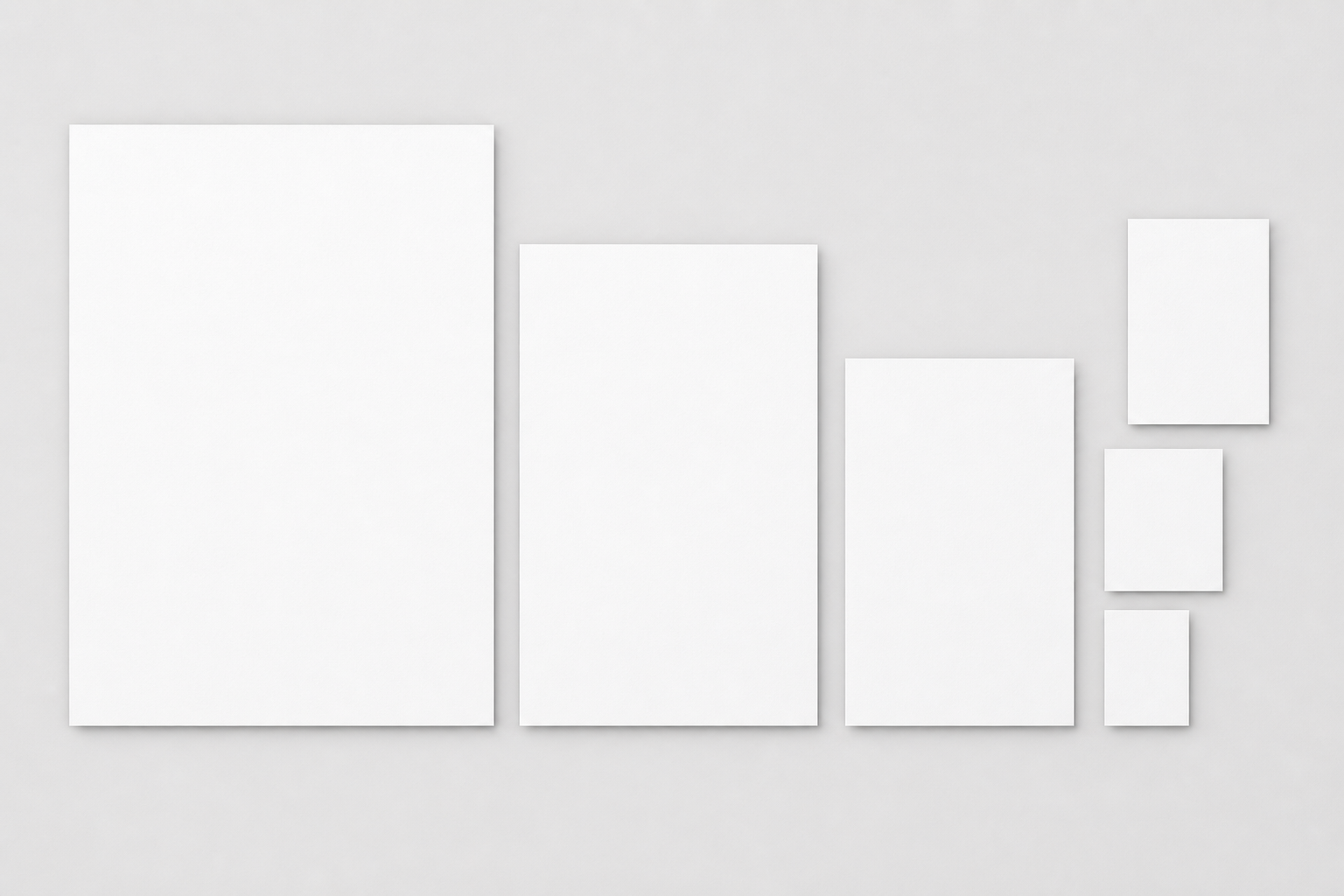
Most offices can operate with Letter-size paper as the default, but procurement teams often encounter additional sizes in printer menus, supplier catalogs, design requests, and department-specific workflows. The key is to connect each size to an actual document need instead of stocking every format by default.
| Paper size | Dimensions | Typical business use | Buying consideration |
|---|---|---|---|
| Письмо | 8.5 × 11 in | Routine documents, forms, reports | Default US stock item for shared printers |
| Legal | 8.5 × 14 in | Contracts and longer forms | Confirm tray support for the longer sheet |
| Tabloid | 11 × 17 in | Spreadsheets, proofs, layouts | Requires compatible trays or media handling |
| A4 | 210 × 297 mm | International business documents | Keep separate from Letter inventory |
| A5 | 148 × 210 mm | Booklets, inserts, compact handouts | Usually a specialty size in US offices |
These names describe sheet dimensions, not paper quality. A Letter sheet and a Legal sheet can still vary by weight, brightness, opacity, surface smoothness, color, packaging, and device suitability. When buyers evaluate suppliers, size should be one field in a broader specification rather than the only product requirement.
For low-risk purchasing, review actual print history or department requests before adding specialty sizes. Legal paper may be justified for document-heavy teams, while Tabloid may belong to marketing, facilities, or presentation workflows. If a size is used rarely, decide whether to stock it centrally, order it as needed, or standardize documents back to Letter where practical.
Buying Checklist: How to Choose the Right Paper Size for Office Printing and Purchasing
Choosing paper size for a business is partly a document decision and partly a procurement control. The goal is to keep daily printing simple while preventing unnecessary inventory, tray errors, and size substitutions. Use the checklist below before standardizing paper purchases across a department, site, or shared print fleet.
- Confirm the default office size. For most US offices, that will be Letter, 8.5 × 11 inches.
- Match sizes to document types, such as invoices, internal forms, contracts, booklets, training packets, or large-format layouts.
- Check printer, copier, and multifunction-device trays for supported sizes before ordering specialty paper.
- Define non-size specifications, including basis weight, color, brightness or opacity, finish, and device compatibility.
- Review packaging requirements, including ream labels, carton quantities, moisture protection, and storage space.
- Set rules for acceptable substitutions so A4, Legal, or Tabloid paper is not supplied when Letter was requested.
- Coordinate recurring order timing with actual usage, not assumptions based on headcount alone.
For teams building a broader purchasing standard, this printer paper buying guide for office procurement can help connect paper size decisions with quality, packaging, and workflow considerations.
Good buying practice also depends on communication. Ask suppliers to identify the exact product being quoted, the packaging unit, and any proposed alternative before the order is approved. Internally, make sure requesters use the same terminology as the purchasing team. This reduces rework when multiple departments buy paper for different printers, locations, or document types.
What Size Is Standard Printer Paper in Pixels?
Standard printer paper has physical dimensions, but pixel size depends on the resolution assigned to a digital file. The basic formula is simple: paper width in inches × DPI and paper height in inches × DPI. For US Letter paper, multiply 8.5 and 11 by the selected dots per inch.
| Resolution | Letter-size pixel dimensions | Typical planning use |
|---|---|---|
| 72 DPI | 612 × 792 px | Screen viewing or low-resolution drafts |
| 150 DPI | 1275 × 1650 px | Basic print drafts or internal layouts |
| 300 DPI | 2550 × 3300 px | Common reference point for sharper print files |
For office procurement, pixels should not change the paper size you buy. They matter for design files, forms, presentations, scanned documents, and print-ready artwork. If a document will be printed on standard office equipment, confirm the page is set to Letter before exporting to PDF. If an outside designer supplies artwork, ask for the intended print size and resolution, not only pixel dimensions.
For routine business documents, templates should use the physical page size first and the resolution second. Design teams can then prepare assets at an appropriate DPI for the output method, while procurement teams continue to order paper based on sheet size, paper grade, packaging, and device compatibility. This separation keeps design requirements from creating unnecessary paper purchasing confusion.
Quick Reference Table: Copy and Printer Paper Sizes
Use this table as a compact reference when setting printer defaults, creating purchase requisitions, or comparing paper options from suppliers. It summarizes the sizes most often encountered by US office buyers, but it should be paired with a complete product specification before ordering.
| Size name | Dimensions in inches | Dimensions in mm | Common office use |
|---|---|---|---|
| Письмо | 8.5 × 11 | 215.9 × 279.4 | Standard US copy and printer paper |
| Legal | 8.5 × 14 | 215.9 × 355.6 | Contracts and longer forms |
| Tabloid | 11 × 17 | 279.4 × 431.8 | Large layouts and spreadsheet prints |
| A4 | About 8.27 × 11.69 | 210 × 297 | International business documents |
| A5 | About 5.83 × 8.27 | 148 × 210 | Booklets, inserts, and smaller formats |
For US-based businesses, Letter is usually the practical baseline for everyday printing. Legal, Tabloid, A4, and A5 should be treated as defined secondary sizes, not casual substitutes. A clear procurement note can state which departments are authorized to order each size, how the paper should be stored, and who approves exceptions.
If your organization is standardizing paper specifications, planning recurring copy needs, or comparing copy and printer paper options, contact a selected supplier with the size list, expected ordering cadence, printer or copier requirements, and packaging preferences. Asking for confirmation before purchase is a simple way to reduce wrong-size paper, document reformatting, and avoidable inventory waste.
The main takeaway is straightforward: in the US, standard copy paper size means Letter, 8.5 × 11 inches. Everything beyond that should be specified by use case, equipment compatibility, and procurement controls.
Frequently Asked Questions
What size is standard copy paper for a US office?
For most US offices, standard copy paper is Letter size, which measures 8.5 x 11 inches. It is the default size used for everyday printing, copying, forms, invoices, and internal documents.
Is standard copy paper the same as A4?
No. In the US, standard copy paper usually means Letter size, while A4 is the common international office paper size. Businesses that work across regions should specify the exact size to avoid printing and purchasing errors.
What are standard copy paper dimensions in centimeters and millimeters?
US Letter copy paper measures 21.59 x 27.94 cm, or 215.9 x 279.4 mm. Some suppliers round the millimeter measurement to 216 x 279 mm in product listings.
What pixel dimensions should I use for Letter-size paper?
Pixel dimensions depend on the chosen DPI. For Letter paper, multiply 8.5 and 11 by the resolution; at 300 DPI, the result is 2550 x 3300 pixels.
When should a business order Legal or Tabloid paper instead of Letter?
Legal paper is useful for contracts and longer forms, while Tabloid paper is commonly used for larger layouts, spreadsheets, proofs, or presentation materials. They should be stocked only when compatible printers and regular document needs justify them.
Does paper weight change the standard copy paper size?
No. Paper weight affects thickness, feel, opacity, and printer performance, but it does not change sheet dimensions. A Letter-size sheet remains 8.5 x 11 inches regardless of its weight.
Supply information
Ordering standard-size paper in bulk?
GUANHE supplies US Letter and A4 in matching specifications, which keeps one spec sheet valid across both regions.
| Trial minimum | 5 reams |
| Volume orders | 20GP full container |
| Port of loading | Qingdao, China |
| Lead time | 14 days |
Specifications: A4 copy paper range · Бумага для лазерных принтеров