
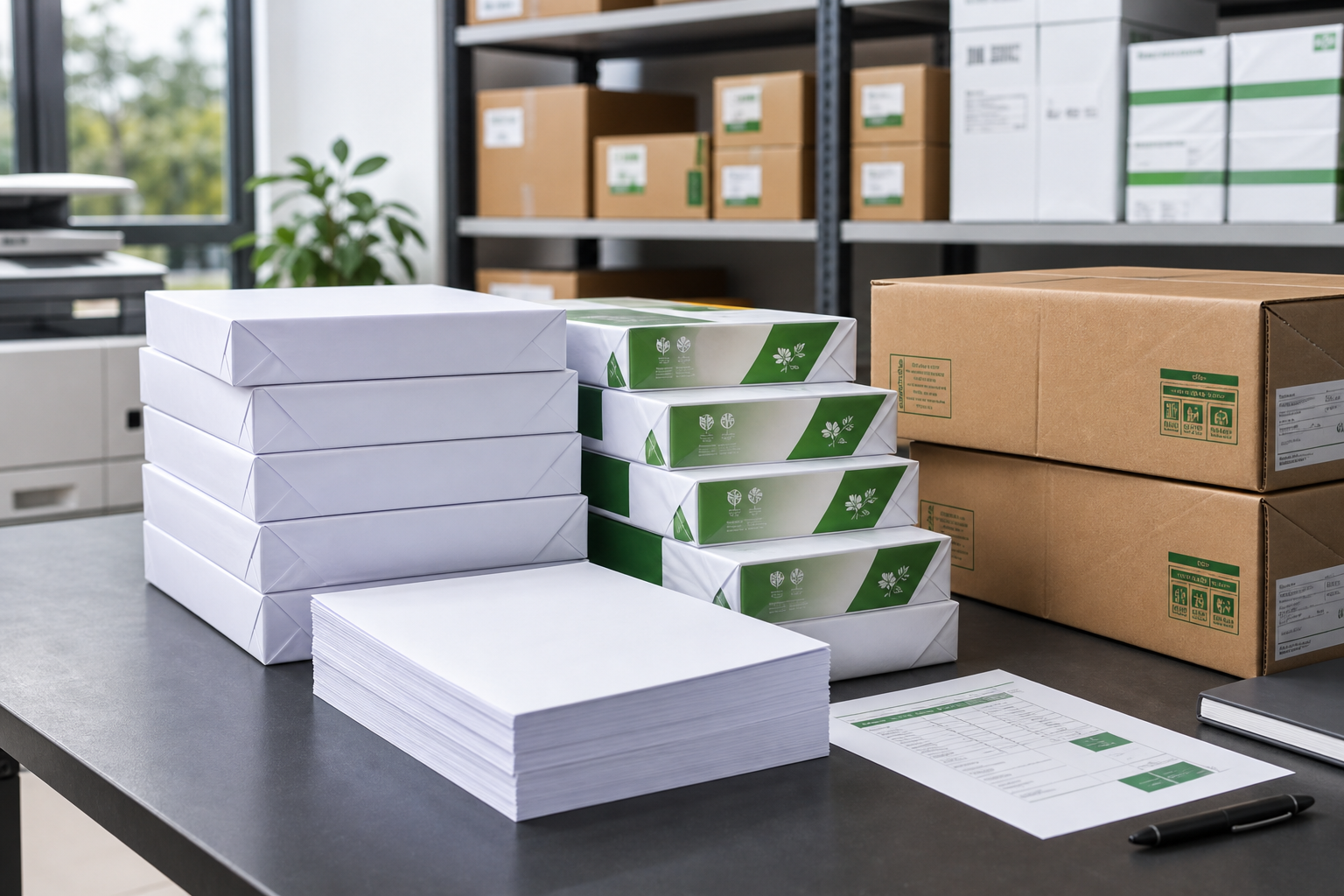
Shop Copy & Printer Paper Options
In purchasing terms, a request for a copy of paper usually means copy paper, printer paper, or multipurpose paper for everyday office output. Before comparing suppliers, separate the need into the formats your team actually buys: single reams for desks and small departments, cases for shared copy rooms, multipurpose sheets for mixed printers, and recycled or certified options for sustainability policies. This prevents buyers from treating all white paper as interchangeable when the order should be tied to use case, device type, storage conditions, and replenishment frequency.
Formats to compare first
- 500-sheet reams: practical for occasional users, satellite offices, training rooms, and controlled departmental allocation.
- 5,000-sheet cases: typically used for stock-up purchasing when teams consume paper regularly and have suitable storage space.
- Multipurpose printer paper: useful when the same paper must run through desktop printers, shared copiers, and general office equipment.
- Recycled and FSC-certified choices: worth evaluating when purchasing policies include environmental sourcing requirements.
For B2B purchasing, the best starting point is not only the lowest unit price; it is a repeatable specification. Confirm sheet size, weight, brightness, pack count, carton labeling, and how the paper will be stored after receipt. If multiple departments order independently, consolidate requirements into a short paper standard so finance, facilities, and office managers evaluate the same product category. That reduces off-spec purchases, incompatible paper, unplanned substitutions, and internal distribution delays.
Choose the Right Copy of Paper for Your Printing Needs
Paper selection should follow the documents your organization produces most often. Everyday black-and-white text, internal memos, invoices, pick lists, and drafts usually require dependable feeding and readable contrast more than premium presentation. High-volume copier rooms need paper that aligns with equipment guidance, resists common handling issues, and arrives in packaging that protects reams until they are opened. For professional documents, buyers may compare heavier weights, higher brightness, and opacity to reduce show-through and improve the look of text-heavy pages.

For a broader framework, review how to choose the right copy paper for office printing before standardizing a recurring SKU. The goal is to match paper grade to actual output rather than overbuying premium paper for drafts or under-specifying paper for external documents.
Match paper to common office workflows
- Copiers and shared printers: prioritize device compatibility, consistent sizing, and reliable feed performance.
- Forms, faxes, and quick copies: select an everyday grade that supports speed and volume without unnecessary finishing requirements.
- Class handouts and training packets: compare case quantities, storage needs, and predictable replenishment schedules.
- Client-facing documents: evaluate brightness, weight, opacity, and whether color printing will be used.
Document these use cases in the purchase request. Suppliers can respond more accurately when they know whether the order supports desktop printing, copy room replenishment, mailroom forms, or mixed office use.
Compare Key Copy Paper Specifications
Specifications are the fastest way to compare copy paper quotes without relying on brand preference alone. Start with the paper size required by your devices and documents. Letter 8.5 x 11 is the standard choice for many US office documents, but some teams also use legal, ledger, or specialty sizes. If size is unclear, confirm tray settings, document templates, and mailing requirements before ordering; a low unit price is not useful if the sheets do not fit the workflow. For a dedicated reference, see this guide to copy paper dimensions.
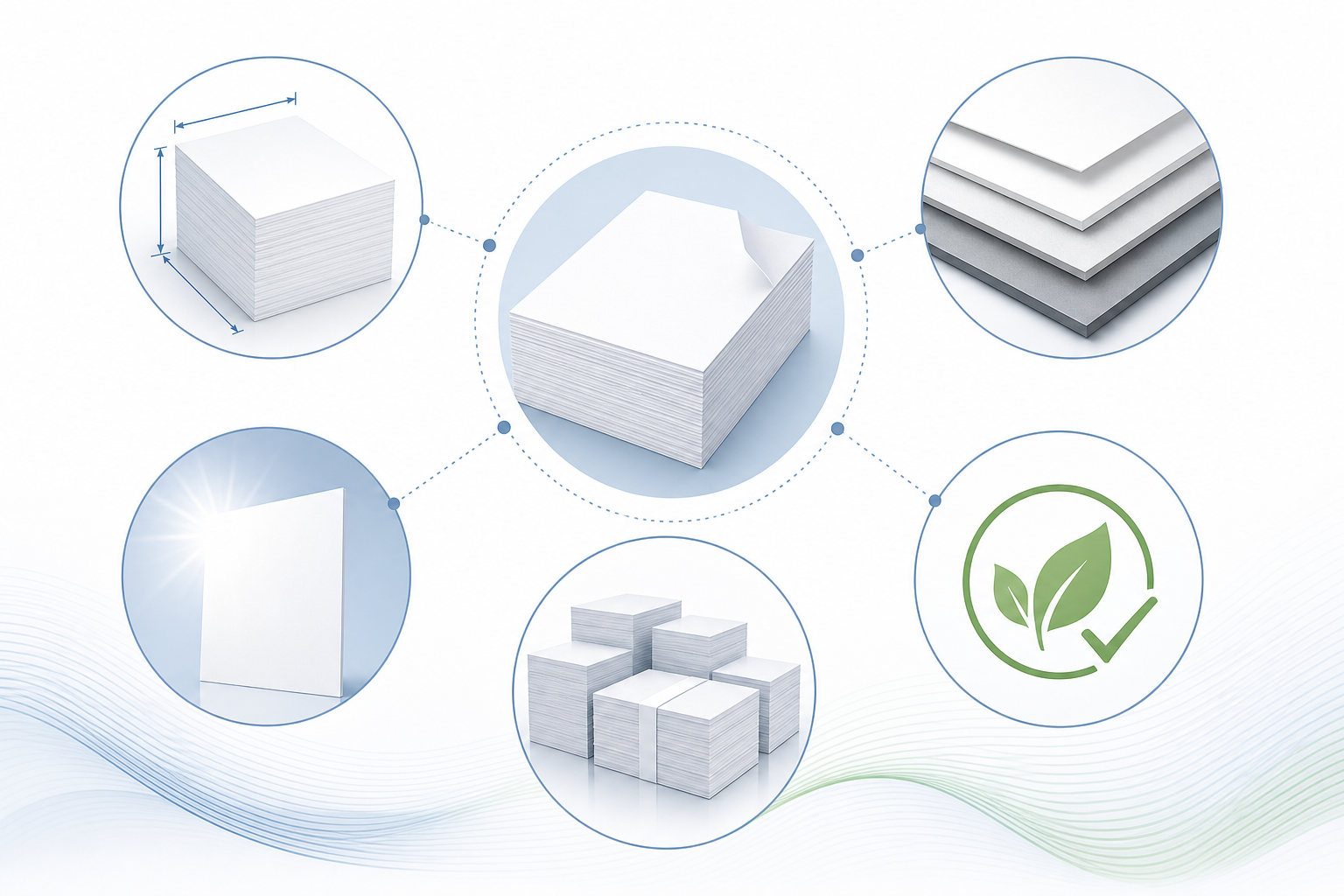
| Технические характеристики | Procurement impact |
|---|---|
| Размер | Determines printer tray fit, document format, and storage compatibility. |
| Вес | 20 lb paper is commonly evaluated for everyday office use; heavier options may suit presentations or duplex printing. |
| Яркость | Affects perceived whiteness and the contrast of text, charts, and basic images. |
| Sheet count | Changes how reams, cases, and bulk orders compare on a cost-per-sheet basis. |
| Certification | Supports procurement policies that require FSC, recycled content, or other sourcing criteria. |
Also review surface quality, opacity, moisture exposure, and carton integrity when samples or product sheets are available. A clear specification helps prevent substitutions that look similar online but perform differently in office equipment. Ask suppliers to identify equivalent items by specification rather than by vague category labels. For recurring orders, keep approved alternatives on file so urgent replenishment does not lead to unmanaged switching.
Buy Copy Paper by Quantity: Ream, Case or Bulk Supply
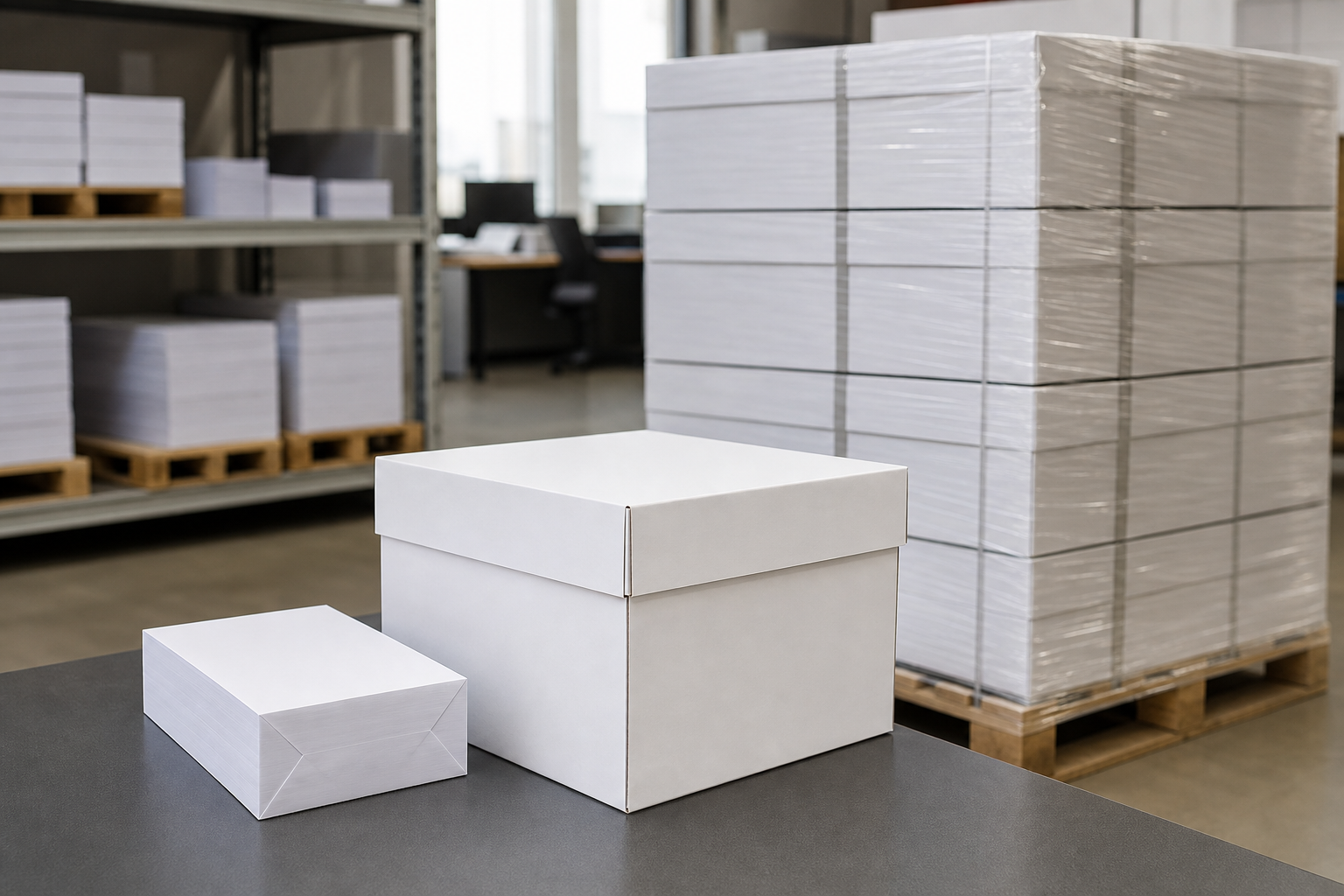
Quantity is where office paper purchasing often shifts from a simple supply order to a procurement decision. A 500-sheet ream can be suitable for occasional printing, small teams, controlled departmental use, or testing a new specification. A 10-ream case, commonly used as a 5,000-sheet stock-up format, may make more sense when departments print consistently and have space to store cartons safely. Larger bulk orders should be tied to actual consumption, receiving capacity, and how quickly paper will be issued to users.
Before comparing offers, use a consistent calculation. Divide the product cost by the sheet count, then review any freight, handling, pickup, minimum order, or storage factors that affect the landed cost. A lower product price can become less attractive if the order creates extra receiving work, unmanaged substitutions, or excess inventory. For more detail on quantity planning, see this copy paper buying guide for office procurement.
| Purchase format | Best-fit use |
|---|---|
| Single ream | Low-volume users, trials, remote offices, or backup stock. |
| Case | Shared copy rooms, regular replenishment, and easier internal allocation. |
| Bulk supply | Multi-location planning, centralized purchasing, or high-volume print environments. |
Procurement teams should also define reorder points. Track monthly consumption, approved substitute items, and who can authorize emergency purchases. This helps avoid running out of paper while also reducing the risk of overbuying a product that may be damaged by poor storage.
Budget, Recycled and FSC-Certified Copy Paper Choices
Budget copy paper can be the right choice for drafts, internal packets, routine black-and-white documents, and high-volume environments where presentation requirements are modest. The key is to define acceptable quality rather than buying only by the lowest visible price. Compare sheet weight, brightness, opacity, smoothness if specified, and packaging condition. For office equipment, a paper that feeds consistently and remains clean in storage may reduce operational frustration even when the specification appears basic.
Recycled printer paper and FSC-certified office paper serve different procurement needs. Recycled content may support waste-reduction goals, while FSC certification can support sourcing policies tied to forest management. Buyers should verify the claim on the product listing, carton, or supplier documentation instead of assuming every environmentally positioned product meets the same requirement. If your organization has a formal sustainability policy, include the required certification language or recycled-content threshold in the request.
When reused paper may be suitable
Reused paper can be practical for scratch work, internal notes, or non-critical draft printing when sheets are clean, flat, dry, and free of staples, adhesive, folds, and heavy toner coverage. It is usually not the right default for customer documents, automated feeders, or workflows where jams would slow down staff. For B2B buyers, the low-cost option should still protect productivity, device compatibility, and document appearance. Treat savings, sustainability, and operating risk as connected decision factors, not separate conversations.
Shipping, Pickup and Supplier Availability
Searches for copy paper near me often come from buyers who need paper quickly, but local availability should still be evaluated with the same discipline as an online order. Confirm the exact specification, quantity, pack format, and pickup or receiving process before approving a purchase. If a store, warehouse, or supplier offers alternatives, check whether the substitute matches the approved size, weight, brightness, certification, and case configuration rather than accepting a similar label.
Coordinate logistics before the order is placed
- Delivery location: confirm office address, floor, receiving hours, security requirements, and any dock or elevator constraints.
- Упаковка: ask how reams and cartons will be protected during handling, especially for multi-case orders.
- Доступность: separate current stock from backordered quantities, substitutions, or split shipments when reviewing supplier responses.
- Recurring supply: plan reorder timing around actual consumption rather than waiting for the last case to be opened.
For centralized procurement, supplier communication matters as much as the product listing. Buyers should request written confirmation of item numbers, pack counts, delivery or pickup expectations, and substitution rules. This reduces disputes when multiple people are involved in ordering, receiving, stocking, and approving invoices. If your organization has several locations, standardize the approved paper specification while allowing each site to coordinate realistic receiving windows and storage space.

B2B Procurement Checklist Before You Order
Use a final checklist before issuing a purchase order, approving a card purchase, or requesting supplier quotes. Copy paper is a routine item, but recurring orders can create avoidable risk when the specification is vague. A clear checklist helps procurement, facilities, finance, and department managers compare suppliers on the same basis.
Buying checklist
- Monthly print volume: estimate usage by department, device group, or location so quantities reflect real demand.
- Device compatibility: confirm copier and printer guidance for size, weight, and approved media types.
- Paper quality: compare brightness, opacity, smoothness if listed, carton condition, and consistency between repeat orders.
- Certifications: record any recycled-content, FSC, or internal sustainability requirements in the purchase request.
- Packaging and storage: verify whether single reams, cases, or larger quantities fit your storage area and handling process.
- Supplier evaluation: review response quality, substitution transparency, order documentation, invoice clarity, and communication during stock changes.
- Specialty needs: identify multipart forms, colored paper, letterhead, or other non-standard items separately from everyday copy paper.
If your organization is standardizing recurring copy needs, prepare a one-page paper specification that lists approved sizes, weights, brightness expectations, sustainability requirements, packaging preferences, and reorder points. Then compare standard, recycled, and certified copy or printer paper options side by side and contact a supplier with expected monthly usage, delivery location, and any constraints that could affect fulfillment. A structured request makes quotes easier to compare and reduces the chance of ordering paper that works for one department but not another.
Frequently Asked Questions
Where can I buy copy paper near me?
Check local supplier inventory, office supply stores, warehouse pickup options, and delivery availability before ordering. Confirm the exact paper size, weight, pack count, and certification so a nearby substitute does not become an off-spec purchase.
How much does 500 sheets of copy paper cost?
The price of a 500-sheet ream varies by brand, paper weight, brightness, recycled content, certification, promotion, and shipping cost. For procurement, compare the current ream price with the cost per sheet in a full case.
What is the cheapest way to buy copy paper?
Buying by the case is often more cost-efficient than purchasing single reams, but the best value depends on freight, pickup options, storage space, and actual monthly usage. Compare landed cost per sheet rather than shelf price alone.
What is the difference between copy paper and printer paper?
Copy paper usually refers to everyday sheets used for copiers, drafts, memos, forms, and black-and-white documents. Printer paper is a broader term that may include multipurpose, brighter, heavier, photo, or specialty papers depending on print quality needs.
Is 20 lb copy paper good for office printing?
Yes, 20 lb copy paper is commonly used for everyday office printing, copying, drafts, invoices, handouts, and internal documents. For client-facing documents, duplex printing, or heavier ink coverage, buyers may want to compare heavier or brighter options.
Should I buy a 500-sheet ream or a 5,000-sheet case?
A 500-sheet ream is practical for occasional use, remote offices, or testing a new paper specification. A 5,000-sheet case is usually better for shared copy rooms, high-volume teams, and recurring office supply planning.
What does brightness mean for copy paper?
Brightness describes how white and reflective the sheet appears, which affects the contrast of text, charts, and basic images. Higher brightness can improve visual clarity, while standard brightness may be sufficient for routine internal printing.