

Shop 20 lb Copy Paper for Everyday Office Printing
20 lb copy paper is commonly purchased as multipurpose white office paper for routine printing, copying, forms, memos and internal documents. For procurement teams, the goal is not only to find a low unit price; it is to standardize a paper specification that works reliably across printers, copiers and departments.
What buyers usually expect from 20 lb copy paper
Most buyers looking at this category compare 8.5 x 11 letter-size sheets, 92 bright options, 500-sheet reams and larger cases or cartons. If your organization uses mixed devices, start by confirming paper size, weight, brightness, finish, sheet count and the stated printer compatibility on each product listing.
For broader product discovery, it can help to buy copy and printer paper for office use using a consistent comparison framework rather than treating every listing as interchangeable.
Quick selection factors for office procurement
- Identify daily print volume and split demand by department or location.
- Confirm paper works with primary copiers, laser printers, inkjet printers and fax devices before large orders.
- Check shelf space, receiving process and who owns reorder approval.
- Compare carton quantity, not only ream price, when reviewing suppliers.
For B2B buyers, document accepted substitutes before ordering. A brand change, different brightness level or different carton quantity may be acceptable for internal drafts but not for customer-facing documents or standardized forms. Clear specifications reduce purchase-order errors and make repeat buying easier.
Choose the Right Pack Size: Ream, Case or Bulk Carton
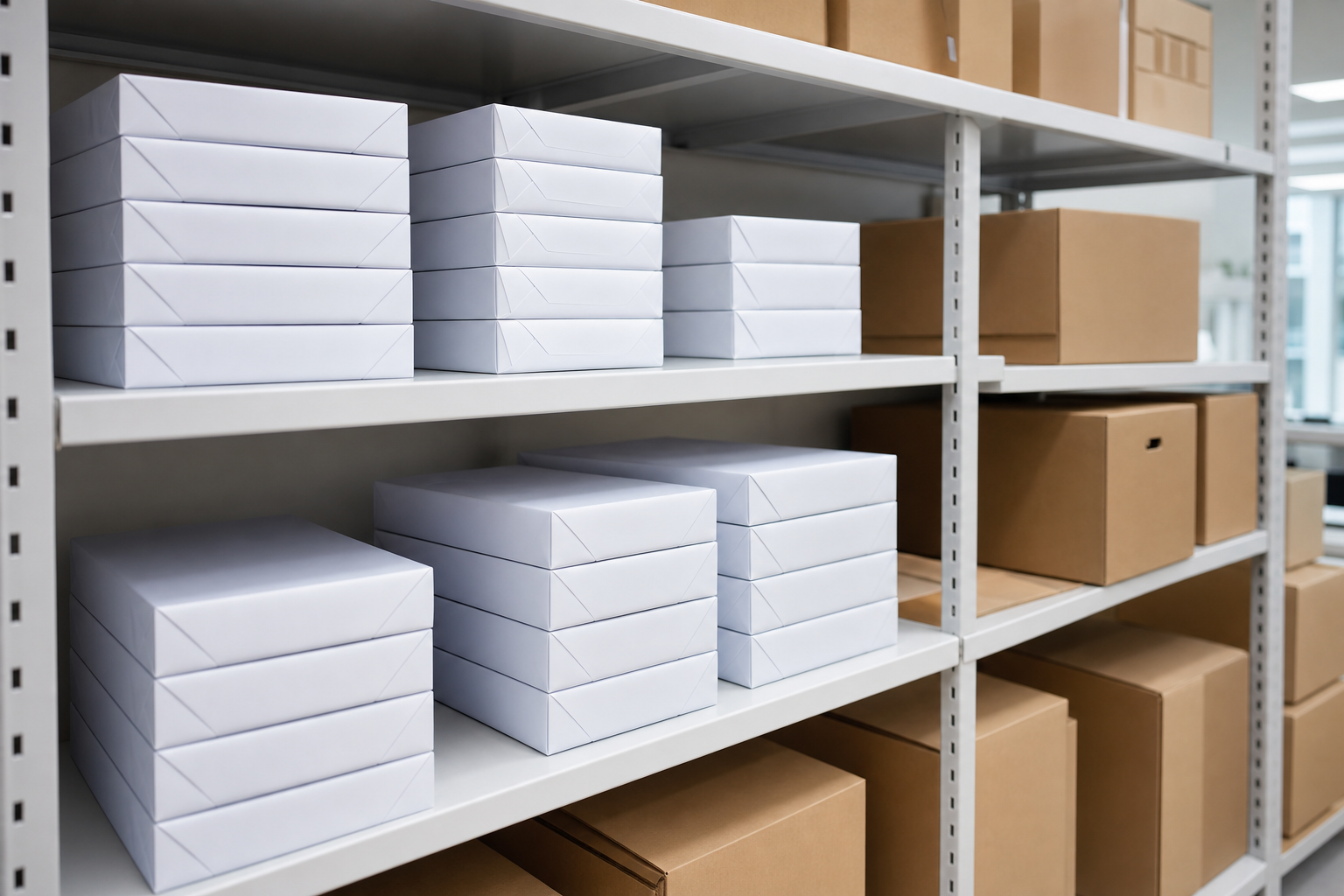
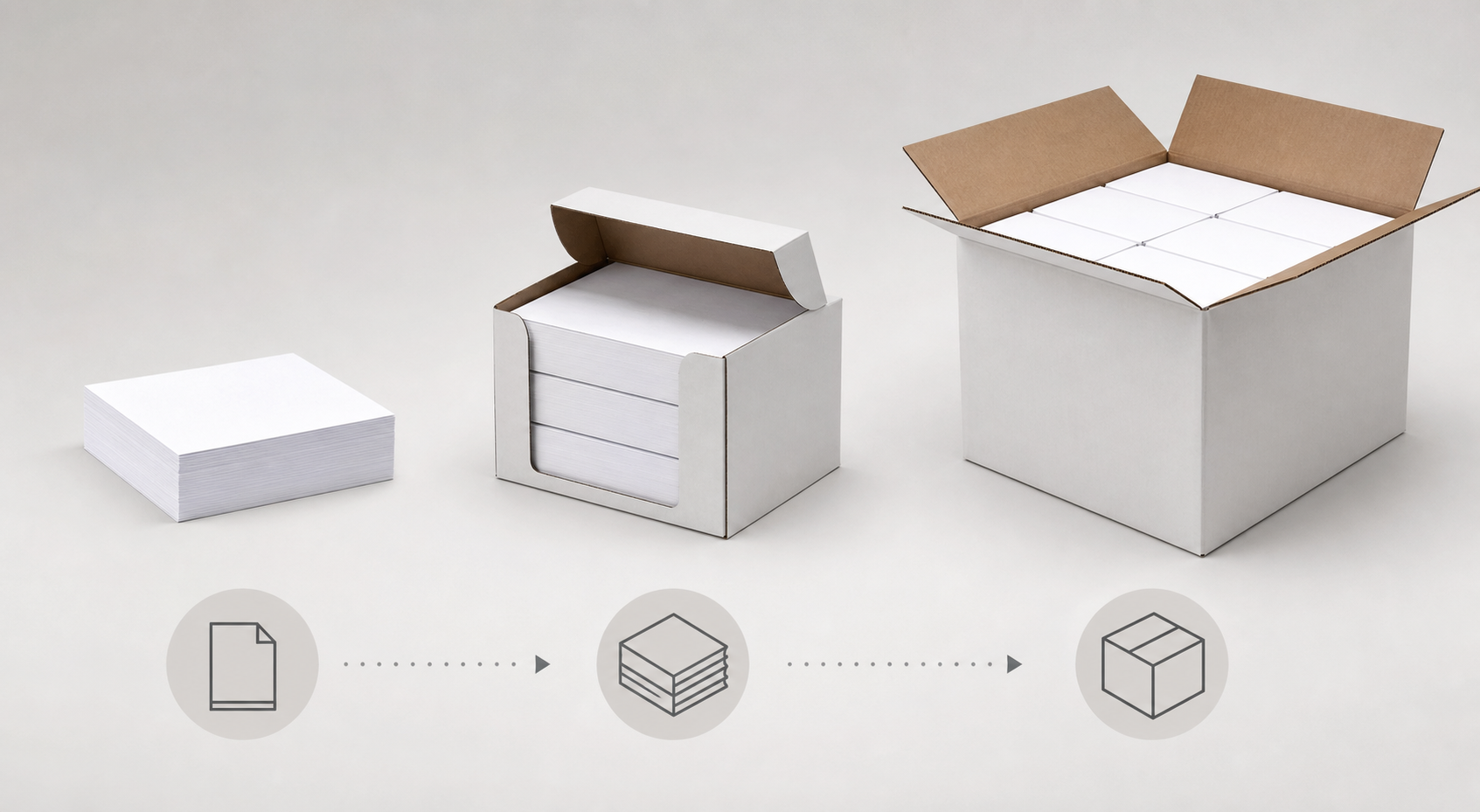
Pack size affects budget control, storage, receiving work and reorder frequency. A single ream may solve an immediate need, while a multi-ream case or bulk carton may better support a shared supply room. Procurement teams should compare the total sheet count and unit of measure before approving a purchase order.
Single 500-sheet reams for light use
Many office paper listings use 500 sheets as the standard ream quantity. A single ream of copy paper is useful for small teams, trial orders, low-volume printers or departments that need a controlled supply. It is also a practical way to test paper behavior before standardizing a larger purchase.
| Format | Best fit | What to confirm |
|---|---|---|
| Single ream | Light or occasional printing | Sheet count, size and device compatibility |
| Multi-ream case | Regular office use | Reams per case, carton strength and storage space |
| Bulk carton | Supply rooms and high-volume users | Receiving access, handling method and reorder timing |
Multi-ream cases and bulk buying
For recurring office printing, cases can reduce the number of transactions and make replenishment easier to plan. However, bigger orders are not automatically better. Check whether the carton size fits shelves, whether staff can handle the weight safely and whether the paper will be used before packaging is damaged or exposed to poor storage conditions.
For multi-site buyers, align pack size with actual usage by location. Ordering the same carton quantity for every branch can create shortages in high-volume locations and excess inventory in smaller offices.
Key Specs to Check Before Buying 20 lb Copy Paper
Specifications are where many office paper purchasing errors happen. Two listings may both say 20 lb copy paper but differ in brightness, sheet size, packaging, carton quantity or compatibility notes. Before comparing suppliers, create a short specification sheet that purchasing, facilities and end users can all understand.
Core specifications to compare
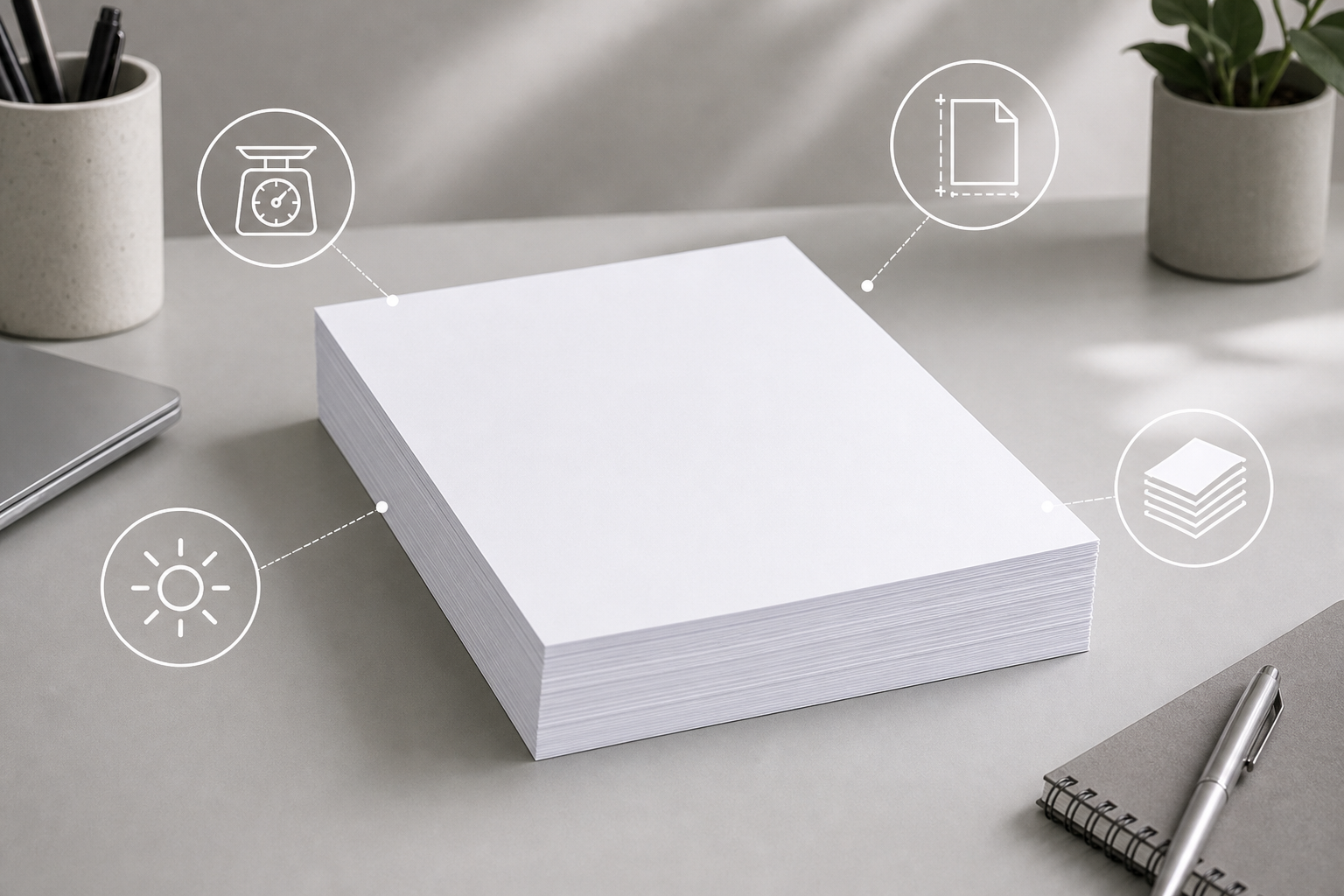
- Paper weight: 20 lb is a common everyday office paper weight for routine printing and copying. If comparing international or specialty paper, ask for the equivalent basis or GSM information.
- Яркость: 92 bright white paper appears frequently in everyday copy paper listings. Confirm whether brightness is important for your documents or whether a standard white multipurpose sheet is sufficient.
- Size: Letter size 8.5 x 11 is common for US office use, but some departments may also need legal, ledger or other formats.
- Sheet count: Confirm whether the offer is one ream, a multi-ream case or a larger carton before comparing value.
- Compatibility: Check the product listing or supplier data for intended use with copiers, laser printers, inkjet printers or fax machines.
Teams that need deeper copier-specific purchasing guidance can review this copier paper buying guide before finalizing internal standards.
Packaging and condition matter
Paper quality is affected by handling as well as specifications. Ask how reams are wrapped, how cartons are labeled and how substitutions are communicated. Damaged packaging, unclear product codes or inconsistent carton counts can create receiving disputes and user complaints even when the listed paper weight is correct.
Best Uses for 20 lb Copy Paper
20 lb copy paper is generally selected for everyday office output rather than premium presentation materials. It is a practical choice when documents need to be readable, affordable to produce and compatible with common office equipment. Procurement teams should match the paper to the document type instead of using one specification for every print job.
Everyday documents, forms, memos and reports
Typical uses include internal reports, meeting handouts, invoices, training packets, draft documents, administrative forms, faxes and general correspondence. In schools, offices, healthcare administration and service businesses, this type of paper often supports repetitive document workflows where consistency is more important than a premium feel.
- Use for high-frequency black-and-white or basic color office documents.
- Review opacity if documents are printed on both sides.
- Test heavier toner coverage if pages include dense graphics or large color blocks.
Printer and copier environments
For mixed device fleets, confirm that the paper is suitable for the equipment actually in use. A product may be marketed as multipurpose, but procurement should still check the listing, printer manual or supplier information for compatibility with laser printers, inkjet printers, copiers and fax machines.

Also identify when 20 lb paper is not the right fit. Customer proposals, certificates, signage, color-heavy marketing pieces or documents that require a more substantial hand feel may need a different paper weight, finish or brightness. Separating routine copy jobs from higher-value print needs helps control cost without lowering document quality where it matters.
Compare Brands, Value Options and Quality Claims
Business buyers often see brand-name 20 lb copy paper, retailer-brand paper and value alternatives in the same search results. Brand examples in the broader market may include well-known office paper names such as Hammermill or HP, depending on the retailer or supplier. The best choice should be based on fit, consistency and total value, not brand recognition alone.
What to verify when comparing options
| Comparison point | Procurement guidance |
|---|---|
| Brand-name paper | Check the exact product code, size, weight, brightness and carton quantity. Do not assume all products from one brand have the same specs. |
| Value or private-label paper | Compare the same specifications against the brand-name option and consider whether substitutions are acceptable for your use case. |
| Quality claims | Review any jam-free, brightness or performance language in the product documentation. Treat claims as comparison inputs, not guarantees across every device. |
| Supplier consistency | Ask how the supplier communicates product changes, backorders, substitutions and carton-count differences. |
Quality indicators beyond the label
Paper problems often show up as feeding issues, excessive curl, dust, show-through, inconsistent shade or damaged ream wrappers. A small test order can help confirm whether a specific product works in your print environment before rolling it out across offices.
For recurring procurement, create an approved list that includes primary and backup products. Include acceptable brightness range, sheet size, pack format and any restrictions on substitutions. This gives purchasing flexibility while protecting end users from unexpected changes in paper feel, color or machine performance.
Calculate Value: Price per Sheet, Delivery and Reordering
The lowest displayed price is not always the lowest procurement cost. For 20 lb copy paper, value depends on sheet count, carton quantity, shipping or pickup requirements, receiving effort, storage space and reorder timing. A procurement comparison should normalize every offer to a price-per-sheet or price-per-ream basis before decisions are made.
Build a comparable cost view
| Cost factor | How to evaluate it |
|---|---|
| Product price | Compare the same paper size, weight, brightness and sheet count. |
| Freight or delivery | Include delivery charges or internal pickup time when calculating total cost. |
| Availability | Confirm whether the supplier can meet the required order timing before committing. |
| Storage | Check whether larger cartons can be stored flat, dry and accessible. |
| Reorder process | Decide who tracks usage, approves replenishment and updates specifications. |
A simple formula is useful: total order cost divided by total sheets. Use the same method across single reams, multi-ream cases and bulk cartons. If freight or handling varies by order size, include those costs in the comparison rather than judging by product price alone.
Plan recurring office supply needs
Set reorder points based on actual consumption, not guesswork. Review monthly usage, seasonal spikes, department-level demand and delivery lead time confirmed by the supplier. Keep enough buffer to avoid emergency orders, but avoid overbuying paper that may sit in poor storage conditions.
If a supplier offers recurring order options, evaluate them against your approval workflow and space constraints. Automated replenishment can be useful only when specifications, quantities and delivery locations are clearly controlled.
B2B Buying Checklist Before You Order
Before placing an order for 20 lb copy paper, confirm that the purchasing decision reflects how the paper will actually be used. A short checklist helps reduce wrong-item orders, carton-count confusion, supplier substitutions and storage issues after delivery.
Procurement checklist
- Confirm the required paper weight: 20 lb for routine office printing and copying.
- Verify sheet size, especially letter size 8.5 x 11 or any department-specific formats.
- Check brightness and whiteness expectations for internal documents versus customer-facing pages.
- Confirm total sheet count per ream, case or carton.
- Review compatibility notes for copiers, laser printers, inkjet printers and fax devices.
- Inspect packaging expectations, including wrapped reams, labeled cartons and damage handling.
- Compare price per sheet after freight, pickup effort or delivery charges are considered.
- Document approved substitutes before the order is placed.
- Align delivery timing with receiving hours, storage capacity and reorder points.
- Assign ownership for monitoring usage and approving repeat orders.
If your team is standardizing recurring copy paper needs, prepare a simple specification sheet that lists paper weight, size, brightness, sheet count, acceptable pack formats and ship-to requirements. Share that information when comparing copy and printer paper options or contacting a supplier, so quotes and product recommendations can be evaluated on the same basis.
The right 20 lb copy paper order should be easy to receive, easy to store and consistent enough for everyday users. By standardizing specifications and reviewing total value instead of headline price alone, procurement teams can reduce ordering risk and keep routine printing workflows supplied.
Frequently Asked Questions
What does 20 lb mean on copy paper?
In the U.S., 20 lb usually refers to the bond paper basis weight, commonly used for everyday office copy and printer paper. It is typically a practical, economical weight for routine documents rather than premium presentations.
How many sheets are in a 10-ream case of 20 lb copy paper?
A standard ream usually contains 500 sheets, so a 10-ream case commonly contains 5,000 sheets. Always confirm the listing, because some suppliers sell 3-ream, 5-ream, 8-ream, or other carton configurations.
Is 20 lb copy paper good for laser and inkjet printers?
Most 20 lb multipurpose copy paper is marketed for standard office printers and copiers, but compatibility should be checked on the specific product listing, especially for high-speed copiers, duplex printing, or color-heavy jobs.
What is the difference between 20 lb and 24 lb copy paper?
20 lb paper is often chosen for economical everyday printing. 24 lb paper is usually slightly heavier and may feel more substantial, making it a better option for external documents, duplex printing, or materials where opacity matters.
How do I calculate the price per sheet for 20 lb copy paper?
Divide the total order cost by the total number of sheets. For accurate comparison, include delivery fees, pickup time, handling costs, and the actual sheet count per ream, case, or carton.
Where can I buy 20 lb copy paper nearby?
Use supplier or retailer filters for local inventory, pickup availability, and delivery windows. For business orders, also confirm carton quantity, substitution policy, and whether recurring delivery or auto-restock is available.