

Quick Buying Summary: Copy Paper 10 Ream Case
A copy paper 10 ream case is a practical purchasing unit for offices, schools, facilities teams, and shared workspaces that need predictable paper supply without managing many single-ream orders. In most standard office listings, a case contains 10 reams, and each ream contains 500 sheets, giving buyers 5,000 sheets per case. Always verify the product listing because specialty sizes, punched paper, colored paper, or nonstandard packaging can vary.
What buyers usually compare first
- Sheet count: confirm 10 reams and 5,000 total sheets before issuing a purchase order.
- Size: 8.5 x 11 letter-size paper is the common everyday office choice in the US.
- Weight: 20 lb paper is widely used for routine copying, forms, reports, and internal documents.
- Яркость: 92 brightness is common for white office copy paper, but higher or lower ratings may be available.
- Fulfillment: compare delivery, pickup, local availability, minimum order quantities, and receiving requirements.
For procurement teams, the best case is not automatically the cheapest case. A low case price can become less attractive if the paper creates printer jams, arrives in damaged cartons, lacks repeatable specifications, or requires frequent substitutions. Before buying, standardize the acceptable paper size, weight, brightness, color, and case quantity so purchasing, facilities, and end users evaluate the same product definition.
What Comes in a 10-Ream Case of Copy Paper?
The standard expectation for a copy paper 10 ream case is straightforward: 500 sheets per ream multiplied by 10 reams equals 5,000 sheets per case. This quantity is useful for business buyers because it supports clearer consumption planning, easier receiving counts, and more consistent reorder points than buying individual reams as needed. If your team is defining office paper units for purchasing records, this guide to a ream of copy paper is a helpful reference for the basic 500-sheet format.
Case, carton, and ream terminology
Suppliers and retailers may use the words case and carton in similar ways, especially for 10-ream office paper packaging. A ream usually refers to one wrapped 500-sheet unit. A case or carton usually refers to the outer box containing multiple reams. For purchase orders, avoid vague descriptions such as one box of paper. Instead, write the full specification, including sheet size, paper weight, brightness, color, sheets per ream, and reams per case.
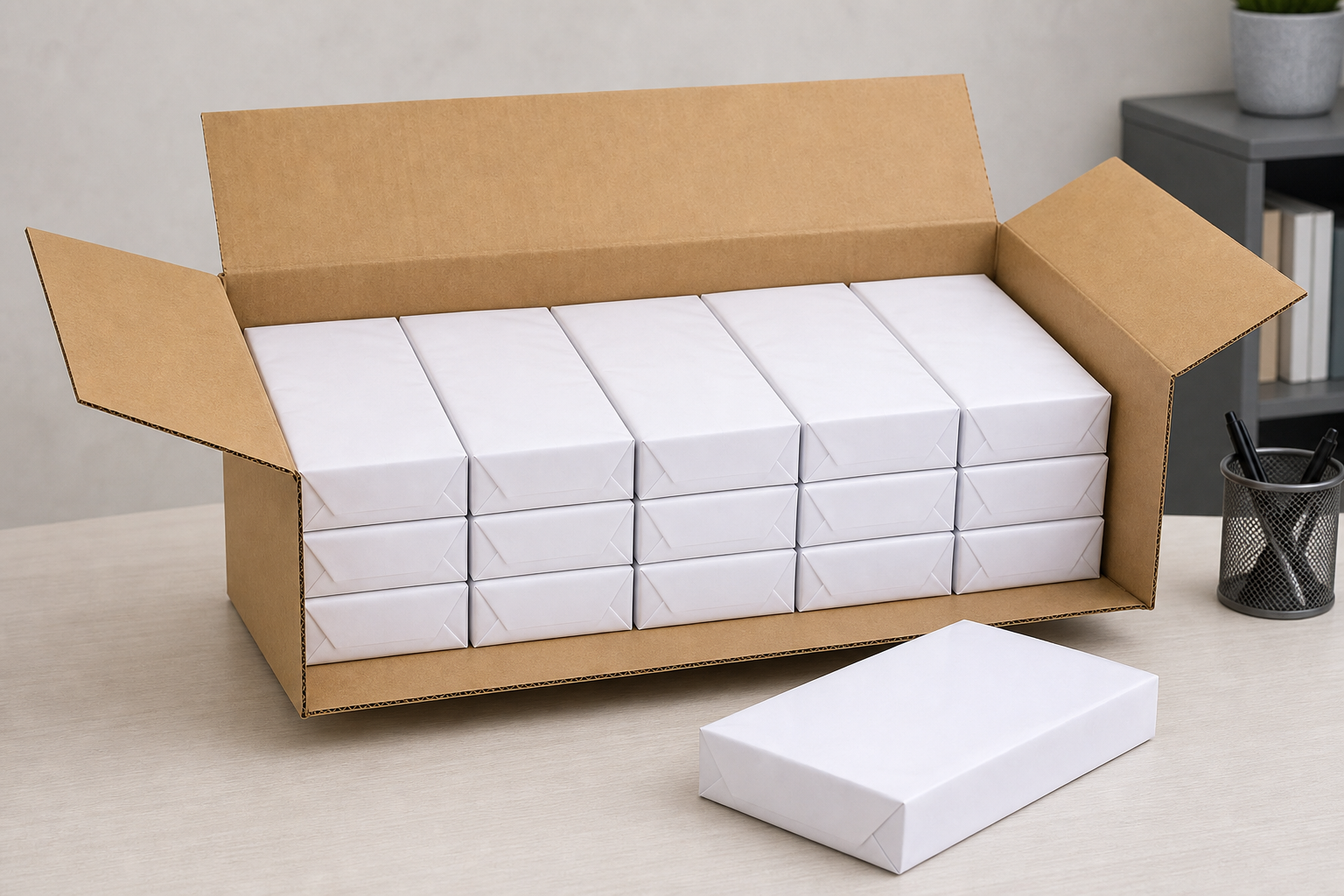
Most office buyers looking for a 10-ream case are comparing standard letter-size paper, but legal-size and other formats may also be sold by the case. The difference matters for printer trays, filing systems, document templates, and storage space. If a department uses multiple sizes, separate the SKUs and reorder points so buyers do not accidentally substitute legal, letter, or A4 paper during replenishment.
Core Specifications to Check Before Purchase
Paper specifications affect print quality, printer performance, user satisfaction, and repeat purchasing consistency. Before selecting a copy paper 10 ream case, procurement teams should confirm the specification set that fits the organization’s everyday documents. For broader compatibility considerations, this copier paper buying guide can help buyers compare office paper requirements before standardizing a case product.
| Технические характеристики | What to check | Procurement impact |
|---|---|---|
| Sheet size | 8.5 x 11 letter, legal, or another format | Prevents tray, filing, and document-format errors |
| Вес бумаги | Common everyday options such as 20 lb | Balances routine printing needs with handling expectations |
| Яркость | Often shown as a numeric brightness rating | Affects perceived whiteness and readability |
| Совместимость | Copiers, laser printers, inkjet devices, duplex printing | Reduces paper jams, curl, and unsuitable use |
Paper color should also be specified, especially when white paper is required for forms, invoices, training materials, or external documents. For two-sided printing, confirm that the paper is appropriate for duplex use and that it performs acceptably in the devices your team relies on most. Packaging is another practical concern. Ream wrappers and outer cartons should protect paper from moisture, dust, crushing, and edge damage during storage and handling. If multiple locations order independently, document the approved specification in purchasing notes so repeat orders do not drift between similar but non-equivalent products.
Compare Price, Wholesale Value, and Total Landed Cost
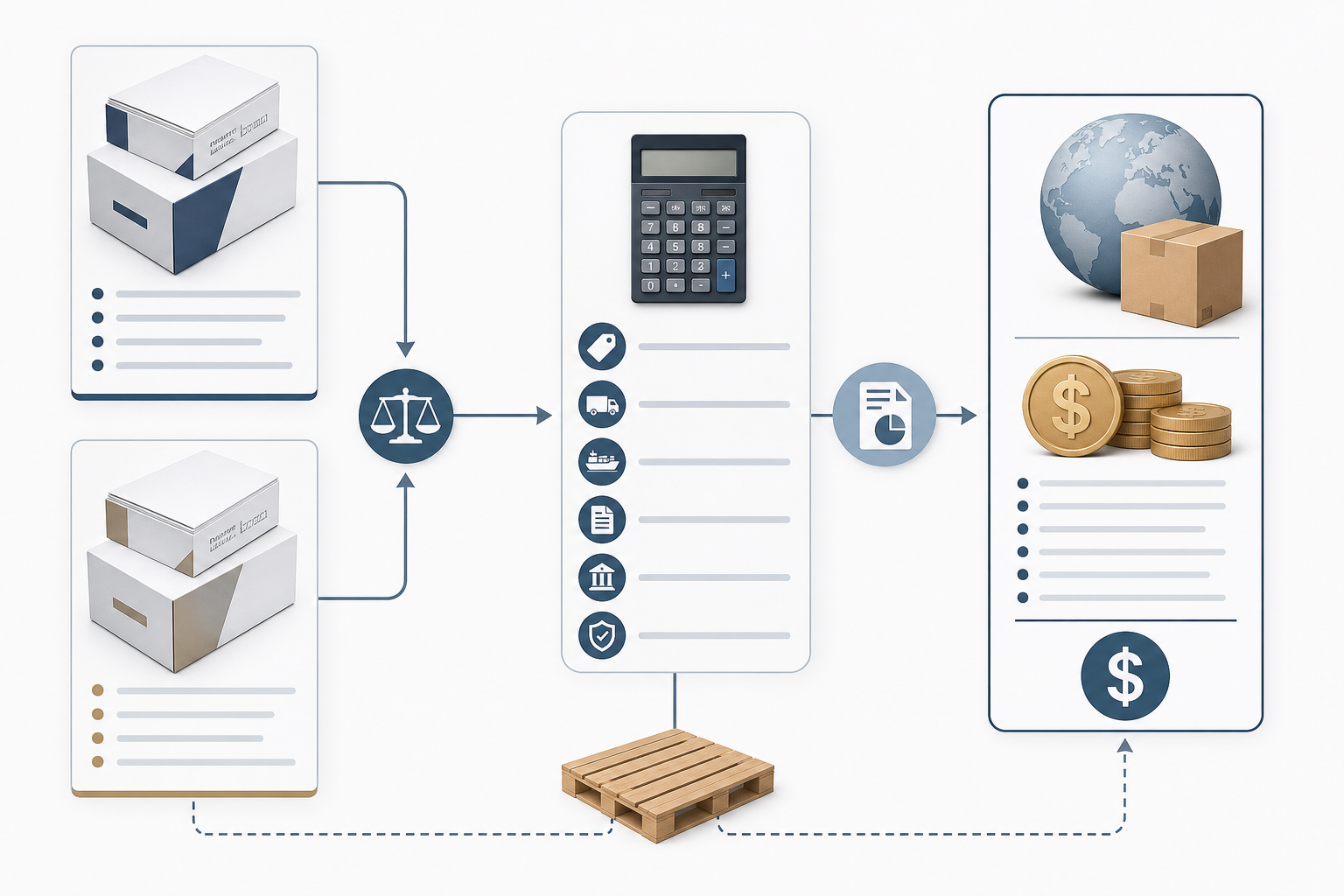
For business buyers, the listed case price is only one part of the decision. A meaningful comparison should include price per case, price per ream, price per sheet, delivery or pickup costs, minimum order quantities, handling time, and any business account requirements. This is especially important when comparing retail listings, wholesale options, local pickup, or pallet-level ordering.
How to compare value without hiding quality
- Price per case: useful for quick budget checks, but not enough for final supplier comparison.
- Цена за пачку: helps compare 10-ream cases against single-ream purchases.
- Price per sheet: useful when comparing different case quantities or bulk formats.
- Total landed cost: includes product cost plus freight, pickup labor, receiving effort, and storage impact.
When benchmarking office-supply channels, buyers may also compare major retailer listings with Staples copy paper alternatives to understand how case quantity, specifications, and fulfillment terms differ across sources. Wholesale or pallet ordering can make sense when usage is predictable, storage space is available, and the buyer can receive heavier shipments without disrupting operations. However, cheapest should not be the only filter. If the paper weight, brightness, size, or compatibility does not match the approved specification, savings can be offset by waste, complaints, printer issues, or emergency reorders.
B2B Supplier and Fulfillment Checks
Supplier evaluation matters when copy paper is a recurring office supply rather than a one-time purchase. A suitable supplier should make it easy to confirm the exact product specification, case configuration, order unit, substitution policy, fulfillment method, and documentation needed for business purchasing. Buyers should ask how the supplier identifies equivalent products if the preferred item is unavailable, because an unapproved substitution can change paper weight, brightness, size, packaging, or user experience.
Fulfillment questions for procurement teams
- Is the order sold as single reams, 10-ream cases, multi-case bundles, or pallet quantities?
- Can the supplier confirm case dimensions, shipping weight, and receiving requirements before dispatch?
- Are invoices, packing slips, purchase order references, and tax-exempt purchasing handled clearly?
- How are damaged cartons, missing reams, or incorrect items reported and resolved?
- Can recurring orders use the same SKU and specification to reduce purchasing variance?
Local availability and near-me pickup can be useful when a department is running low, but it should not replace planned replenishment. For larger or recurring orders, coordinate receiving hours, dock access, elevator access, and internal storage. Copy paper is heavy enough that handling should be considered in advance, especially when multiple cases arrive at once. Clear communication between purchasing, facilities, and the supplier reduces missed deliveries, incorrect quantities, and last-minute substitutions.
Best Uses for a 10-Ream Copy Paper Case
A 10-ream case works well when paper usage is steady enough that single reams create unnecessary reorder activity, but not so high that pallet ordering is clearly more efficient. Common use cases include daily office printing, copier rooms, school administration, training packets, facility documentation, forms, internal reports, and shared workspace supply closets. The format gives teams enough paper to support routine demand while keeping storage and receiving simpler than larger bulk shipments.
When the case format makes sense
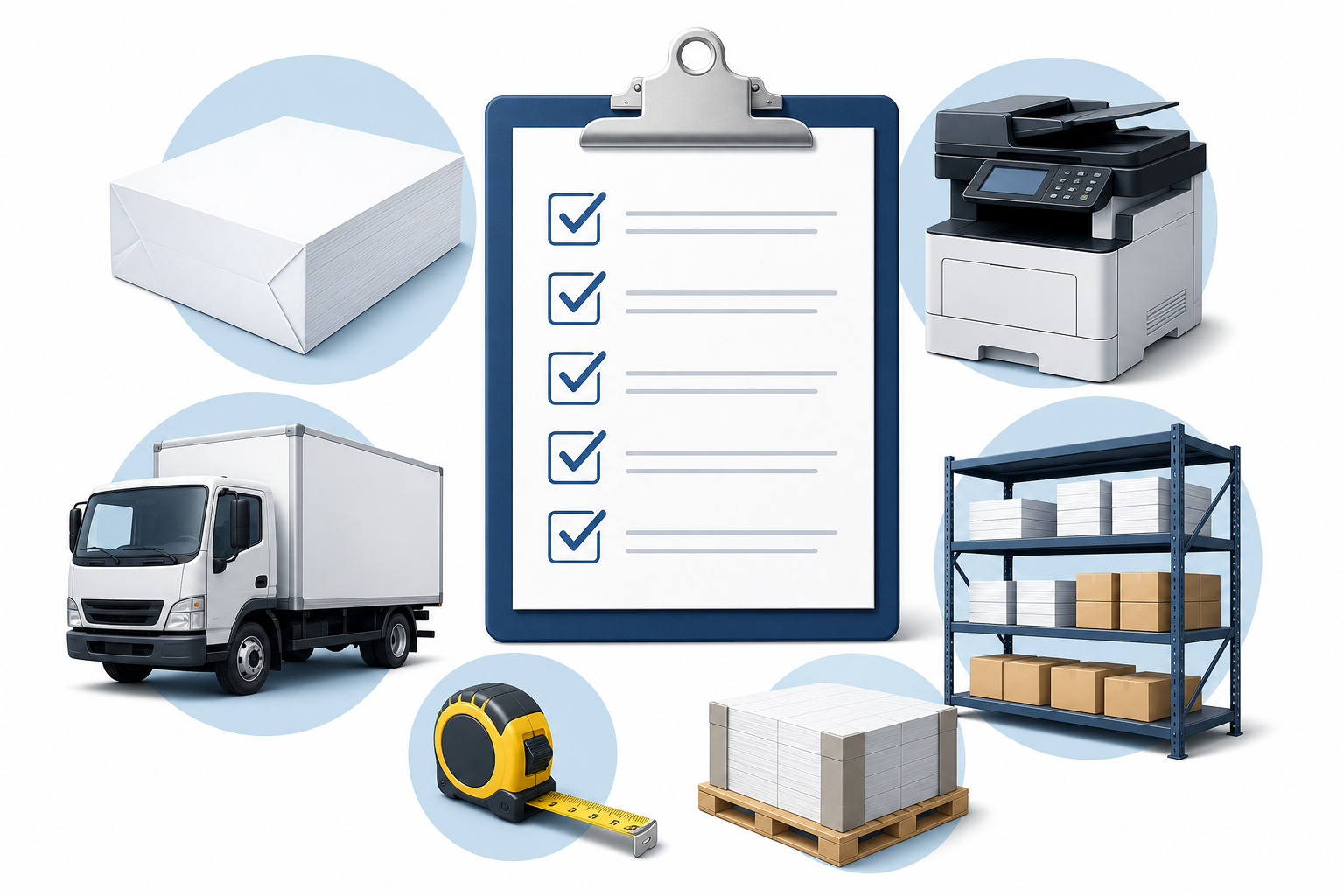
Choose single reams when usage is occasional, testing a new paper specification, or supplying a small remote office. Choose 10-ream cases when usage is recurring and buyers want better order control. Consider multi-case or pallet quantities only when monthly consumption, storage space, and receiving processes justify the larger purchase unit.
For planning, track how many reams each location uses during a normal operating period, then set a reorder point before the final case is consumed. Procurement teams should also separate everyday copy paper from specialty paper used for presentations, color printing, letterhead, forms, or heavier documents. Mixing specialty and everyday use can make consumption appear unpredictable and lead to emergency orders. A basic usage log, even if reviewed monthly, helps standardize reorder timing and prevents overstocking paper in humid, dusty, or high-traffic storage areas.
Buying Checklist Before You Order
Use a final procurement checklist before approving a copy paper 10 ream case order. The goal is to prevent avoidable mistakes in quantity, specifications, supplier selection, and delivery coordination.
Procurement checklist
- Confirm the case contains 10 reams and the expected total sheet count.
- Verify sheet size, especially letter versus legal or A4.
- Confirm paper weight, brightness, color, and intended use.
- Check compatibility with printers, copiers, duplex settings, and high-use devices.
- Review packaging expectations for ream wrapping, outer carton condition, and moisture protection.
- Compare total landed cost, not just the visible case price.
- Confirm pickup, delivery, receiving hours, storage space, and internal handling responsibility.
- Record the supplier, SKU, specification, and approved substitution rules for future orders.
If your organization buys paper regularly, standardize the approved specification before comparing copy and printer paper options. Share the same requirement with each supplier so quotations are based on equivalent sheet count, size, weight, brightness, and case quantity. For recurring needs, align purchasing with actual usage, storage limits, and reorder timing. When requirements are clear, suppliers can respond more accurately, buyers can compare options more fairly, and teams are less likely to face paper shortages, unsuitable substitutions, or unnecessary emergency purchases.
Frequently Asked Questions
How many sheets are in a copy paper 10 ream case?
A standard case usually includes 10 reams with 500 sheets per ream, for a total of 5,000 sheets. Buyers should still confirm the listing because specialty paper formats can vary.
What is the most common size for a 10-ream copy paper case?
In the US, the most common size is 8.5 x 11 letter-size paper. Legal-size, A4, punched, or specialty options may also be sold by the case, so always match the sheet size to your printer trays and document needs.
Is 20 lb 92 brightness copy paper good for everyday office printing?
Yes. 20 lb paper with 92 brightness is a common everyday office choice for printing, copying, internal documents, forms, and general business use. For premium presentations, heavier or brighter paper may be more suitable.
How much does a 10-ream case of 20 lb letter copy paper weigh?
A 10-ream case of 20 lb letter-size copy paper is commonly around 50 lb before outer packaging and shipping materials. This matters for delivery, storage, and internal handling planning.
How do I compare the cheapest 10-ream copy paper case?
Compare the total case price, price per ream, price per sheet, delivery fees, pickup costs, minimum order quantity, and paper specs. The cheapest option is not always the best value if the size, weight, brightness, or compatibility is wrong.
Can businesses buy 10-ream copy paper cases wholesale or by pallet?
Many suppliers offer business accounts, quantity discounts, carton-level purchasing, or pallet quotes. Before ordering wholesale, confirm the SKU, specs, lead time, receiving requirements, and substitution policy.
Where can I buy a copy paper 10 ream case near me?
Use supplier ZIP code tools, local inventory filters, pickup options, and delivery coverage checks. For recurring office supply needs, compare nearby availability with scheduled delivery or bulk supplier programs.