
Quick buyer summary: choosing a copy paper brand
The best copy paper brand depends on your printer type, target price, sheet weight and supply needs. For B2B purchasing, do not compare brand names only; compare jam rate, opacity, brightness, packaging consistency and whether the supplier can support repeat bulk orders.
- For everyday offices: prioritize stable 75gsm or 80gsm A4 copy paper with reliable feeding.
- For distributors: check carton packing, pallet or container loading, available GSM ranges and repeat supply consistency.
- For premium documents: compare brightness, smoothness, opacity and duplex performance before committing to volume.
Need a sourcing option for office, school or wholesale supply? Review related products such as Double A A4 Paper, JK Copier A4 Paper and Laser Printer Paper, or request a bulk quote.
1. Why Brand Choice Matters for Copy Paper in 2025
Choosing copy paper in 2025 is no longer a simple commodity decision. Whether for offices, educational institutions, print shops, or personal use, the type and brand of copy paper you select can have a direct impact on productivity, cost efficiency, sustainability, and print quality. This section outlines why the right choice matters, what can go wrong, and how a thoughtful, framework-driven approach prevents hidden costs.
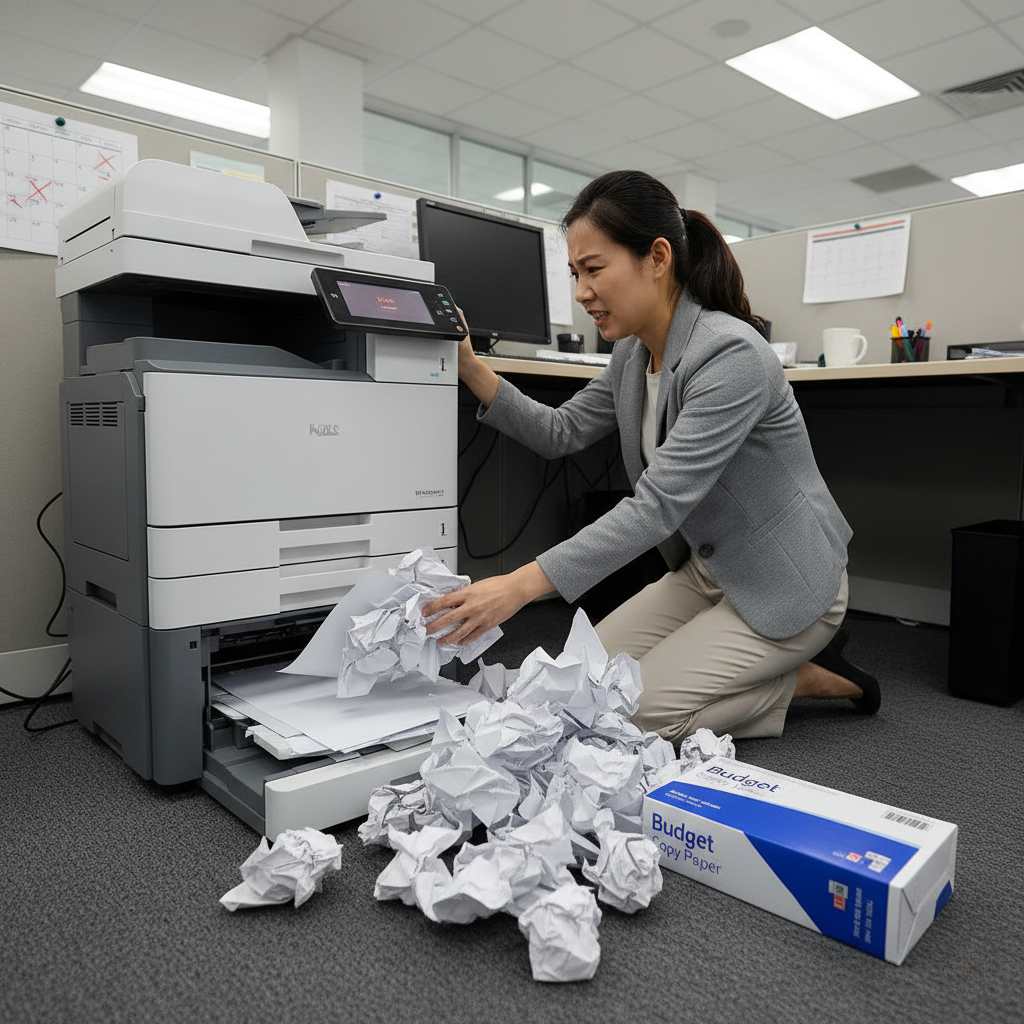
1.1 The Hidden Cost of “Cheap” Paper – Jam Rate, Printer Wear, Waste
- Calculate the total cost of ownership (TCO), not just per-ream price.
- Monitor printer downtime and sheet wastage; cheap paper often produces higher reject rates.
- Track maintenance logs for jam incidents per 10,000 sheets.
- Balance price against reliability over 6–12 months, not just the initial invoice.
1.2 What Performance Metrics Matter: Brightness, GSM, Opacity, Jam‑Free Reliability
- Brightness: Higher numbers (typically 92–100) mean sharper images and more professional documents.
- GSM/Weight: Standard office use often requires 75–80 GSM (20 lb); heavier weights may be needed for color or double-sided printing.
- Opacity: Higher opacity prevents show-through on duplex prints.
- For daily internal use: 92 brightness, 75–80 GSM.
- For client-facing or duplex: 96+ brightness, 90+ GSM, high opacity.
1.3 Market Trends in 2025: Sustainability Pressure, Digital vs Print, Bulk Purchasing
- Look for eco-labels (such as FSC, PEFC, or Blue Angel) to meet green requirements.
- Consider supply chain resilience—brands with global distribution often maintain steadier stock and pricing.
- Assess the importance of recycled content vs. virgin fiber for your organization.
- Factor in local availability and logistics for global offices.
2. Methodology: How These Brands Were Evaluated
To provide an objective and actionable comparison, this analysis used a strict data-driven approach across all major global brands.
2.1 Criteria Used
- Price per ream (500 sheets)
- Brightness level
- GSM (paper weight)
- Opacity rating
- Reported jam rate/sheet reliability
- Sustainability and eco-labels
- Packaging and ease of storage
- Global availability
2.2 Data Sources
- Manufacturer product sheets (for technical specs)
- Aggregated buyer reviews (for jam rates, perceived quality)
- Public price indexes and wholesale price trackers
- Sustainability reports (for green credentials)
- Institutional feedback (for bulk reliability and logistics)
2.3 Scope & Exclusions
This comparison focuses exclusively on standard A4/Letter copy paper suitable for most business, educational, and institutional uses. It does not include specialty papers (such as photo, color, or card stock), non-standard sizes, or highly region-specific brands.
3. Top Copy Paper Brands in 2025 — Head‑to‑Head Comparison
3.1 Brand A: HP Papers
- Price per ream: Medium-high
- Brightness: 92–96
- GSM: 75–80
- Reported jam rate: Very low in controlled environments
- Eco-labels: Multiple global certifications
- Packaging: Reinforced moisture protection
- Availability: Global
3.2 Brand B: Amazon Basics
- Price per ream: Low to medium
- Brightness: 92–96
- GSM: 75–80
- Reported jam rate: Low (varies by lot)
- Eco-labels: Some lines feature certifications
- Packaging: Basic, but robust
- Availability: US, EU, select global markets
3.3 Brand C: Hammermill
- Price per ream: Medium
- Brightness: 97–100
- GSM: 80
- Reported jam rate: Exceptionally low
- Eco-labels: Strong sustainability credentials
- Packaging: Premium, humidity-resistant
- Availability: North America, some EU markets
3.4 Brand D: Navigator
- Price per ream: High
- Brightness: 99–100
- GSM: 80–90
- Reported jam rate: Minimal
- Eco-labels: Multiple, including FSC and EU EcoLabel
- Packaging: Double-boxed, anti-moisture
- Availability: EU, global export
3.5 Brand E: Double A
- Price per ream: Medium-high
- Brightness: 98–100
- GSM: 80
- Reported jam rate: Very low
- Eco-labels: Sustainable fiber sourcing
- Packaging: Sturdy, water-resistant
- Availability: Asia, global export
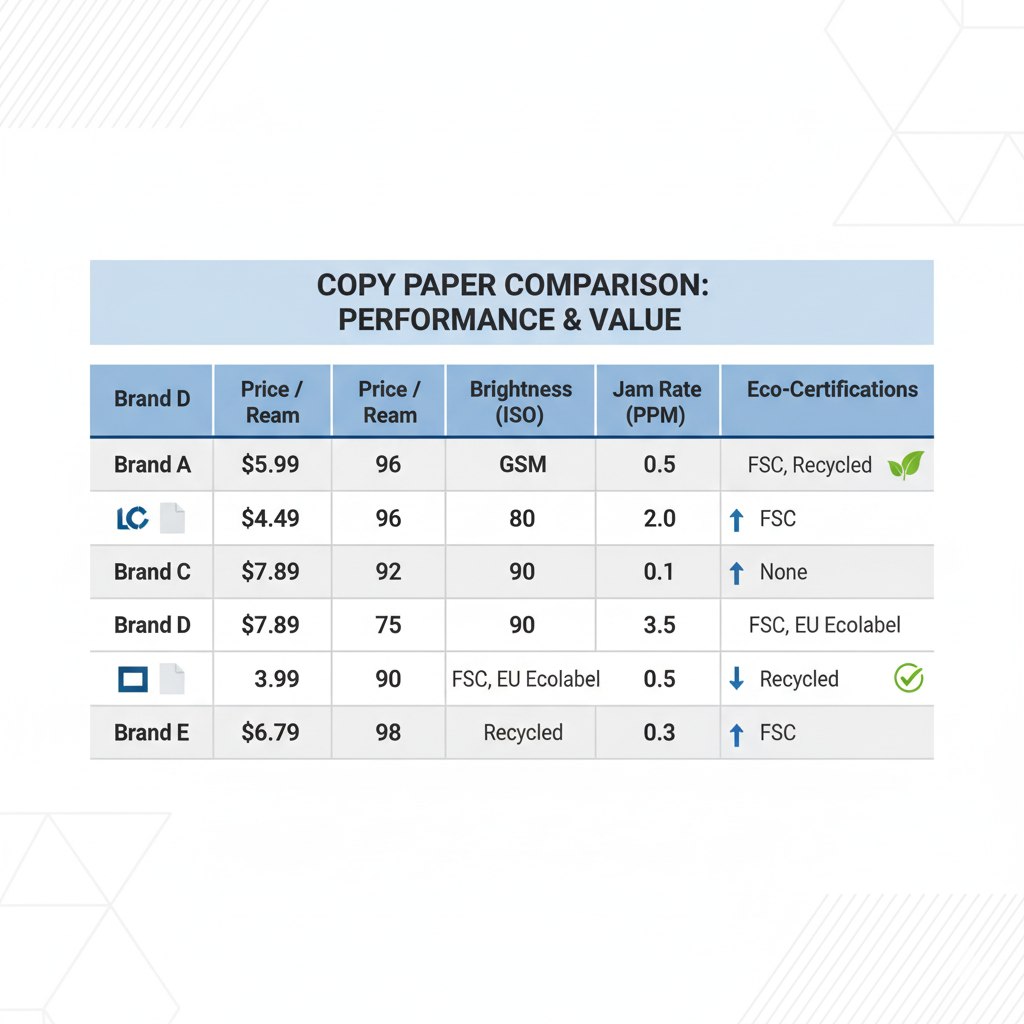
Comparison Table: Major Global Copy Paper Brands (2025)
| Brand | Price/Ream | Brightness | GSM | Jam Rate | Eco Labels | Key Strength |
|---|---|---|---|---|---|---|
| HP Papers | Med-High | 92–96 | 75–80 | Very Low | Multi-global | Consistency |
| AmazonBasics | Low-Med | 92–96 | 75–80 | Low-Varies | Some | Price |
| Hammermill | Medium | 97–100 | 80 | Exceptionally Low | Strong | Duplex/Color |
| Navigator | High | 99–100 | 80–90 | Minimal | FSC, EU EcoLabel | Premium print |
| Double A | Med-High | 98–100 | 80 | Very Low | Sustainable Fiber | Humidity Resistance |
4. Niches & Use‑Cases: Which Brand for What Buyer?
4.1 High‑Volume Enterprises vs. Small Offices
- For high-volume users, favor brands with low jam rates and consistent supply.
- Small offices may value cost per ream over premium features.
4.2 Eco‑Focused Organizations
- Select brands that hold multiple eco-labels and have published sustainability reports.
- Verify the chain of custody for recycled or FSC-certified content.
4.3 Cost‑Sensitive Buyers
- Focus on brands with the most consistent pricing over time—not just the lowest “sale” price.
- Buy in bulk whenever possible to take advantage of discounts.
4.4 Special Printing Environments
- Laser printers, color print jobs, and duplex (double-sided) printing demand higher brightness and GSM.
- Use humidity-resistant packaging in tropical or variable climates to protect your products from damage and deterioration.
5. Buying Tips & Hidden Traps to Avoid
5.1 Bulk Buys: Shipping/Storage Cost, Warehousing Moisture-Risk
- Store paper in a climate-controlled, dry environment to prevent warping or sticking.
- Calculate total landed cost—shipping, taxes, and storage, not just base price.
5.2 Paper Specs: Understanding Brightness, GSM, Sheet Weight, Whiteness
- Request spec sheets or physical samples from suppliers.
- Test for “feel” and print performance—metrics don’t always capture the user experience.
5.3 Compatibility Issues: Older Printers, Heavy Duplex Jobs, Finish Requirements
5.4 Sustainability Claims: What to Ask
6. Final Recommendations & Quick Decision Guide
6.1 Quick‑Pick Table: Find Your Fit
| Scenario | Brand Options (no order) | Key Spec to Prioritize |
|---|---|---|
| High-Volume, Minimal Jams | HP Papers, Hammermill, Navigator | Jam rate, consistency |
| Budget-First, Acceptable Quality | Amazon Basics, HP Papers | Price, batch consistency |
| Eco/Green Mandate | Navigator, Double A, Hammermill | Eco-labels, recycled content |
| Duplex, Color Printing | Hammermill, Navigator | Brightness, GSM |
| Humid/Challenging Storage | Double A, Hammermill | Packaging quality |
(This table is for quick scan and comparison, not recommendation.)
6.2 CTA: Request Samples, Don’t Gamble
Test samples across all device types in your office, and log results for jam incidents, print quality, and sheet feel.
Sample Request CTA:
“Order your free sample pack from each shortlisted brand. Test for real-world performance in your environment. Make a data-driven decision before you commit.”
6.3 What to Do Next: Optimize Your Copy Paper Program
- Audit your current paper usage: volumes, jam incidents, and print output quality.
- Compare current costs (including hidden costs such as printer downtime) with sample test results.
- Shortlist top-performing brands using your own in-house data.
- Negotiate for better pricing or support, leveraging your documented findings to secure a more favorable outcome.
FAQ:
Q: What’s the most critical factor when choosing copy paper?
A: Balance reliability (jam rate), print quality (brightness/GSM), and total cost of ownership. Testing is key.
Q: Is recycled copy paper as good as regular paper?
A: Modern recycled options can match or exceed traditional papers—verify with in-printer samples.
Q: How can I prevent paper jams?
A: Use high-quality, compatible paper and store it in dry, climate-controlled environments.
Q: What’s the best way to get started?
A: Request free samples, compare print results, and analyze cost-per-sheet, including downtime and maintenance.
Ready to Optimize Your Copy Paper Choice?
Don’t gamble on brand marketing or assumptions.
Take control: request sample packs, track your actual results, and make every ream count in 2025.
Supply information
Want to compare these brands on your own desk?
GUANHE supplies Double A, JK, Xerox, Rotatrim and Reflex, so you can sample several brands from one supplier instead of chasing each separately.
| Trial minimum | 5 reams |
| Volume orders | 20GP full container |
| Port of loading | Qingdao, China |
| Lead time | 14 days |
Specifications: Double A A4 Copy Paper · JK Copier A4 Paper · Xerox Copy Paper · Rotatrim A4 Paper · Reflex A4 Copy Paper