

A4 Copy Paper Moisture Control in Tropical Sea Freight: PE Wrapper & ECT-44 Carton SOP
Uncoated A4 paper needs 4.0% to 4.5% mill moisture (ISO 287:2017) for flat 200 C laser printing. For 30-to-45-day tropical voyages, specify 80 gsm wrappers extruded with 15 um PE film and 5-ply BC-flute ECT-44 cartons. Pair kiln-dried pallets below 16% timber moisture (IPPC ISPM 15) with 12.5 kg of calcium chloride desiccants per 20GP container.
| Transit Control Layer | Target Engineering Metric | Governing Standard | Failure Symptom When Omitted |
|---|---|---|---|
| Sheet Core Moisture | 4.0% - 4.5% mass fraction (ISO 287:2017) | ISO 287:2017 / TAPPI T 412 | Steam curl and duplex gate jams above 5.2% (ISO 287:2017) |
| Ream Vapor Barrier | 80 gsm craft-art + 15 um extruded PE or BOPP | ISO 2528 / ASTM E96 | Cross-grain wavy edges (cockling) within 72 hours at port |
| Master Export Carton | 5-ply BC double-wall, 44 lb/in (7.7 kN/m) | ISO 3037 / TAPPI T 811 | Bottom-tier corner crush under 8-high container stacking |
| Export Wood Pallets | Heat-treated timber at 12% - 16% moisture (ISPM 15, 2019) | IPPC ISPM 15 | Up to 60 liters of pallet water evaporating into container air |
| 20GP Headspace Drying | 10 x 1.25 kg CaCl2 starch-gel poles (= 12.5 kg) | ASTM D4169-22 | Nighttime container rain dripping onto top carton tiers |
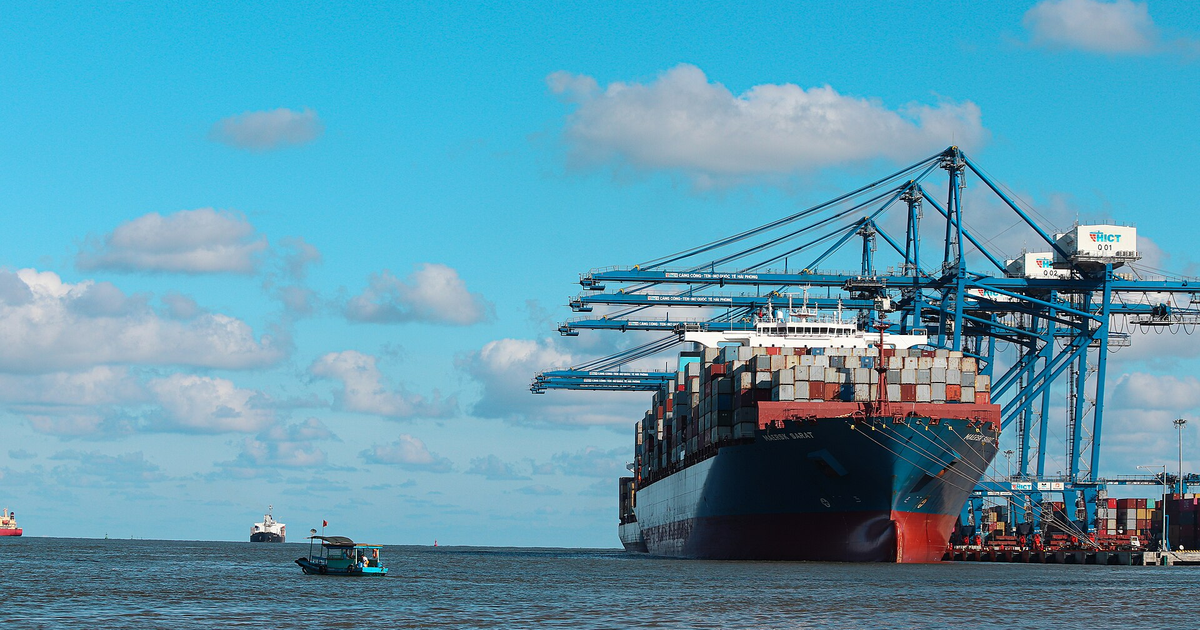
Ocean containers bound for Mombasa, Jebel Ali, Lagos, Manila, or Callao endure deck temperatures near 55 degrees Celsius by day and sharp hull cooling at night. Cellulose wood fibers act like microscopic sponges inside steel boxes when relative humidity climbs past 80% (Library of Congress preservation data). Even premium sheets that passed factory inspection will jam high-speed office copiers if marine vapor penetrates weak ream seals.
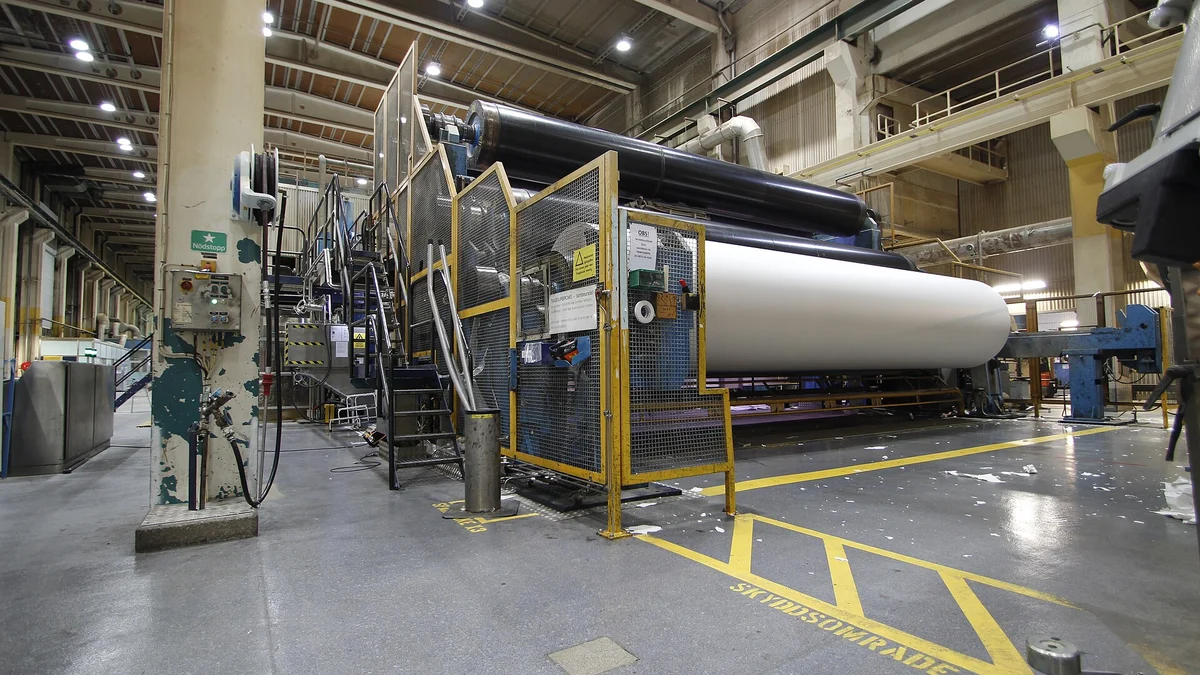
Compiled by Dr. Wei Chen and reviewed by the quality editorial desk at the GUANHE Paper Mill and QC Lab, this standard operating procedure covers every barrier from twin-wire drying cylinders to port unloading. Buyers who need baseline sheet dimensions and basis-weight tolerances first can read our A4 copy paper specifications and 20GP import guide or price full loads on our A4 copy paper wholesale page.
Mill Moisture Equilibrium and Hygroexpansivity Curl Physics
Equilibrium moisture content (EMC) is the steady-state water fraction reached by paper fibers under fixed temperature and humidity (ISO 187:2022). Uncoated eucalyptus woodfree sheets balance with 50% relative humidity at 23 degrees Celsius per the ASTM D685-17 conditioning standard when internal moisture stays at 4.0% to 4.5% (ISO 287:2017).
Hygroexpansivity is the dimensional swelling or shrinkage of a cellulose sheet per unit change in moisture content. Bleached hardwood fibers align mostly along the machine direction during twin-wire forming. When water bonds to cellulose fibers, individual fibers swell up to 20% in diameter (FAO Report, 2022) per FAO forest product references. Meanwhile, fiber length expands by less than 1% (ISO 187:2022).
Why does moisture pickup ruin a 500-sheet A4 ream before a single page enters the printer? Stacked reams absorb humid port air through their four cut edges first while the compressed center stays dry. Because cross-direction expansion exceeds machine-direction expansion by a factor of three to five, the outer 15 millimeters of the stack lengthen and buckle into tight waves known as wavy-edge curl.
Consider the exact water mass math for one 20GP container holding 8,000 reams of 80 gsm A4 paper under WCO HS code 4802.56.00. One 500-sheet ream has a nominal conditioned ream mass of 0.210 m x 0.297 m x 500 x 0.080 = 2.495 kg. If unsealed paper drifts from 4.5% mill moisture to 6.5% port moisture (ISO 287:2017), each ream absorbs 2.495 kg x 0.02 = 0.05 kg (50 milliliters) of water. Across 8,000 reams, that seemingly minor 2.0% drift (ISO 287:2017) injects 400 kg of water into the cargo.
Once damp sheets hit a laser fuser nip running at 190 to 205 degrees Celsius, trapped moisture above 5.2% (ISO 287:2017) flashes into steam on the heated side first. Differential shrinkage curls the leading edge upward by 8 to 15 millimeters, tripping optical sensors inside duplex turnaround gates. Conversely, over-drying paper below 3.8% moisture (ISO 287:2017) builds triboelectric static charge that pulls two or three sheets into pickup rollers at once.
How Do 15 um PE and BOPP Laminates Block Marine Vapor?
Plain kraft or uncoated offset paper wrappers offer almost zero resistance to water vapor diffusion. Protecting cut-size A4 sheets across equatorial sea lanes requires a continuous polymer membrane extruded or laminated onto the structural base paper.
Water vapor transmission rate (WVTR) is the steady-state mass of water vapor permeating one square meter of barrier sheet over 24 hours under ISO 2528. At 38 degrees Celsius and 90% relative humidity (ISO 2528:2017), plain 80 gsm paper exceeds 450 g/m2-day. Extruding a 15-micrometer low-density polyethylene (LDPE) film layer onto the sheet drops WVTR below 12 g/m2-day.
| Ream Wrapper Architecture | Base Grammage & Polymer Layer | Tropical WVTR (38 C, 90% RH) | End-Fold Seal Integrity | Recommended Export Route |
|---|---|---|---|---|
| Unlaminated Offset Paper | 80 gsm paper only (0 um film) | 450 - 600 g/m2-day (ISO 2528, 2017) | Cold PVA glue; wicks damp air | Domestic dry-climate trucking only |
| Standard Export PE Wrapper | 80 gsm craft-art + 15 um extruded LDPE | 8 - 12 g/m2-day (ISO 2528, 2017) | 170 C EVA hot-melt gusset seal | Standard 20GP sea freight (15 - 40 days) |
| Heavy Monsoon BOPP Wrapper | 85 gsm art paper + 18 um gloss BOPP film | 4 - 6 g/m2-day (ISO 2528, 2017) | Heat-activated overlap + hot-melt | High-humidity OEM retail & 45-day transit |
Barrier film thickness means nothing if humid air leaks through pinhole gaps at the ream corners. On synchronized Will and Bielomatik wrapping lines, long-seam overlaps must carry a continuous bead of ethylene-vinyl acetate (EVA) hot-melt adhesive applied at 165 to 175 degrees Celsius. Both gusseted end tucks must fold flat without tearing the inner polyethylene skin, locking the 500-sheet block inside a sealed vapor envelope until the end user opens the tear strip.
Why 3-Ply Boxes Fail in High Humidity: 5-Ply ECT-44 Carton Engineering
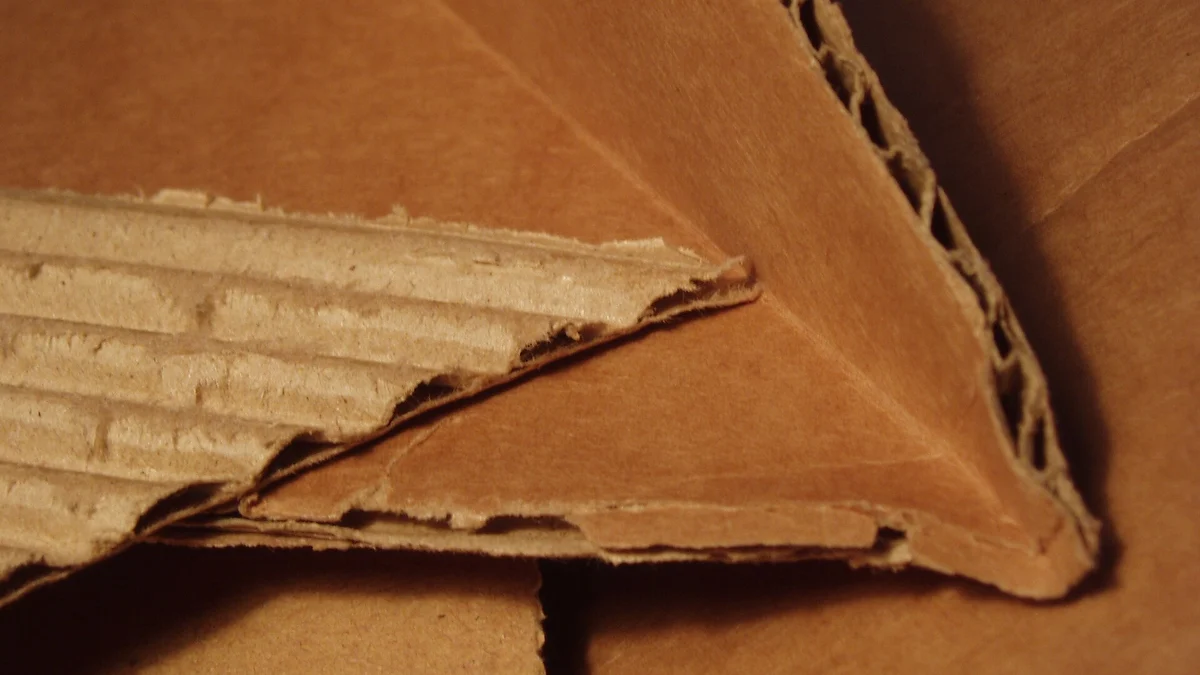
Importers who trim $0.18 per box by accepting 3-ply single-wall cartons frequently face collapsed bottom rows at destination ports. Corrugated fiberboard loses mechanical stiffness rapidly as ambient relative humidity rises inside a closed shipping container.
Edge Crush Test (ECT) is the cross-direction compressive force per unit length that a corrugated board specimen sustains before buckling under ISO 3037 or TAPPI T 811. Packaging engineers combine ECT with board caliper and box perimeter in the McKee equation to predict static Box Compression Strength (BCT) under warehouse and container loads.
Inside a floor-stowed 20GP container holding 1,600 boxes of 80 gsm A4 paper (13.20 kg gross), cartons stack eight tiers high. Each bottom-tier carton carries seven boxes directly above it, creating a static deadweight of 7 x 13.20 kg = 92.4 kg. However, three environmental factors multiply the required dry lab strength under ASTM D4169-22 distribution testing.
- High-Humidity Fiber Softening: Raising container relative humidity from 50% to 85% (ASTM D4169, 2022) cuts kraft linerboard compression strength by roughly 40% to 50% (Library of Congress cellulose humidity curve).
- Long-Term Creep Duration: Sustaining a constant load over a 35-day ocean voyage reduces long-term creep resistance by an additional 35% (ASTM D4169, 2022).
- Dynamic Vessel Pitching: Ocean swell vertical accelerations of
0.3 gto0.5 gimpose cyclic shock loads on interlocking carton corners.
Applying a combined marine distribution safety factor of 4.5 yields a minimum dry box compression target of 92.4 kg x 4.5 = 415.8 kg (4,078 N). Standard 3-ply C-flute 32-ECT cartons (308 x 220 x 285 mm footprint) deliver only 250 to 275 kg of dry BCT, so lower tiers buckle mid-voyage. Upgrading to 5-ply BC double-wall cartons rated at 44 lb/in (7.7 kN/m, ECT-44) raises dry BCT above 460 kg. Twin polypropylene straps also prevent telescopic lid pop during port crane handling.
How Do You Calculate Desiccant Dosing and Pallet Stowage for a 20GP Container?
Container rain is interior roof condensation formed when nighttime ocean cooling drops the steel container ceiling temperature below the internal air dew point. Warm tropical air trapped during port loading holds ~30 grams of vapor per cubic meter at 35 degrees Celsius and 75% relative humidity (ISO 187:2022). Most hidden water inside a closed container actually comes from wet wood dunnage and damp container floors.
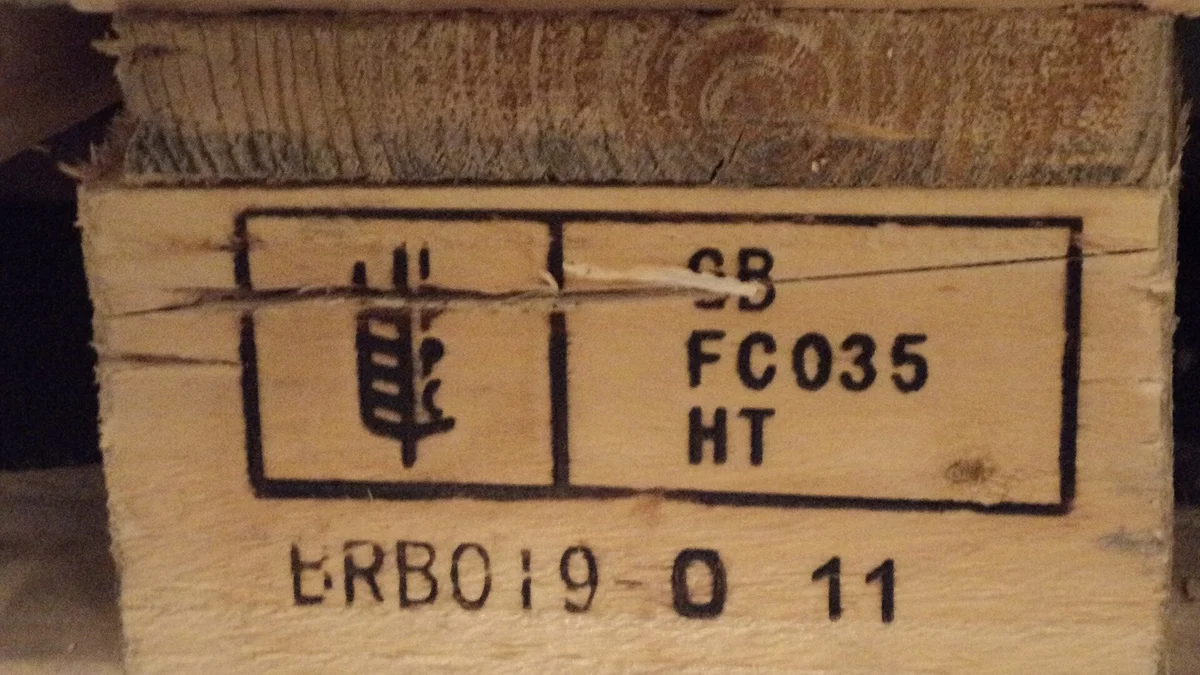
For example, twenty green softwood pallets (18 kg each) at 28% wood moisture (ISPM 15, 2019) carry 360 kg x 0.12 = 43.2 kg of excess water. Kiln-dried pallets capped at 16% moisture avoid this vapor load (IPPC ISPM 15 heat-treatment rules). As daytime deck heat bakes the container, unseasoned pallet water evaporates and condenses across the steel ceiling every night.
Follow this five-step container preparation and desiccant dosing protocol before loading at Qingdao or Shanghai port.
- Probe Container Floor Moisture First: Reject any empty 20GP unit whose marine plywood floor reads above 14% moisture (ISO 287:2017) on a pin meter, or fails door gasket checks.
- Mandate Kiln-Dried ISPM-15 Pallets: For 7,800-ream palletized loads, require heat-treated pallets (
56 Ccore for 30 minutes) dried to 12% to 16% moisture (IPPC ISPM 15). Wrap each pallet in 4-layer stretch film with top kraft slip-sheets. - Tape Vent Baffles on Humid Routes: Seal container side vents with waterproof tape when loading in humid coastal ports so salt-laden monsoon air cannot enter dried cargo headspace.
- Dose Calcium Chloride Desiccant Poles: Hang
10 x 1.25 kg = 12.5 kgof calcium chloride (CaCl2) plus modified-starch gel poles from the upper lashing rings (5 poles per wall). Unlike silica gel, which saturates near 30% of its weight (ASTM D4169, 2022),CaCl2starch poles bind over 200% of their mass (ASTM D4169, 2022), locking25.0 kgof water into a gel. - Line Walls for Floor-Stowed Loads: For 8,000-ream floor-stowed containers (
1,600 boxes), tape kraft linerboard against the steel side walls to stop carton contact with cold metal ribs.
GUANHE Moisture-Sealed A4 Grades and OEM Private Label Selection
Matching paper grammage and barrier packaging to destination climate prevents post-arrival curl complaints and tender disqualifications. Every export lot in our A4 copy paper catalog passes online infrared moisture scanning before sheeting. Parent reels stay locked within 4.0% to 4.5% moisture (ISO 287:2017) with full FSC Chain-of-Custody traceability.
| Export Grade / Program | Basis Weight & Brightness | Standard Moisture Shield | 20GP Load Capacity | Ideal Climate & Buyer Profile |
|---|---|---|---|---|
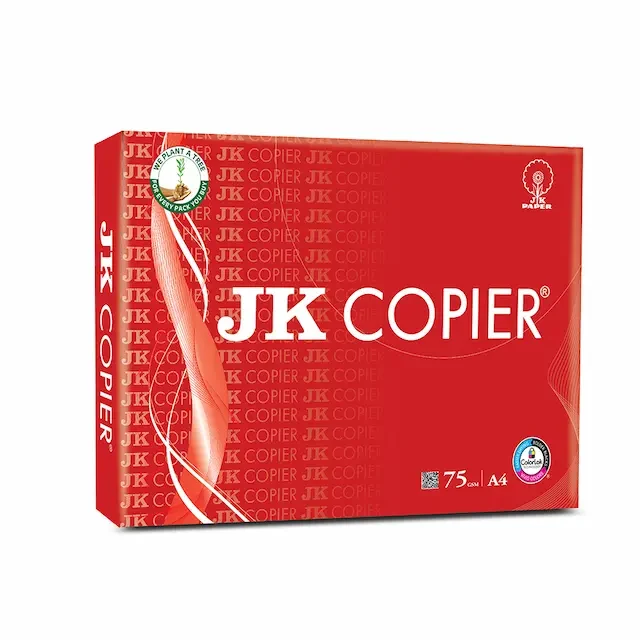
| JK Copier 75 GSM A4 Paper | 75 gsm, 98% - 100% D65 (ISO 2470-2:2008) | 80g craft-art + 15 um LDPE wrap; ECT-44 box | 8,000 reams floor / 7,800 pallet | High-volume corporate duplex printing in humid coastal cities |
| Double A 80 GSM A4 Paper | 80 gsm, 102% - 104% D65 (ISO 2470-2:2008) | Heavy PE/BOPP moisture barrier; 5-ply box | 8,000 reams floor / 7,800 pallet | Government tenders and jam-free 100 ppm copy centers |
| Rotatrim 80 GSM A4 Paper | 80 gsm, 102% D65 (ISO 2470-2:2008) | Hermetic hot-melt PE wrapper; strapped box | 8,000 reams floor / 7,800 pallet | East/West African and Middle Eastern wholesale distribution |
| Dedicated Laser Printer Paper | 80 - 90 gsm, 104% D65 (ISO 2470-2:2008) | Low-moisture 4.0% - 4.3% (ISO 287:2017) + BOPP | 8,000 reams (80g) per 20GP | High-heat color laser presses sensitive to fuser blister |
| JK Copier 80 GSM A4 Paper | 80 gsm, 100% - 102% D65 (ISO 2470-2:2008) | 80g craft-art + 15 um LDPE wrap; ECT-44 box | 8,000 reams floor / 7,800 pallet | Regional stationery wholesalers and institutional contracts |
| Uncoated Woodfree Jumbo Rolls | 70 / 75 / 80 gsm reels | Stretch-PE + heavy kraft + rubber end plugs | 22 - 24 MT per 20GP/40HC | Local sheeting converters importing under HS 4802.55.00 |
For regional distributors launching private brands at a three-container MOQ (24,000 reams), GUANHE upgrades standard wrappers to 6-color rotogravure BOPP-laminated film (WVTR < 6 g/m2-day). Orders include custom ECT-44 telescopic cartons and plot-level pulp traceability compliant with the EU Deforestation Regulation (EUDR). Request sealed A4 moisture-barrier samples, batch COA sheets, and FOB Qingdao or Shanghai container quotes through our direct proforma RFQ and contact desk.
Frequently Asked Questions (FAQ)
What is the ideal moisture content for A4 copy paper exported by sea?
Uncoated woodfree A4 copy paper should be manufactured and sealed at 4.0% to 4.5% absolute moisture content by weight (ISO 287:2017). Staying within this narrow band prevents static double-feeding below 3.8% (ISO 287:2017) while avoiding steam-induced laser fuser curl above 5.2% (ISO 287:2017).
Why do A4 paper stacks develop wavy edges in humid warehouses?
Wavy edges occur when unsealed or torn reams absorb ambient humidity above 65% (ISO 187:2022) through their exposed cut edges while the compressed center stays dry. Because hardwood fibers swell three to five times more across the grain than along the grain, the outer edges lengthen and buckle into waves.
How much container desiccant is needed for one 20GP load of copy paper?
A standard 20GP dry container carrying 7,800 to 8,000 reams on a 30-to-45-day tropical voyage requires 10 hanging poles of 1.25 kg calcium chloride plus modified starch (12.5 kg total). Combined with kiln-dried pallets below 16% wood moisture, this capacity traps up to 25 kg of headspace vapor.
Should importers acclimatize A4 copy paper before opening reams in air-conditioned offices?
Yes, sealed master cartons moved from hot port warehouses into 22 degrees Celsius air-conditioned print rooms should acclimatize unopened for 24 to 48 hours. Opening cold or warm reams immediately causes rapid surface moisture shock; keeping the PE wrapper shut until press loading preserves flat sheet geometry.
Tropical Sea-Freight Export Packaging
Shipping A4 copy paper to humid coastal or equatorial ports?
GUANHE seals every 500-sheet ream in 15 μm PE or 18 μm BOPP moisture-barrier wrappers inside 5-ply BC double-wall ECT-44 master cartons, with kiln-dried ISPM 15 pallets and 12.5 kg CaCl2 container desiccant dosing.
| Mill Sheet Moisture | 4.0% – 4.5% mass fraction (ISO 287:2017 infrared verified) |
| Wrapper Barrier | 80g craft-art + 15 μm LDPE (or 6-color BOPP OEM private label) |
| Master Carton Spec | 5-ply BC double-wall, 44 lb/in ECT-44 + twin PP straps |
| 20GP FCL Capacity | 8,000 reams floor-stowed / 7,800 reams on 20 kiln-dried ISPM 15 pallets |
Matched Grades: A4 Wholesale Container Spec · Rotatrim 80gsm A4 · Double A 80gsm A4 · JK Copier 75gsm A4
All moisture, barrier, and compression parameters verified under ISO 287:2017, ISO 187:2022, ISO 2528:2017, ISO 3037, ASTM D4169-22, and IPPC ISPM 15.