Decide If Regular Copy Paper Is the Right Default for This Order
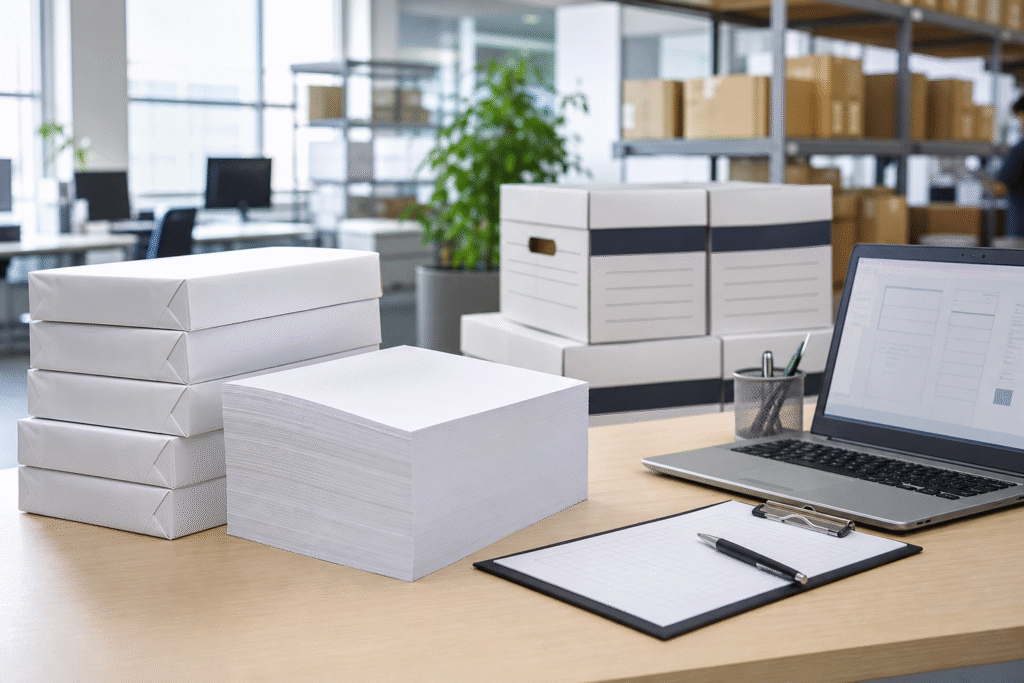
Before treating regular copy paper as a purchase request, decide whether the job is actually asking for the office default or hiding a special requirement. In US office purchasing, regular copy paper usually means everyday white office paper for routine printing and copying. It is the baseline for shared printers, copiers, internal records, drafts, and administrative output, not a complete specification by itself.
Use the default when the request is for routine office documents: internal memos, meeting packets, general forms, draft reports, training handouts, and day-to-day copies that do not require a premium finish. These jobs typically value availability, device compatibility, predictable feeding, and reorder consistency more than appearance upgrades.
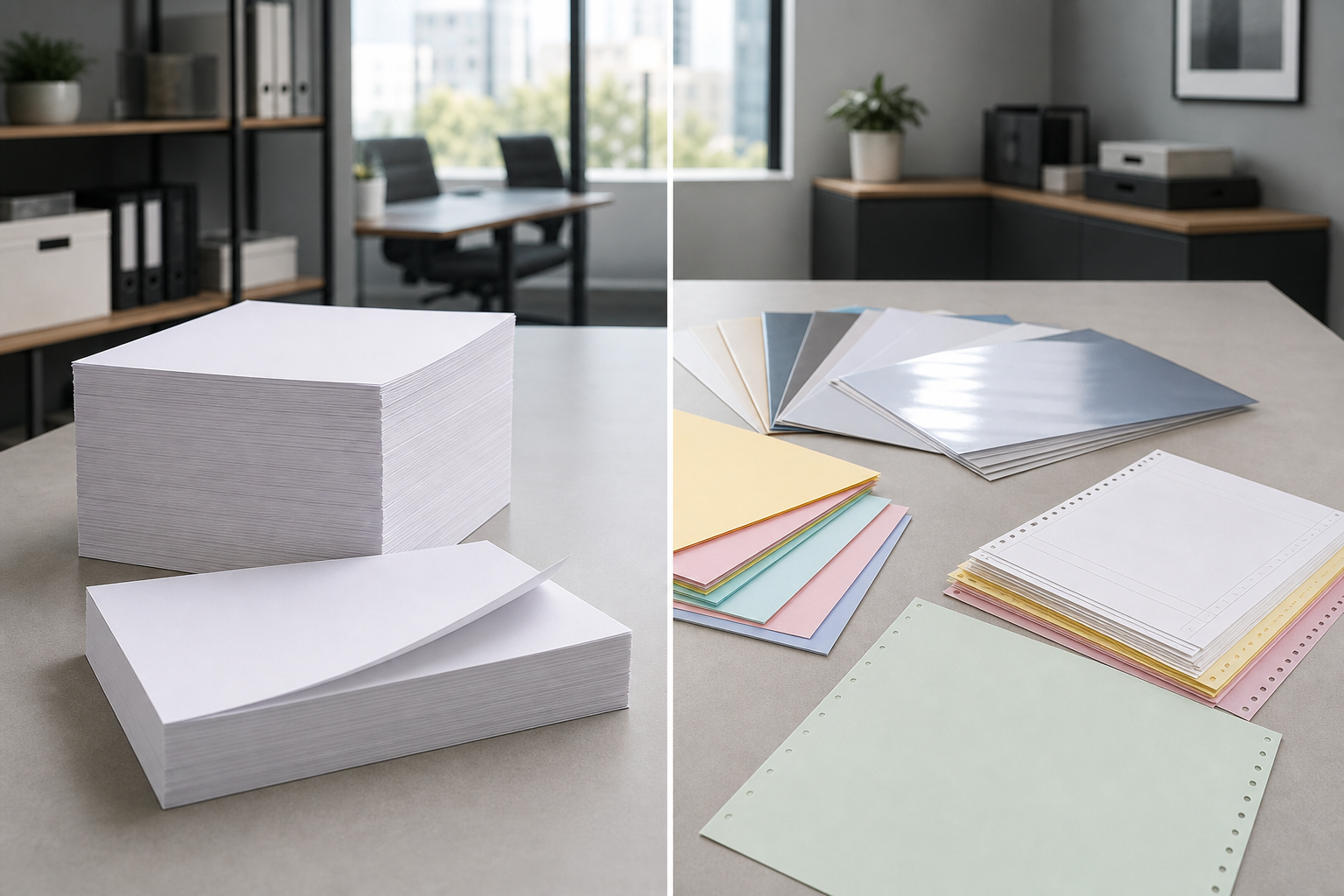
Pause before ordering when the job mentions a different size, heavier feel, glossy finish, color stock, photo output, legal-size documents, A4 files, labels, envelopes, or specialty forms. Those words signal that regular paper may be the wrong baseline even if someone casually says copy paper.
The procurement risk is letting regular mean cheapest available, same as last time, or whatever a supplier has nearby. For repeat orders, confirm the exact product listing or supplier quote before treating regular as a spec. A controlled office standard should state the required size, weight, brightness, color, finish, sheet count, case quantity, and printer or copier compatibility so reorders stay consistent across departments and vendors.
Looking for Factory-Direct Copy Paper Prices?
Skip the middlemen. Get FOB/CIF container quotes directly from the mill. OEM private labeling available.
Translate “Regular Copy Paper” Into an Orderable Spec Line
The phrase regular copy paper becomes useful to procurement only after it is converted into fields a supplier can quote and a buyer can repeat. The common US baseline to check is letter size, 8.5 x 11 inches; 20 lb weight; white paper with standard office brightness such as 92 bright; and 500 sheets per ream. These are common expectations, but the final requirement should always be confirmed against the product listing or supplier quote.
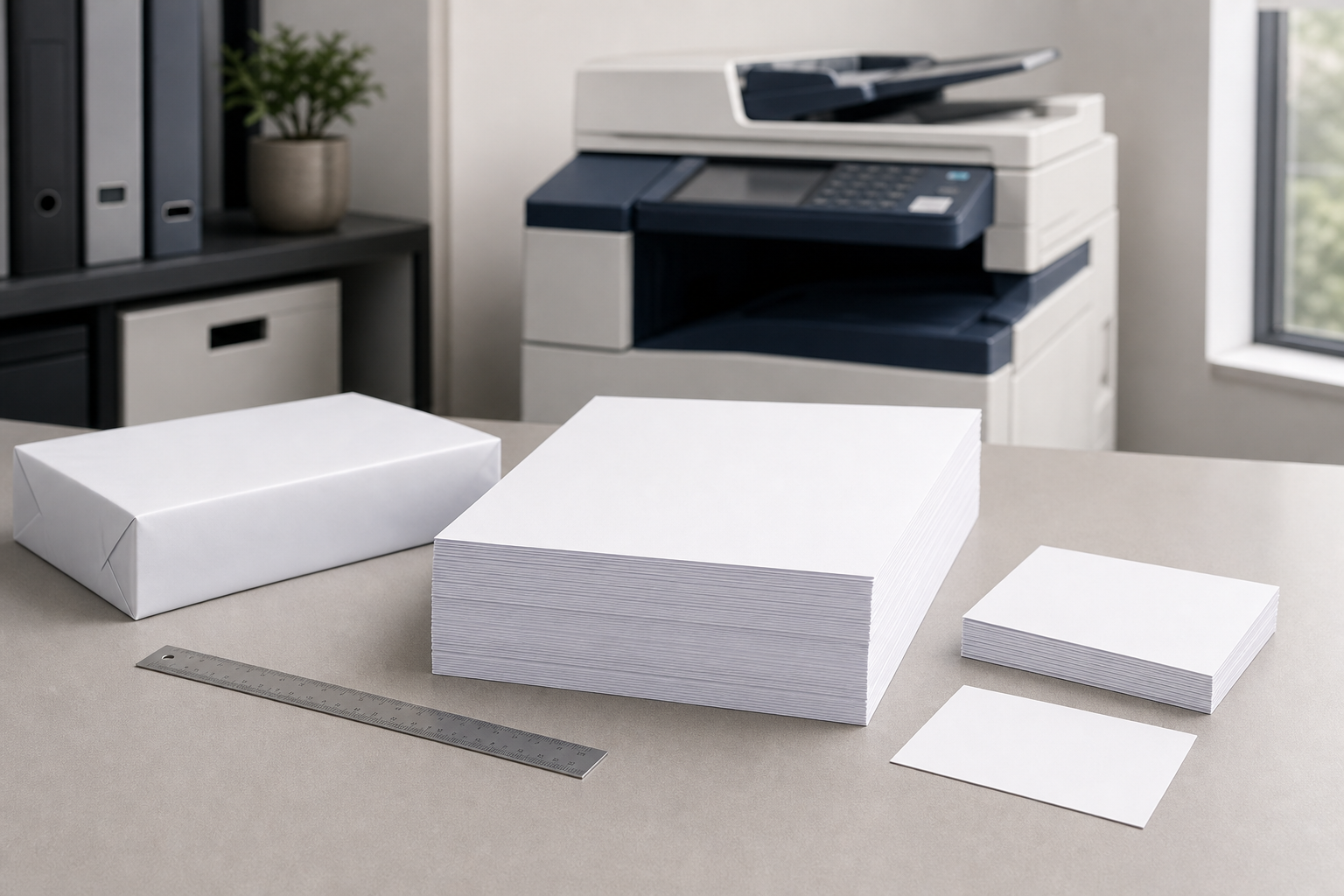
For teams that need a size-specific reference, this 8.5 x 11 copy paper guide can help clarify the letter-size field before it is embedded into a broader regular paper standard.
| Order field | What to define |
|---|---|
| Описание | Regular copy paper for routine office printing and copying |
| Размер | Letter size, 8.5 x 11 inches, unless another size is approved |
| Вес | 20 lb as the default office baseline, if that matches device and document needs |
| Brightness and color | White paper, such as 92 bright, or the approved equivalent |
| Finish | Standard non-gloss office finish unless a coated or specialty finish is requested |
| Количество | 500 sheets per ream; specify reams per case or carton |
| Совместимость | Confirm use with the buyer’s printers, copiers, and duplex settings as applicable |
A reusable line might read: regular copy paper, letter size 8.5 x 11 inches, 20 lb, white, around 92 bright, standard office finish, 500 sheets per ream, specified reams per case, suitable for approved office printers and copiers. Add that substitutions require approval for any change to size, weight, color, finish, brightness, or sheet count.
Use Regular Paper or Choose Something Else: The Exception Boundary
Regular copy paper is the right default only when the document does not need a different physical or visual result. A boundary table helps office buyers decide when to stay with the standard and when to route the request to another paper type.
| Job request | Buying decision |
|---|---|
| Internal memos, drafts, reports, routine forms, and everyday copies | Use the approved regular copy paper standard |
| Shared printer output for general administration | Use regular paper if device compatibility is confirmed |
| Photos, image-heavy pieces, or glossy marketing pages | Choose paper designed for image quality or a coated finish |
| Client-facing handouts that need a heavier feel | Review heavier office paper before ordering |
| Legal-size files, A4 documents, or special page layouts | Order the required size instead of default letter paper |
| Duplicate-record forms, receipts, or field documents needing transfer copies | Consider carbon copy paper for specialty forms or another purpose-built option |
Copy paper and printer paper often overlap in everyday office language, so the label alone should not drive the order. A listing described as printer paper may still be suitable for regular office copying if the size, weight, brightness, finish, sheet count, and device compatibility match the approved standard. Likewise, a product labeled copy paper may be unsuitable if it has the wrong size, coating, color, or quantity format. For B2B buying, the safest rule is to treat regular as the baseline and let documented exceptions trigger a deliberate change.
Choose Ream, Multi-Ream, or Case Quantities From Actual Workflow
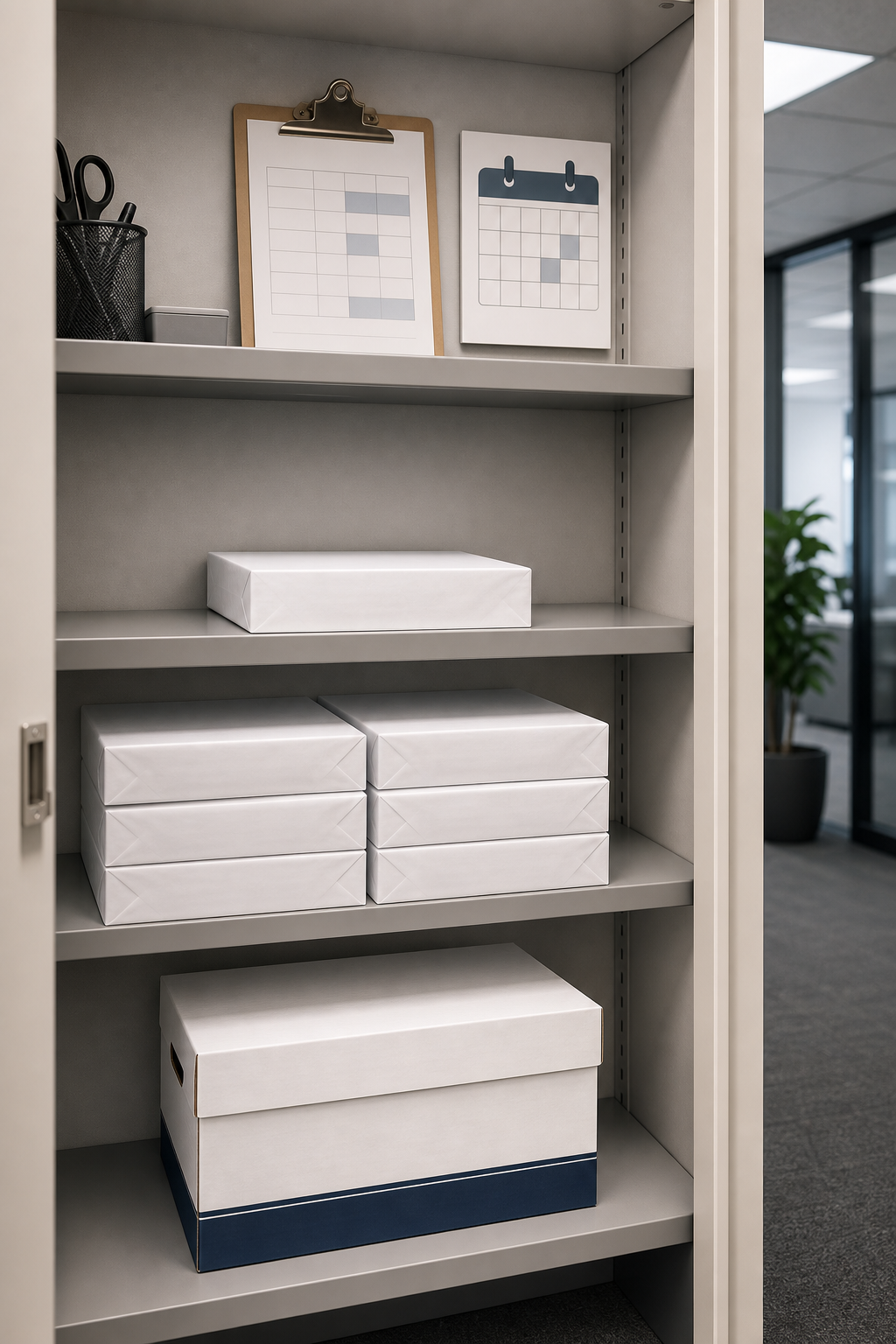
Quantity should be selected from office workflow, not from the largest pack on the page. A 500-sheet ream works for low-volume teams, controlled departmental use, temporary projects, or a first order when the buyer is confirming whether a paper standard feeds correctly through shared devices. It also limits excess stock when storage space is tight.
Multi-ream packs can fit small offices, reception areas, accounting teams, or departments that need their own supply without managing full-case inventory. Common listings may show three reams or 1,500 sheets, but buyers should verify the exact sheet and ream count because pack configurations vary by vendor.
Ten-ream cases, often described as 5,000 sheets when each ream contains 500 sheets, are better suited to predictable replenishment. They can simplify recurring orders for high-use offices, copy rooms, and facilities teams, but only when the receiving area and supply closet can handle the case quantity without damage, clutter, or uncontrolled access.
Build the reorder rule from usage data your office already has: printer or copier meter readings, historical purchase intervals, supply closet checks, or department requests. Then set a reorder point before the stockout point, allowing time to quote, approve, receive, and distribute the paper. If the buyer has multiple office locations, define whether cases are delivered centrally, split by department, or purchased locally under the same approved regular copy paper standard.
Normalize Vendor Offers Before Comparing Regular Copy Paper Prices
Regular copy paper prices are difficult to compare when one vendor lists a single ream, another lists a multi-ream pack, and another quotes by case. Normalize every offer into the same units before deciding which option has better value.
- Total sheets: sheets per ream multiplied by reams per pack or case.
- Cost per sheet: quoted product cost divided by total sheets.
- Cost per case equivalent: convert the offer into the same case quantity before comparing.
- Usable supply: exclude formats that do not match the approved size, weight, finish, or compatibility standard.
Do not assume a lower headline price is the better purchase. A smaller pack may look cheaper but have a higher cost per sheet. A case may look efficient but create storage, handling, or budget-timing issues if the office cannot use it before the next reorder cycle. If case sizes differ, compare the number of sheets, not the word case.
Fulfillment also affects value. Local or near-me availability can be useful for urgent restocking, but it should be checked after the paper standard is defined. Compare pickup requirements, delivery charges, receiving constraints, minimum order quantities, storage space, and substitution terms. A quote that matches the regular copy paper spec and arrives in a manageable quantity may be preferable to a superficially cheaper option that requires extra handling or creates an uncontrolled substitution risk.
Control Out-of-Stock Alternatives Without Redefining “Regular”
Out-of-stock situations are where a regular copy paper standard often drifts. A supplier may offer a different brand, pack configuration, brightness, weight, or finish to keep the order moving. Some changes may be harmless; others can quietly redefine the office baseline and create inconsistent reorders later.

Accept brand or packaging changes only when the core fields remain intact: approved size, weight, color, brightness range, finish, sheet count per ream, and printer or copier compatibility. A different outer carton or pack count may be acceptable if the buyer receives the same total sheets and the replenishment plan still works.
Require approval for any change to the paper itself. If the office baseline is 20 pound copy paper, a move to heavier paper is not a neutral substitution; it can affect document feel, storage, postage, or device behavior depending on the workflow. A change from letter to legal, letter to A4, white to colored stock, or regular finish to glossy should also be treated as a new requirement.
Reject alternates that break the document requirement or create uncertainty: unclear sheet count, unconfirmed device compatibility, incorrect size, specialty coatings, unknown finish, or a quantity format that does not fit storage and distribution. Ask suppliers to identify the exact field that changed, the reason for the alternate, and whether the original regular copy paper standard can be restored on the next reorder.
Send a Regular Copy Paper RFQ or Reorder Prompt With Controlled Open Fields
After the office standard is defined, send suppliers a controlled prompt instead of a vague request for regular paper. The goal is to leave room for current product options while preventing unapproved changes to the specification.
RFQ or reorder prompt: Please quote current options for regular copy paper matching the following baseline: letter size 8.5 x 11 inches, 20 lb, white, standard office brightness such as 92 bright or approved equivalent, regular non-gloss office finish, 500 sheets per ream, specified reams per case or pack, and compatibility with our approved office printers and copiers. Please state brand or product line, pack configuration, total sheets, case quantity, pickup or delivery options, current availability, and any proposed alternates.
Keep the open fields controlled. Suppliers can propose brand, SKU, case format, multi-ream pack, pickup, delivery, or available alternates. They should not change the paper size, weight, finish, color, sheet count, or compatibility assumption without clearly flagging the change for approval.
If your team is preparing a reorder, use the standardized spec line from this article when requesting current regular copy paper options, comparing ream or case quantities, and clarifying acceptable substitutions before ordering. That gives purchasing, facilities, and administration the same reference point whether the order is placed through a local supplier, online listing, or bulk procurement process.
Frequently Asked Questions
How should purchasing respond when someone asks for “regular paper” without specs?
Treat the request as incomplete until the use case is clear. Ask what device will use it, what document type is being printed, whether letter size is acceptable, and how much paper is needed before routing the order to the approved office baseline.
Can different departments have different regular copy paper standards?
Yes, but each standard should be named and controlled separately. For example, a general office baseline, a client-facing handout stock, and a legal-size workflow should not all be described as the same “regular” paper.
What should buyers ask when a supplier quotes an “equivalent” copy paper?
Ask which fields are identical and which have changed: size, weight, brightness, color, finish, sheet count, pack configuration, and printer or copier compatibility. An equivalent offer should be approved only after the differences are visible.
Should a case-pack change be treated as a paper substitution?
Not always. If the paper itself is unchanged, a different case or carton configuration may be acceptable, but buyers should recalculate total sheets, storage fit, receiving effort, and cost per sheet before approving it.
Is 24 lb paper a safe replacement for regular 20 lb copy paper?
It should not be accepted as an automatic upgrade. Heavier paper may affect document feel, device behavior, storage space, mailing weight, and cost assumptions, so it should be approved as a controlled alternate.
How can offices reduce printer issues when standardizing one regular copy paper?
Check the paper against the printer and copier fleet, especially high-speed and duplex devices. For large rollouts, test a small quantity first and document any machines that require a separate paper rule.
Planning Full Container (20GP) Copy Paper Import?
We manufacture and export high-brightness 70 / 75 / 80 GSM A4 copy paper directly to overseas paper importers, commercial stationery distributors, and procurement managers worldwide. Access factory-direct FOB / CIF container pricing with custom OEM brand packaging.