

Set the Default Spec: 20 Pound Copy Paper, Letter Size, 92 Bright, 500 Sheets per Ream
Start the buying process by turning the request into a controlled line item. A practical default for many US offices is: 20 lb bond copy paper, 8.5 x 11 letter size, white, 92 bright, 500 sheets per ream. If the office restocks regularly, add 10 reams per case, 5,000 sheets per case to the same standard so quotes are comparable.
This wording does three things a vague request for 20 pound copy paper does not. It tells the supplier the paper weight category, the tray size, the visual expectation, the color, and the package count. It also gives procurement a repeatable baseline for approvals, invoice matching, and substitutions. If your team is building a broader standard for copy paper for office use, this line can serve as the everyday 20 lb item within that wider office-paper policy.
Keep the word bond with 20 lb when possible. In paper terminology, 20 lb is a basis-weight description, not the literal weight of the ream delivered to your dock. Buyers do not need to calculate the basis size for every order, but they should preserve the weight language on RFQs and purchase orders. That prevents a supplier or department from replacing an everyday 20 lb copy paper request with a heavier presentation sheet, a lighter economy alternative, or a different paper category.
Decide Whether 20 lb Should Be Your Office Default
20 lb bond is commonly used as everyday office copy paper in the US and is often treated as the practical default for routine print and copy work. In metric terms, buyers may see roughly 75–80 gsm used as a reference point, but the purchase order should still state 20 lb bond when that is the required US specification.
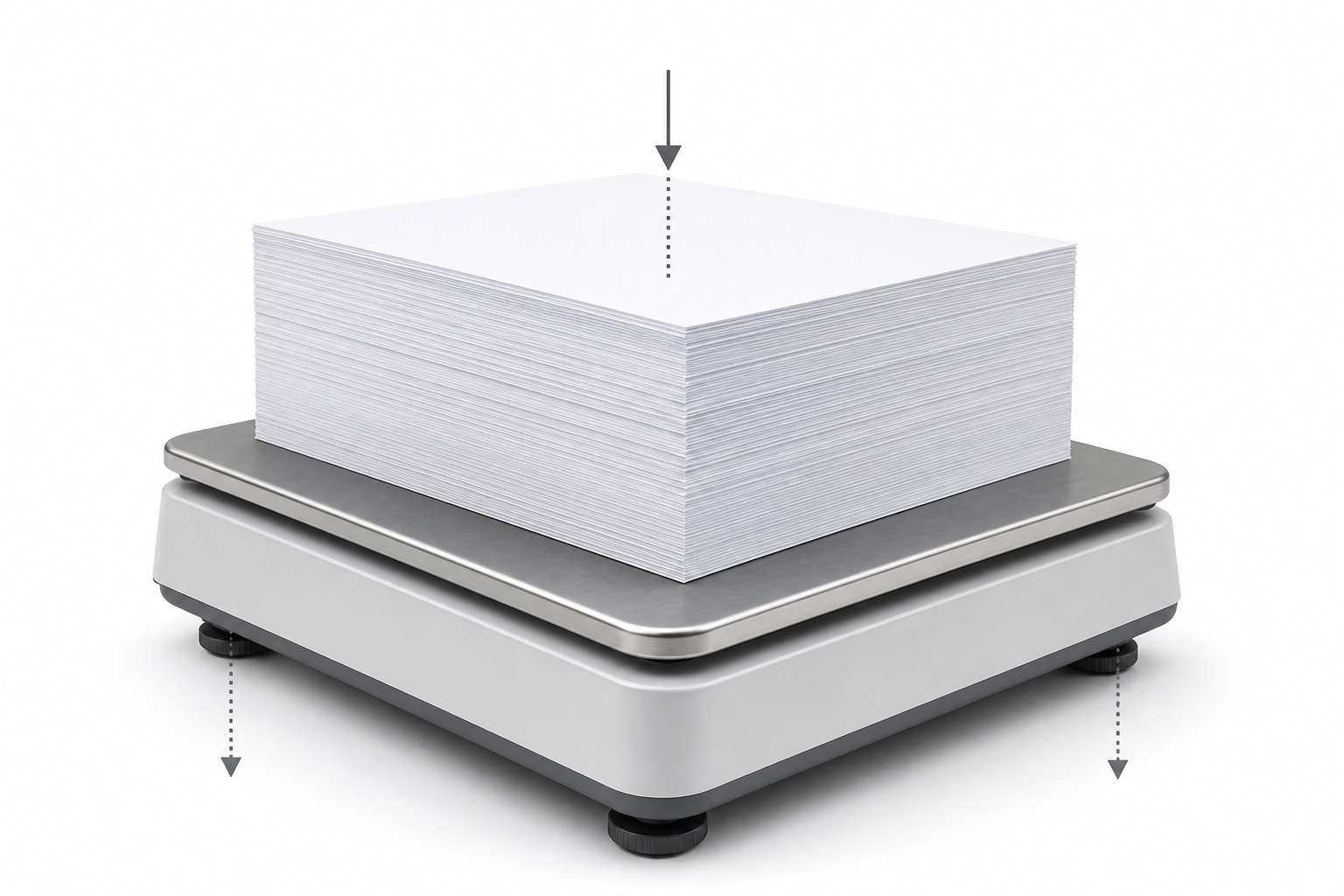
Use 20 lb copy paper as the default when the job is high-volume, internal, and not intended to create a premium tactile impression. Typical examples include drafts, meeting handouts, training packets, forms, internal reports, ordinary correspondence, records, and day-to-day copier output. For these workflows, the goal is consistency and machine compatibility rather than a heavier feel.
Do not make 20 lb the automatic default for every paper request. Separate approval should be required for premium client presentations, proposals where hand feel matters, color-heavy pieces, specialty forms, preprinted letterhead, or any document where a department has a documented reason for heavier stock. If a team requests 24 lb paper, treat it as an exception with a stated use case, not as a competing everyday standard. This keeps the approved 20 pound copy paper item simple, avoids unnecessary SKU fragmentation, and helps procurement compare supplier quotes against the same baseline each time.
Lock Down the Variables That Cause Wrong Orders
Most wrong orders happen after the buyer confirms the weight but leaves other fields open. The first control point is size. Letter-size 8.5 x 11 paper should have its own approved line, and legal-size 8.5 x 14 paper should have a separate line. They may share the same 20 lb bond weight, but they are not interchangeable in trays, files, forms, or document workflows.
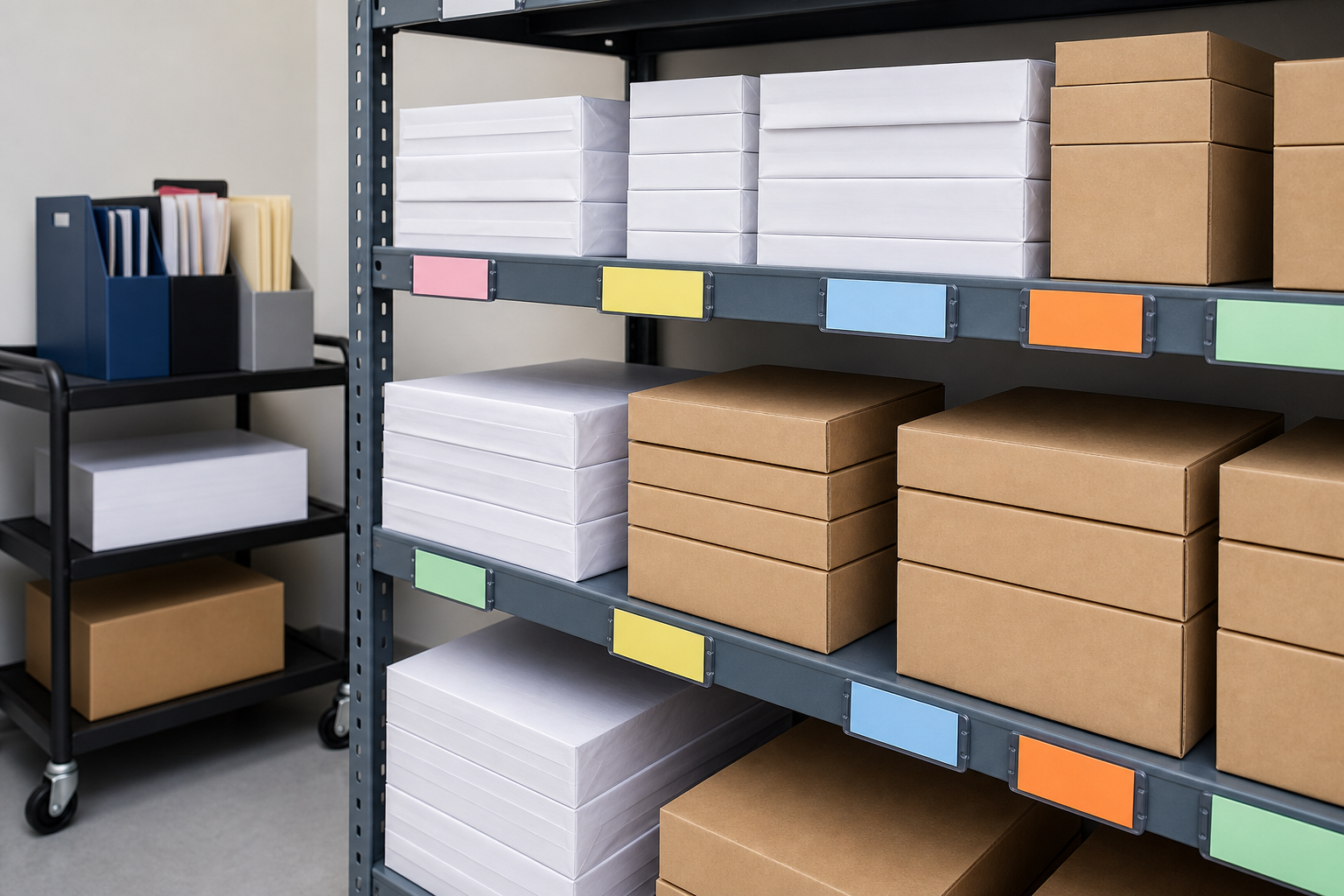
Also separate standard copy paper from oversized requests. If a department actually needs ledger or tabloid output, route that demand outside the 20 pound letter/legal standard and compare the correct format, such as 11×17 copy paper 5-ream case nearby, rather than allowing an 8.5 x 11 line to be stretched informally.
- Brightness and color: state white paper and the target brightness, such as 92 bright, when visual consistency matters across departments.
- Equipment fit: confirm the paper size and weight range supported by the actual printers, copiers, trays, and drawers in use.
- Duplex behavior: if two-sided printing is common, confirm manufacturer guidance and run small validation steps before making a location-wide switch.
For multi-location businesses, document these variables in the approved item record, not only in a one-time purchase note. A consistent record reduces mismatched cartons, legal-size paper ordered for letter trays, brightness variation between departments, and last-minute returns caused by ambiguous copy-paper requests.
Turn Reams, Cases, and Restock Cycles Into Order Rules
A 500-sheet ream is the familiar unit for small offices, department cabinets, and occasional use. It is also useful when a site is testing a supplier or when paper consumption is decentralized. For more detail on the single-pack format, see this guide to a ream of copy paper. For recurring office consumption, however, buyers usually need a case-based rule rather than repeated one-ream decisions.
Many business listings describe 10-ream cases, which equals 5,000 sheets when each ream contains 500 sheets. Use that format in the purchasing standard if the office routinely consumes multiple reams and has adequate clean, dry storage. A case standard also makes receiving and invoice checks easier because the buyer can verify reams per case and cases ordered against the purchase order.
Convert pack format into restock behavior. Track how many reams each location or department uses during a normal period, then set a reorder point based on expected usage before the next replenishment plus a reasonable reserve. Avoid over-ordering if storage space is limited, cartons will be split across unsecured areas, or the paper may sit in poor conditions. The goal is not simply to buy more 20 lb copy paper; it is to keep the standard item available without creating damage, confusion, or emergency purchases.
Compare Quotes by Unit Cost Without Buying on Price Alone
Once the 20 pound copy paper specification is fixed, price comparison becomes more reliable. Normalize every quote to the same size, weight, brightness, color, sheets per ream, and reams per case before judging the number. A low price for a single ream should not be compared directly with a case quote unless procurement converts both to the same unit.

| Comparison point | What to calculate or confirm |
|---|---|
| Cost per sheet | Total paper cost divided by total sheets quoted |
| Стоимость за рулон | Useful for department-level allocation and small orders |
| Cost per case | Useful for recurring restock and receiving checks |
| Landed cost | Include applicable shipping, handling, pickup labor, or split-shipment effects when they apply |
The lowest quoted price can still create friction if it results in partial cases, inconsistent substitutions, extra receiving steps, or emergency reorders because quantities were too small. Local pickup may be convenient for a short-term gap, but it also uses staff time and must be checked against the exact product specification. Delivery can reduce internal handling, but storage capacity and receiving coordination still matter.
Ask suppliers to state the quote unit clearly: per ream, per case, per carton, or bulk order. Also ask whether the quoted product must be accepted as a fixed item or whether approved equivalents may be supplied under your substitution rules. This makes price analysis part of risk control, not just a race to the lowest visible number.
Create Substitution Rules Before a Product Is Out of Stock
Substitution decisions should be made before a department runs out of paper, not during an urgent reorder. For 20 pound copy paper, the safest approach is to divide specifications into flexible fields and approval-required fields. This lets buyers maintain supply continuity while protecting the standard that printers, users, and invoices are built around.

| Usually flexible | Confirm before changing |
|---|---|
| Brand, equivalent multipurpose positioning, or seller packaging description | 20 lb bond weight, 8.5 x 11 or 8.5 x 14 size, white color, brightness expectation, sheets per ream, and reams per case |
| Carton labeling style or product naming that still maps to the approved spec | Any move to 24 lb, another weight, a different brightness level, legal instead of letter, or a different case count |
If 92 bright is important for consistent internal documents, state it as a required field. If the organization can accept a small brightness variation, define that tolerance in the approved item record rather than leaving it to individual buyers. The same logic applies to case quantity: a product that matches the paper but arrives in a different pack format may disrupt storage, cost comparison, or departmental allocation.
Document exceptions for legal-size paper, duplex-heavy workflows, client-facing documents, and any machines with manufacturer-specific guidance. A written rule prevents a stockout from becoming an uncontrolled switch to heavier paper, wrong-size paper, or a package count that does not match the PO.
Write the RFQ or PO Line for 20 Pound Copy Paper
The final step is to put the standard into a line item that suppliers, approvers, receiving teams, and accounts payable can all read the same way. A practical RFQ or PO line can look like this: 20 lb bond copy paper, 8.5 x 11 letter size, white, 92 bright, 500 sheets per ream, 10 reams per case, 5,000 sheets per case, for routine office copying and printing. If legal-size paper is required, create a separate line that changes the size to 8.5 x 14 and keeps the remaining fields visible.
Add purchasing context after the line item: requested quantity, preferred quote unit, delivery or pickup location, receiving constraints, intended departments, and whether equivalent products are allowed if they meet the documented substitution rules. For equipment-sensitive environments, add a note that the paper must be suitable for the specific printers and copiers used by the organization, based on manufacturer guidance or internal validation.
When you request a quote or sourcing recommendation, avoid sending only the phrase copy paper. Send the defined 20 pound copy paper spec with size, brightness, sheets per ream, reams per case, quantity, and delivery location. That gives the supplier enough information to quote comparable options and gives procurement a cleaner basis for approval, reorder setup, and substitution control.
If nearby ordering or local pickup is being considered, confirm the exact product, case count, pickup location, and substitution policy before releasing the order. Treat availability as a verification step, not an assumption.
Frequently Asked Questions
Can 20 pound copy paper be approved for duplex printing?
Yes, 20 lb paper is commonly acceptable for routine two-sided office printing when the printer or copier supports that paper weight. For high-volume duplex workflows, procurement should confirm equipment guidance and test for jams, curling, and show-through before making it the approved standard.
Is 92 bright required when ordering 20 lb copy paper?
Not always. Use 92 bright as a required field when departments need consistent-looking white documents; otherwise, define an acceptable brightness range so buyers do not approve inconsistent substitutions by accident.
Should legal-size 20 lb paper have a separate purchasing line from letter-size paper?
Yes. Legal-size paper can share the same 20 lb bond weight, but its 8.5 x 14 size affects trays, forms, filing, and department usage, so it should not be mixed into the letter-size line item.
When should an office order a 10-ream case instead of single reams?
A case usually makes more sense when a department or location uses copy paper predictably and has suitable storage. Single reams are better for low-use areas, supplier trials, or decentralized cabinets where a full case may sit too long.
Can a supplier substitute 24 lb paper for 20 lb copy paper?
Only if the buyer approves the change. A 24 lb sheet may feel more substantial, but it changes the approved weight standard and can affect cost comparison, usage rules, and equipment expectations.
What should be confirmed before local pickup of 20 lb copy paper?
Confirm the exact size, weight, brightness, color, sheets per ream, reams per case, and substitution policy before releasing the order. A category name alone is not enough for procurement-controlled buying.