

What a Piece of Copy Paper Means in Office Purchasing
A piece of copy paper is one sheet. In office purchasing, however, that phrase is not an orderable specification by itself. The buyer needs to determine whether the requester needs a single sheet right now, a refill for a printer area, or a replenishment order for an approved office-paper stock point.
Most business paper is purchased as packs, reams, cartons, or cases rather than loose sheets. A common office ream contains 500 sheets, and larger case quantities may be described by total sheets, such as 5,000 sheets, but the listing or quote should always be checked. Treat the individual sheet as the consumption unit and the ream or case as the procurement unit.
Clarify the meaning before a purchase is created
- If the person needs one page for an immediate task, look first at existing internal supply, copier rooms, print areas, or approved stock locations.
- If the request means ordinary white copy paper, convert it into a size, weight, brightness, and quantity requirement before buying.
- If the phrase is really about a hard-copy document, clarify the workflow separately; the term paper copy can point to a different office communication issue.
- If duplicate forms are required, ordinary copy paper may be the wrong category; carbon or carbonless forms should be specified separately.
This first clarification prevents a one-sheet need from becoming an unnecessary order, while also preventing a real stock problem from being dismissed as a casual request.
From One Sheet to Office Stock: Match the Request to the Scenario
When an employee asks for a piece of copy paper, procurement should not automatically open a purchase request. The same phrase can represent an immediate handoff, a department-level shortage, a planned case reorder, or a recurring access issue. Matching the scenario before buying helps avoid both emergency ordering and excess stock.
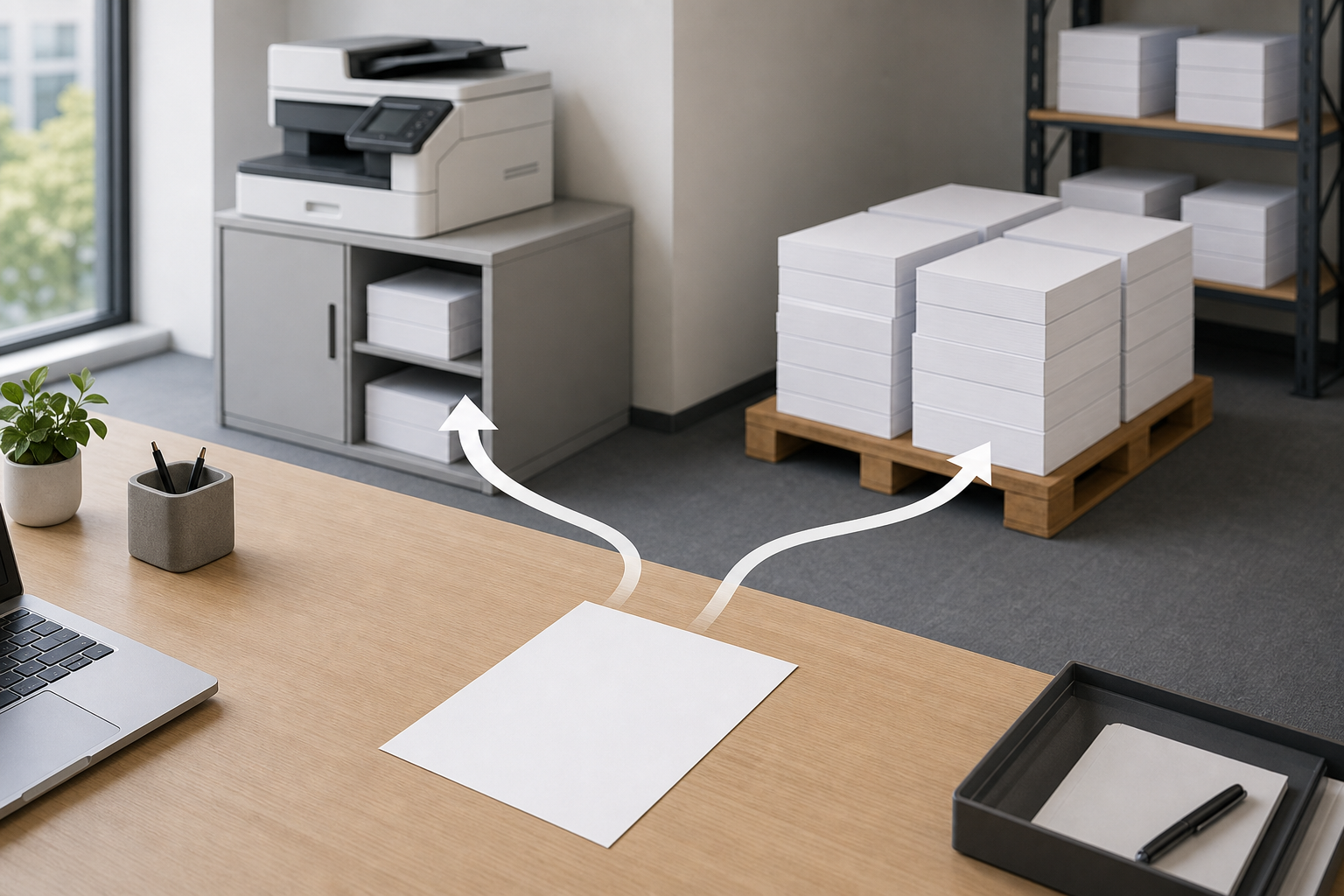
Scenario triage for the buyer
- One-off need: The employee needs a single sheet for a form, note, or quick print. The practical response is to direct them to existing approved stock, not create a supplier order.
- Ream-level restock: A desk, printer tray area, copy room, or department cabinet is low. Confirm the same paper spec already used in that location and replace by ream or approved pack size.
- Case replenishment: Multiple reams are needed across printers, departments, or sites. Convert each proposed purchase into total sheets so a case, carton, or multi-ream box can be compared consistently.
- Recurring office supply planning: If people repeatedly ask for individual sheets, the issue may be unclear access, no visible reorder trigger, or an ownerless stock point.
This scenario split is especially useful for facilities coordinators and office managers because it keeps small usage needs from being ignored. A single sheet should be easy to obtain internally; repeated single-sheet requests should push the buyer to inspect floor stock, reorder rules, and whether approved paper is placed where work actually happens.
Translate a Piece Into Purchasable Units: Sheet, Ream, Carton, Case, Total Sheets
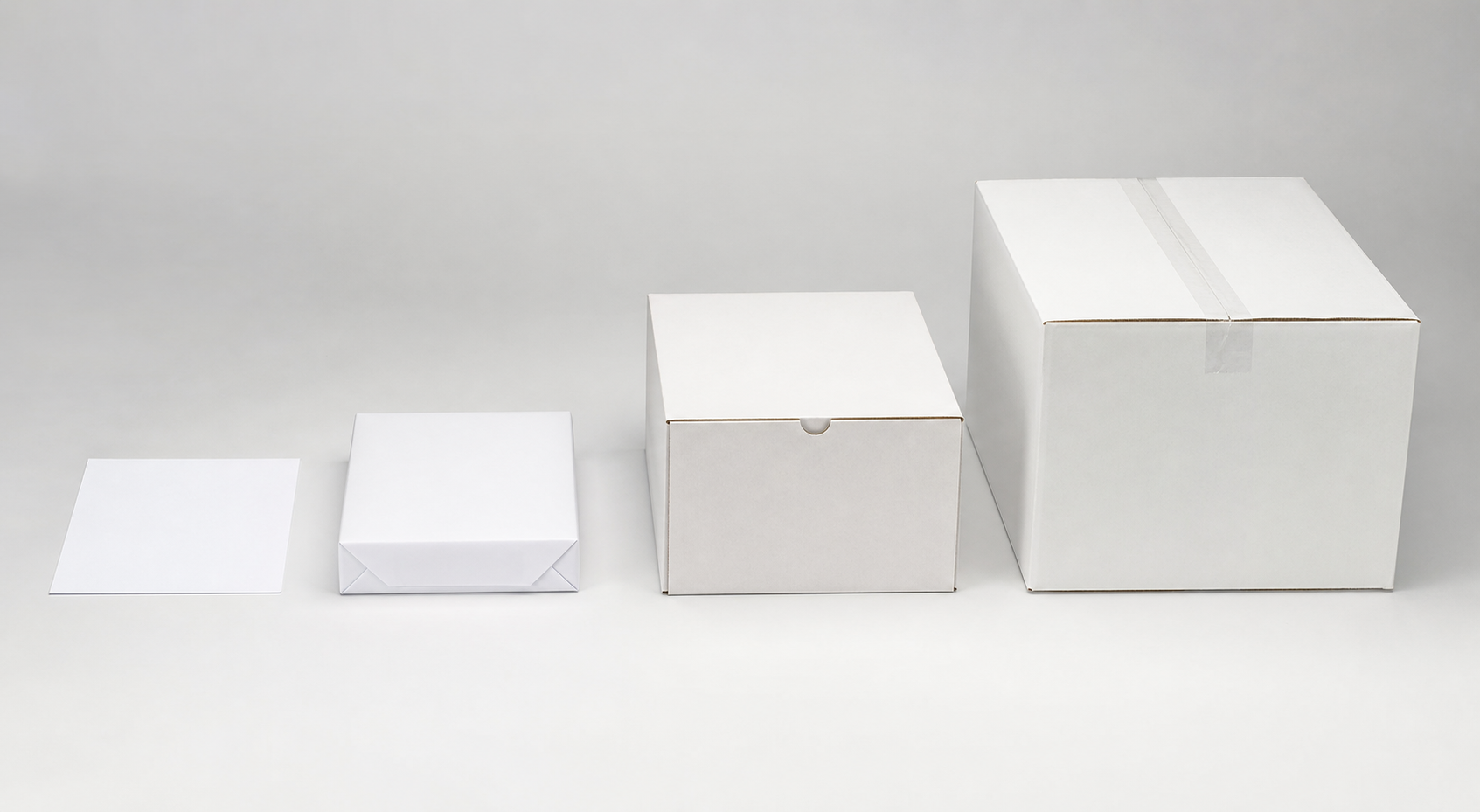
The word piece describes how paper is used, not how it is normally sold. Supplier pages and quotes may use ream, pack, carton, box, or case, so buyers should translate every option into total sheets before comparing products or approving a reorder. This is the bridge between a casual office request and a controlled paper supply decision.
| Единица | What it means for purchasing |
|---|---|
| Single sheet | The page an employee consumes; usually pulled from internal stock rather than bought alone. |
| Ream | A common office restock unit, often 500 sheets, but confirm the sheet count on the listing. |
| Carton or case | A multi-ream supply unit; normalize by sheets per ream, reams per case, and total sheets. |
| Recurring stock | A replenishment rule tied to usage, departments, printers, or supply points. |
Pack wording matters less than the calculation. A box that sounds large may contain fewer total sheets than another supplier’s case, while a smaller pack may fit a low-volume team better than a full replenishment unit. For broader planning around copy paper for office use, compare the unit count with actual print and copy demand rather than buying on product names alone.
For B2B orders, record the unit exactly: 500 sheets per ream, number of reams per carton or case, and total sheets ordered. That notation makes approvals, receiving checks, and future reorders easier to reconcile.
The Basic Spec Hidden Inside a Single-Sheet Request
A request for one sheet hides several specifications. In a US office, the default assumption is often letter-size 8.5 x 11 paper for everyday copying and printing, but assumption is not enough for purchasing. If the user needs contracts, forms, signage, spreadsheets, or tabloid-style output, legal or ledger paper should be written as a separate requirement rather than treated as a substitute.
For ordinary office workflows, the buyer should confirm size, color, paper weight, brightness, finish, unit count, and equipment compatibility. White paper is common for day-to-day documents, but colored stock or preprinted forms need a separate line. Weight such as 20 lb and brightness values seen in supplier listings are comparison fields; they should be matched to the approved office standard or confirmed before substitution.
Minimum spec questions
- Is standard 8.5 x 11 copy paper acceptable, or is legal or ledger size required?
- Should the paper be white, colored, recycled, branded, or otherwise restricted by policy?
- What weight and brightness are acceptable for the documents being produced?
- Will the paper run through copiers, laser printers, inkjet printers, duplex equipment, or mixed-use office devices?
The goal is not to overcomplicate a simple sheet. It is to avoid ordering paper that fits one printer tray but not another, or paper that meets a single employee’s need but conflicts with the office’s approved standard.
Verify Supplier Listings and Quotes Without Assuming Stock
Once the request becomes a purchasable unit, the buyer still has to read listings and quotes carefully. The safest review starts with unit math: sheets per ream, reams per carton or case, cartons per order, and total sheets. Do not rely on headline wording such as pack, box, case, or bulk unless the sheet count is stated clearly.
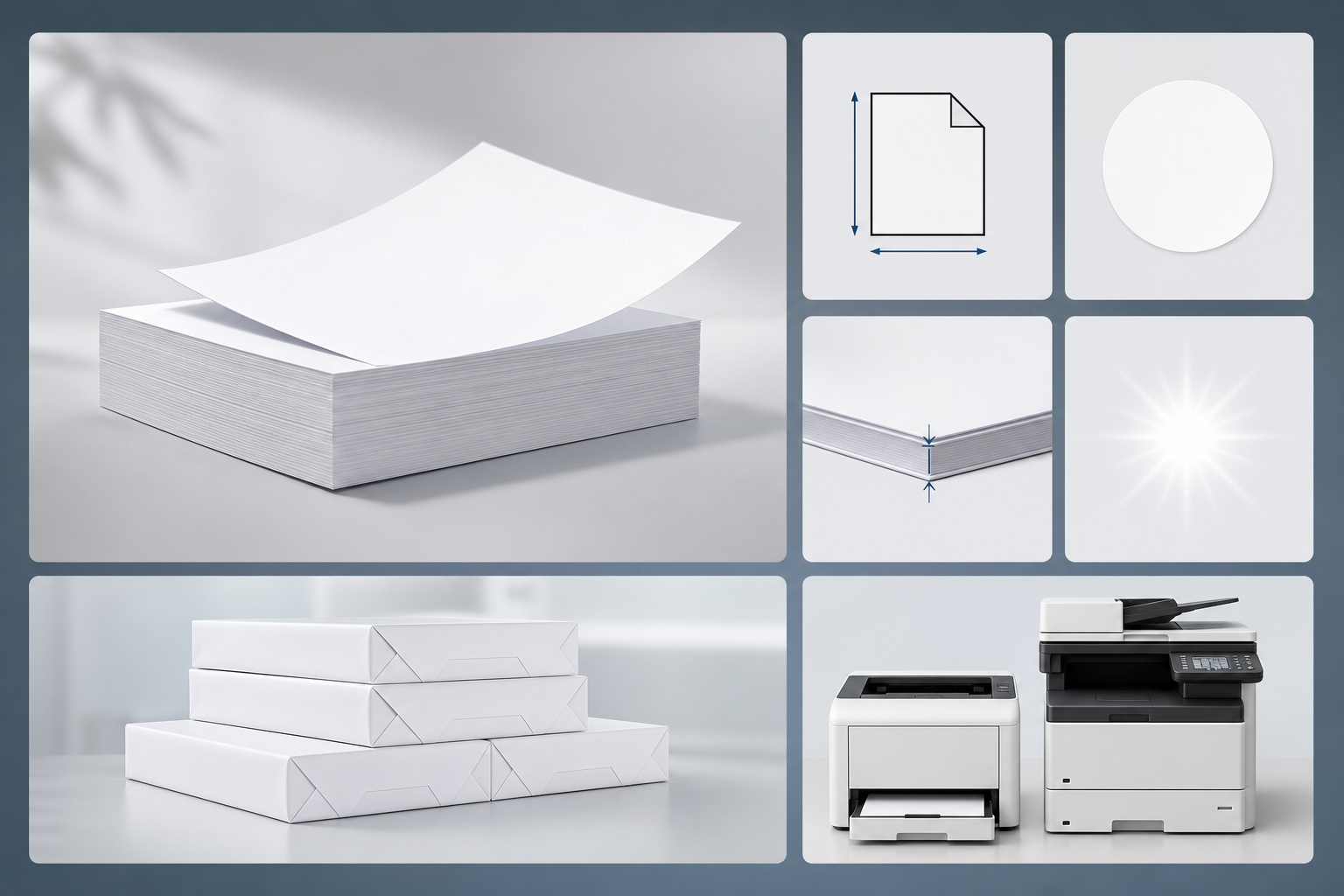
Compatibility language also matters. A listing may describe copy paper, printer paper, multipurpose paper, laser paper, inkjet paper, or copier paper. Those terms can overlap, but they should not be treated as identical if your equipment, duplex requirements, or document workflows have constraints. When a supplier proposes an alternative, confirm that size, weight, brightness, finish, and equipment compatibility remain within the approved range.
Availability is a verification task
- Confirm whether the quoted unit is a single ream, multi-ream carton, or full case.
- Ask whether substitutions will require approval before fulfillment.
- Verify any pickup, delivery, or local availability information directly from the supplier or ordering system at the time of purchase.
- Check packaging descriptions so receiving teams know what should arrive.
This approach avoids assuming stock, delivery timing, or local pickup options that have not been confirmed. It also reduces receiving disputes because the purchase request, supplier quote, and delivered unit can be checked against the same total-sheet calculation.
When Single-Sheet Requests Reveal a Replenishment Gap
Repeated requests for a piece of copy paper are rarely just about one page. They can signal that a printer area is empty, a department cabinet is locked or unowned, or employees do not know where approved paper is stored. For procurement and facilities teams, these requests are useful early warnings because they appear before a copier stops work for an entire team.
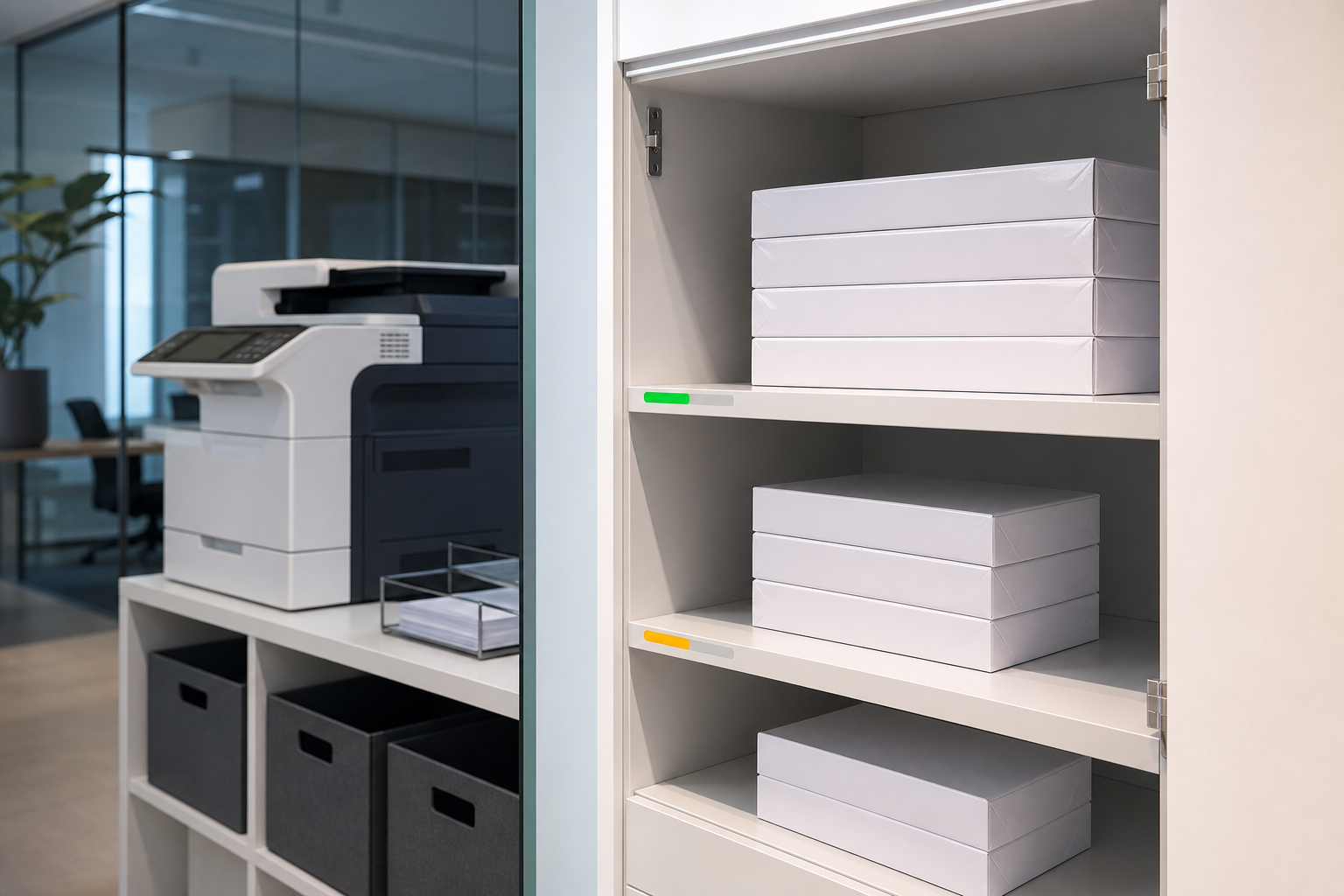
The control issue is usually not the sheet itself; it is the absence of a visible replenishment rule. If employees wait until the last sheet is gone, every restock feels urgent. A better trigger is based on remaining reams at each supply point, such as when a cabinet reaches an agreed minimum level. The exact threshold should reflect usage, storage space, and how often orders are reviewed, rather than a universal rule.
What to inspect before increasing orders
- Are paper access points close to the printers and copiers that consume the most sheets?
- Is one person responsible for checking remaining reams and initiating replenishment?
- Are different sizes or weights mixed together in the same location, creating tray and compatibility mistakes?
- Do employees take single sheets because they cannot find an open ream or approved storage location?
When these problems appear, buying more paper may not solve the underlying issue. Planned floor-stock management, clear ownership, and ream-based reorder triggers often reduce urgent single-sheet requests more effectively than ad hoc purchasing.
Minimum Order-Line Format for a Piece-of-Copy-Paper Request
After the requester confirms that ordinary copy paper is needed, reduce the request to one clear order line. The line should be specific enough for supplier comparison, approval, receiving, and future reordering, but not so narrow that it accidentally names a product feature your organization does not require.
Order-line sequence
Use this structure: paper type, sheet size, color, weight, brightness or approved range, finish if relevant, sheets per unit, quantity unit, total quantity, and printer or copier compatibility. For example: Copy paper, 8.5 x 11 in, white, 20 lb, approved brightness range, 500 sheets per ream, quantity stated in reams or cases, for office copier and printer use. Adapt the fields to your internal standard and remove fields that your policy does not control.
If alternatives are allowed, state the guardrails. A safer phrase is: approved equivalent must match size, color, weight, unit count, and equipment compatibility; substitutions require buyer approval. This protects the order from a well-intended replacement that changes the tray size, sheet count, or print performance expected by users.
Before discussing supply options, turn the casual request for a piece of copy paper into a confirmed office-paper requirement: size, weight, brightness, sheet count, quantity unit, and expected usage. That small translation step gives the buyer a cleaner quote conversation and gives the supplier a clearer basis for recommending an appropriate unit.
Често задавани въпроси
Can a business buy just one piece of copy paper?
Usually not through standard office-supply procurement. One sheet is normally taken from internal stock, while suppliers typically sell paper in packaged units such as reams, cartons, or cases.
Is a piece of copy paper the same as a ream?
No. A piece of copy paper is one sheet. A ream is a packaged purchasing unit, commonly 500 sheets, and should be verified on the supplier listing or quote before ordering.
What should I order if an employee asks for a single sheet?
First confirm whether approved office stock is already available. If restocking is needed, order by the approved unit, such as a ream or case, and include size, color, weight, sheet count, and equipment compatibility.
When should single-sheet requests become a ream or case purchase?
A ream or case purchase makes sense when requests are recurring, multiple supply points are low, or printer areas need planned replenishment. The decision should be based on usage, remaining reams, storage space, and total sheets per unit.
How should I word a purchase request for a piece of copy paper?
Convert the phrase into a clear order line: copy paper, sheet size, color, weight, brightness range, sheets per ream or case, quantity, and printer or copier compatibility. Note whether substitutions need approval.
How can I check availability for copy paper near me without assuming stock?
For an immediate single sheet, check approved onsite supply or print areas first. For purchasing, verify local supplier listings, pickup options, and stock status directly in the ordering system or quote at the time of purchase.