

Verify the 10-Ream Case Before You Treat It as 5,000 Sheets
A case copy paper 10 reams order should be validated at carton level before procurement compares sellers. A common office carton contains 10 reams, each ream contains 500 sheets, and the case therefore totals 5,000 sheets. That relationship is common, but it is not a substitute for reading the listing, quote, or purchase order line.
Use packaging words carefully. Case, carton, and box often describe the outer package, not an automatic quantity guarantee. The control fields are reams per case, sheets per ream, and total sheets per carton. If any of those fields are missing, ask the supplier to confirm in writing or choose a listing with clearer quantity details.
- Case quantity: 10 reams per carton.
- Sheet count: 500 sheets per ream and 5,000 total sheets, when listed.
- Paper size: letter, legal, or another stated size.
- Format: standard, punched, colored, or specialty only when shown in the product details.
This step prevents a buyer from comparing a true 5,000-sheet carton with a smaller bundle, a different sheet size, or a specialty format. For a unit-level reference, see our 500-sheet ream of copy paper guide, then return to the case-level fields before approving a carton order.
Build a Repeat-Order Case Spec Standard
For recurring office paper, the best comparison baseline is a short case spec standard. This is the paper profile a buyer can copy into a requisition, vendor quote request, or approval note so future 10-ream cartons are measured against the same requirement.
| Поле | What to record for repeat ordering |
|---|---|
| Размер | Specify 8.5 x 11 letter, 8.5 x 14 legal, or another required size. |
| Тегло | Record the required paper weight, such as 20 lb when that is the office standard. |
| Яркост | Use the listed brightness value, such as 92 brightness, when it is part of the requirement. |
| Color and finish | Confirm white, colored, smooth, recycled, or other stated attributes only when listed. |
| Carton quantity | State 10 reams, 500 sheets per ream, and 5,000 total sheets when applicable. |
| Special format | Record 3-hole punched, legal, colored, or specialty formats only if needed. |
Keep the standard practical. A brand name may be useful for internal reference, but the repeat-order standard should still define the paper itself so equivalent cases can be evaluated if substitutions are considered. For broader context, review our copy paper specs for office procurement, then reduce the requirement to fields that fit cleanly on a purchase order line.
Shortlist Available 10-Ream Case Options by Exact Carton Fields
Once the spec standard is written, create a shortlist using fields visible in each 10-ream case listing. Do not rely on product titles alone; titles may emphasize carton, case, or box while omitting total sheets, paper size, or format. A useful comparison view should show brand or item name, case quantity, total sheet count, paper size, paper weight, brightness, color, special format, case price, seller or fulfillment status, and any visible pickup or delivery details.
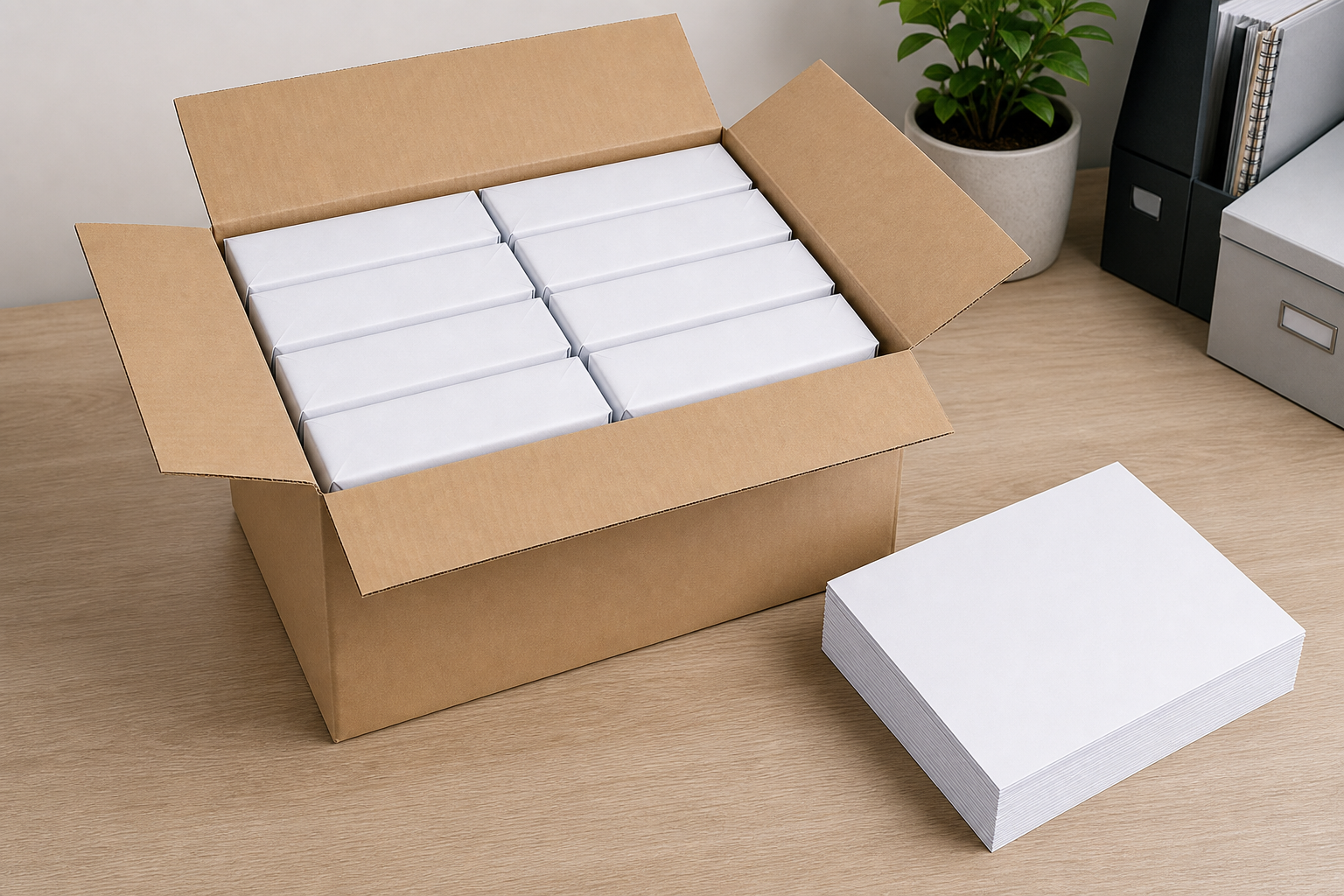
Group products only when they are equivalent. Standard letter-size white multipurpose cases should be compared with other standard letter-size white cases. Legal-size paper, 3-hole punched sheets, colored paper, recycled-content paper, or heavier presentation paper should sit in separate groups unless the user intentionally requests those formats.
- Exclude listings that show one case but do not confirm 10 reams or 5,000 sheets.
- Hold back options where seller substitutions are unclear or core specs are hidden.
- Do not let sale labels override a mismatch in size, weight, brightness, or format.
- Keep availability and fulfillment notes attached to the same line item being evaluated.
For B2B approval, the shortlist should also identify whether current availability, lead time, pickup, delivery, and substitution rules are displayed. If those details are not provided, treat fulfillment as an unresolved risk rather than an assumed benefit. This keeps the comparison focused on reliable cartons, not look-alike listings.
Calculate True Case Value With a Per-Sheet Formula
Price should be normalized only after the case fields match. The simplest formula is: true case cost equals the product case price plus any visible shipping, handling, delivery, or pickup-related charges that apply. Then divide by the verified carton quantity. This prevents a low headline price from hiding fulfillment cost or a spec mismatch.
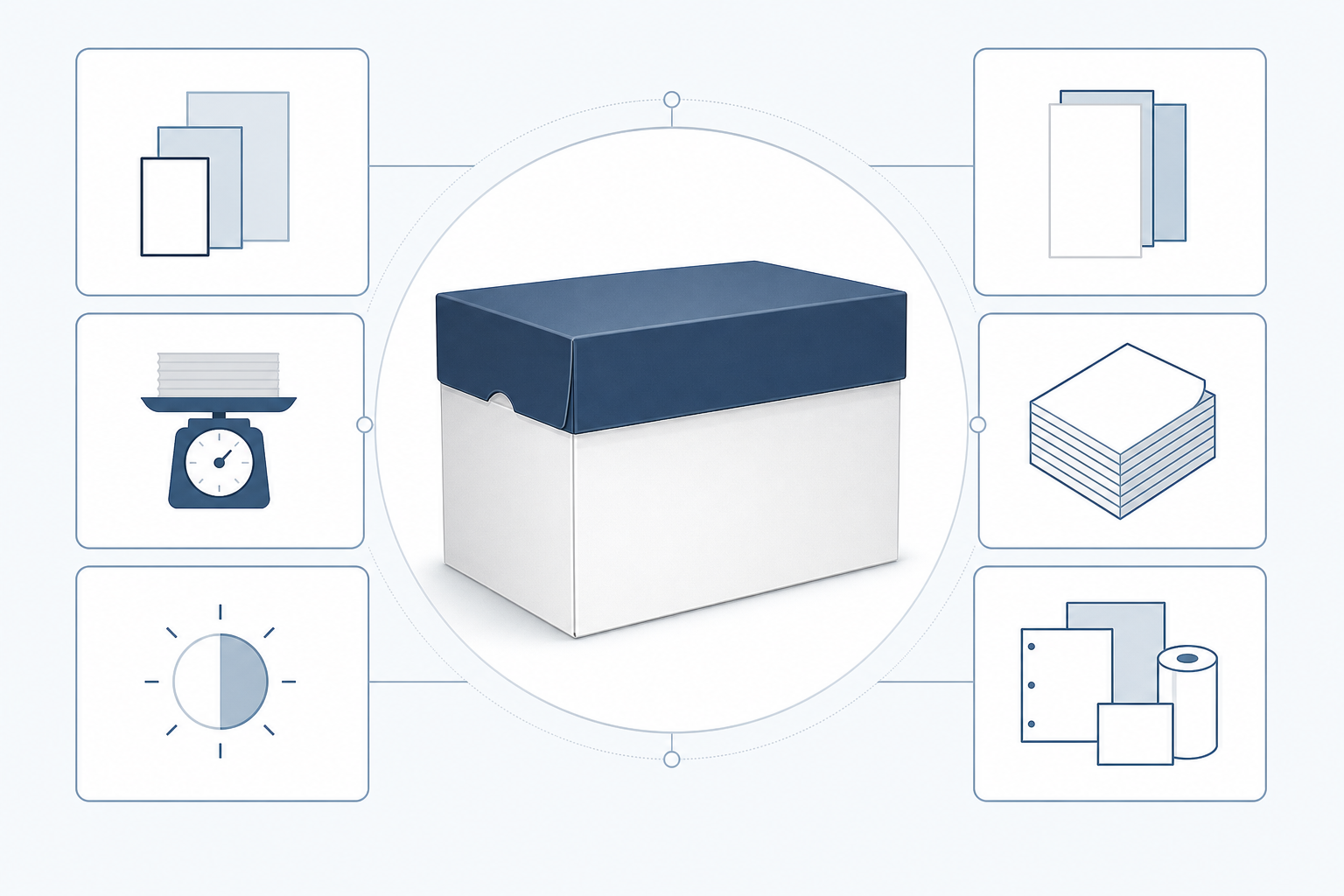
| Metric | Formula | Procurement use |
|---|---|---|
| True case cost | Case price plus visible fulfillment costs | Shows the amount being approved for that carton. |
| Price per ream | True case cost divided by 10 | Normalizes the 10-ream case against other equivalent cases. |
| Price per sheet | True case cost divided by verified total sheets | Supports budget comparison when total sheet count is confirmed. |
| Comparable case set | Same size, weight, brightness, color, and format | Keeps the analysis from mixing unlike products. |
If a listing does not display fulfillment cost, do not assume it is zero. Mark it as unknown until the checkout page, quote, or seller communication confirms the cost. Buyers comparing multiple pack sizes can also review how to compare reams of copy paper by pack size and sheet count, but the approved case decision should use the verified 10-ream carton math.
Set Reorder Quantities in 5,000-Sheet Case Counts
For office stock planning, convert demand into 5,000-sheet cases rather than loose reams. Start with observed print and copy use by department, printer area, school office, or administrative team. If you track monthly sheet consumption, divide expected monthly sheets by 5,000 to estimate case demand; if you track weekly usage, multiply to match your reorder cycle first.
A case-count model for reorder decisions
- Expected period use divided by 5,000 equals estimated cases consumed during that period.
- Minimum-on-hand level equals the number of full cases needed before the next order can arrive, based on your own approval and fulfillment cycle.
- Reorder quantity equals expected use through the next cycle plus safety stock, minus usable cases already on hand.
- Storage cap equals the maximum unopened cases that can be kept dry, flat, accessible, and out of traffic paths.
Use full cases as the planning unit even if reams are distributed internally. A department may receive individual reams, but purchasing should know how many 10-ream cartons remain unopened and how many are already committed to printer areas. This prevents a misleading inventory count where scattered reams appear available but do not support the next high-volume print period.
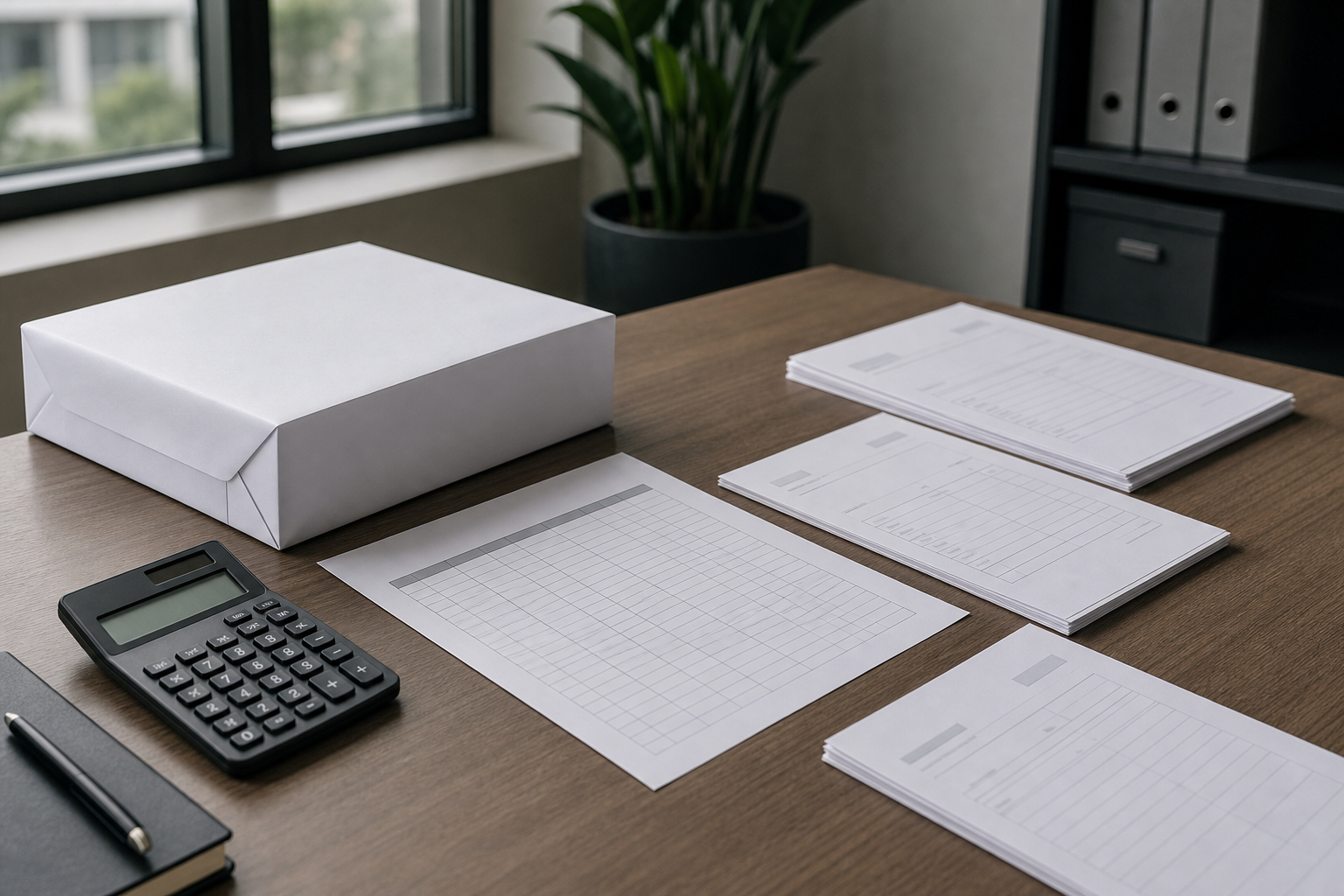
Review reorder quantities after unusual events, such as testing periods, annual reporting, open enrollment, or mailing projects. The goal is not to overfill storage; it is to maintain enough verified case copy paper 10 reams inventory to avoid emergency substitutions.
Receive, Store, and Distribute 10-Ream Cases Correctly
After purchase approval, control the carton at receiving. Match each delivered or picked-up case against the purchase order, packing slip, and product label before the case is broken open. Confirm carton count, reams per case, sheet count, size, weight, brightness, color, and any special format required by the approved order.
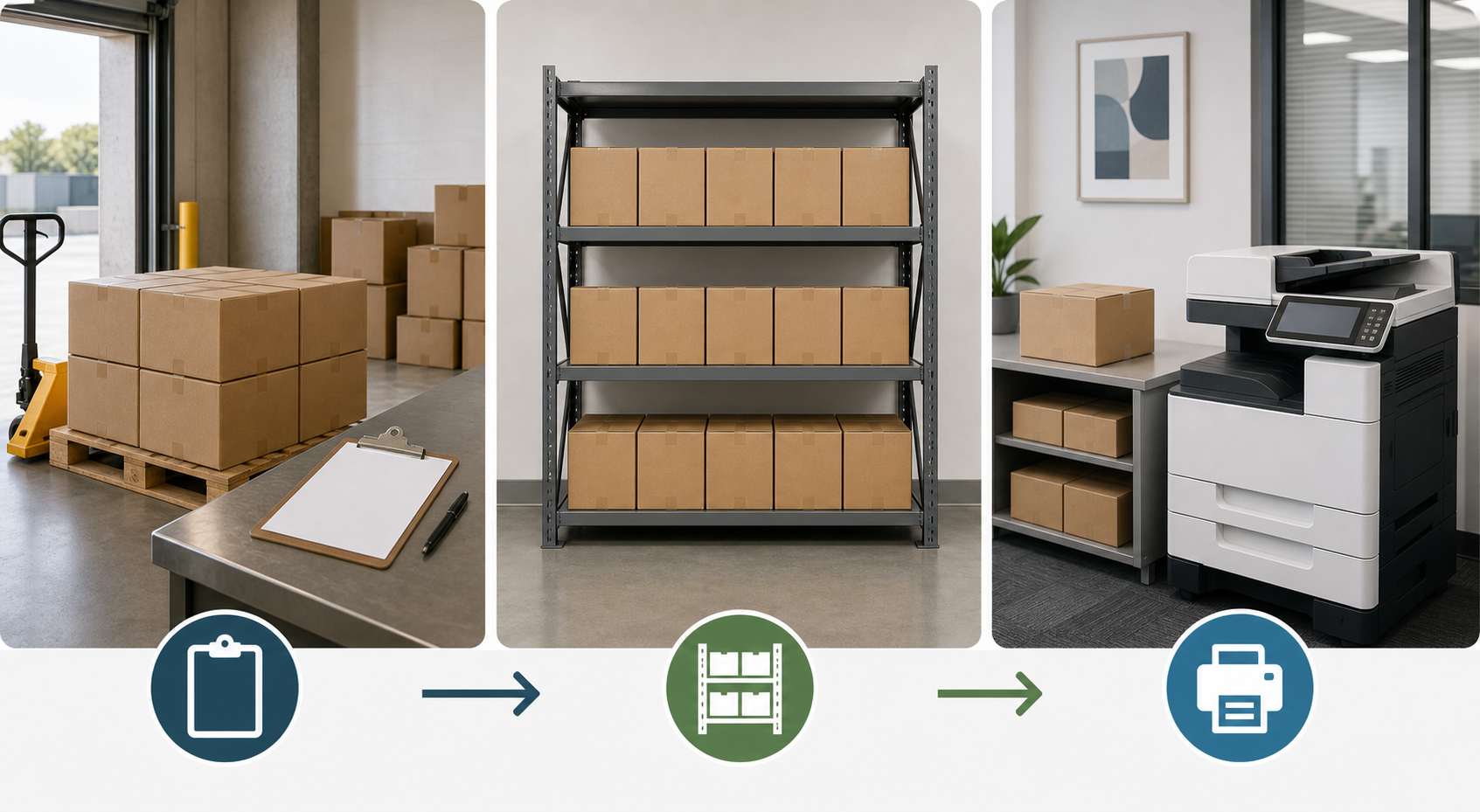
Do not distribute paper to print areas until receiving is complete. If cartons are damaged, wet, crushed, short shipped, or labeled with different specs, document the issue promptly according to your internal process and contact the seller with the order information. This is especially important when multiple departments share one order and a mismatch could spread before it is noticed.
Storage controls for unopened cartons
- Keep unopened paper dry, flat, and protected from moisture, dust, and impact.
- Store cases where staff can lift and move them safely without blocking aisles or equipment access.
- Open cases only when reams are ready to be issued, so the remaining paper stays protected.
- Allocate by printer area or department after the case count has been confirmed.
For multi-location offices, record which cases went to which areas. A simple case-level log helps facilities or purchasing staff distinguish paper that is still in central stock from paper already assigned to a copier room, classroom, clinic station, or administrative desk.
When a 10-Ream Copy Paper Case Is Not the Best Unit
A 10-ream case is efficient only when it matches usage, storage, and document requirements. It may not be the right unit for a very low-volume office, a temporary team, or a department with limited shelf space. In those situations, buying a full 5,000-sheet carton can tie up budget, invite damage from poor storage, or leave paper sitting longer than the buyer intended.
Also avoid standard cases when the job clearly requires a different format. Legal documents may require 8.5 x 14 paper. Binder-ready workflows may require 3-hole punched stock. Customer-facing documents may call for a different weight, brightness, color, or finish. If the listing does not match the printer tray, copier settings, or document size, a low price per sheet will not make the carton a good buy.
- Choose a smaller quantity when testing a new paper type or supplier.
- Choose specialty paper when the job requires a defined finish, color, or weight.
- Choose a different case standard when the office has changed printers, forms, or storage locations.
- Pause the order if the seller does not show enough carton detail to verify the purchase unit.
Before approving the order, compare available 10-ream copy paper cases by exact carton specs and current purchasing details. Select the case that matches your office standard, visible fulfillment terms, storage capacity, and reorder plan rather than relying on package wording alone.
Често задавани въпроси
What should a purchase order say for a 10-ream copy paper case?
Use a line item that names the case as the purchase unit and includes confirmed size, weight, brightness, color, format, 10 reams per carton, and total sheets. That gives receiving and finance the same match criteria.
Can I approve a carton listing that does not show total sheets?
Treat it as unverified until the seller confirms reams per carton and sheets per ream. If the quantity remains unclear, exclude it from the case comparison.
How should I compare a sale case with a contract catalog case?
Compare only matching specs, then use the landed case cost: case price plus visible fulfillment charges. Review both per-ream and per-sheet cost before choosing.
What substitution rules work for 10-ream copy paper cases?
Allow a substitute only when it matches the approved paper size, weight, brightness, color, sheet count, and special format. Otherwise require buyer approval before receipt or distribution.
How can departments share one 10-ream case order without losing control?
Receive the cartons centrally, record full cases issued to each area, and break cartons into reams only after label checks. This keeps central stock separate from allocated paper.
When is a smaller pack safer than a 10-ream case?
Choose a smaller pack when testing a new supplier, confirming printer compatibility, serving a temporary team, or buying a specialty format with uncertain demand.