
You need clear prints, predictable handling, and good value—without over-claiming or guesswork. This side-by-side explains what changes when you move from 75 gsm to 80 gsm A4, how it affects duplex printing and show-through, and how to run a quick in-office test with free samples before you negotiate bulk pricing in China.
What “gsm” Really Means for Everyday Printing
gsm (grams per square meter) is the sheet’s basis weight. Higher gsm usually means a slightly thicker, stiffer sheet.
-
75 gsm: lighter, often chosen for high-volume internal documents and draft printing.
-
80 gsm: a touch heavier, often preferred for duplex reports and external-facing documents where opacity and feel matter.
Bottom line: gsm changes feel, stiffness, and often opacity. It does not guarantee particular jam rates or universal compatibility.
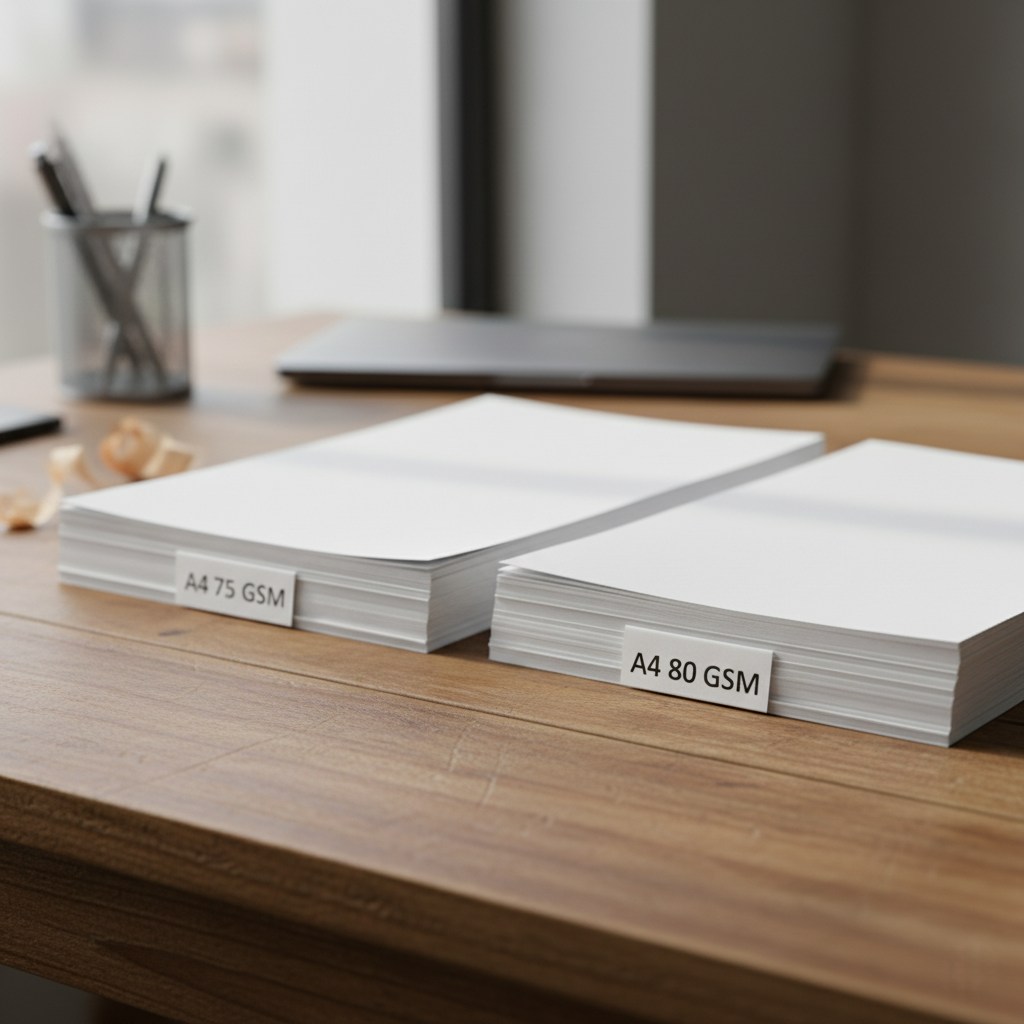
75 gsm vs 80 gsm: thickness, stiffness, feel
-
75 gsm feels lighter in hand and can reduce paper costs per ream.
-
80 gsm feels more substantial and may handle duplex jobs with less show-through, depending on brand and device setup.
How gsm influences duplex, curl, and show-through
-
Duplex: Heavier stocks often look cleaner in duplex mode. Test your own devices to confirm.
-
Curl: Storage conditions and printer heat settings matter. Slightly heavier sheets may resist curl better, but driver profiles and humidity control are key.
-
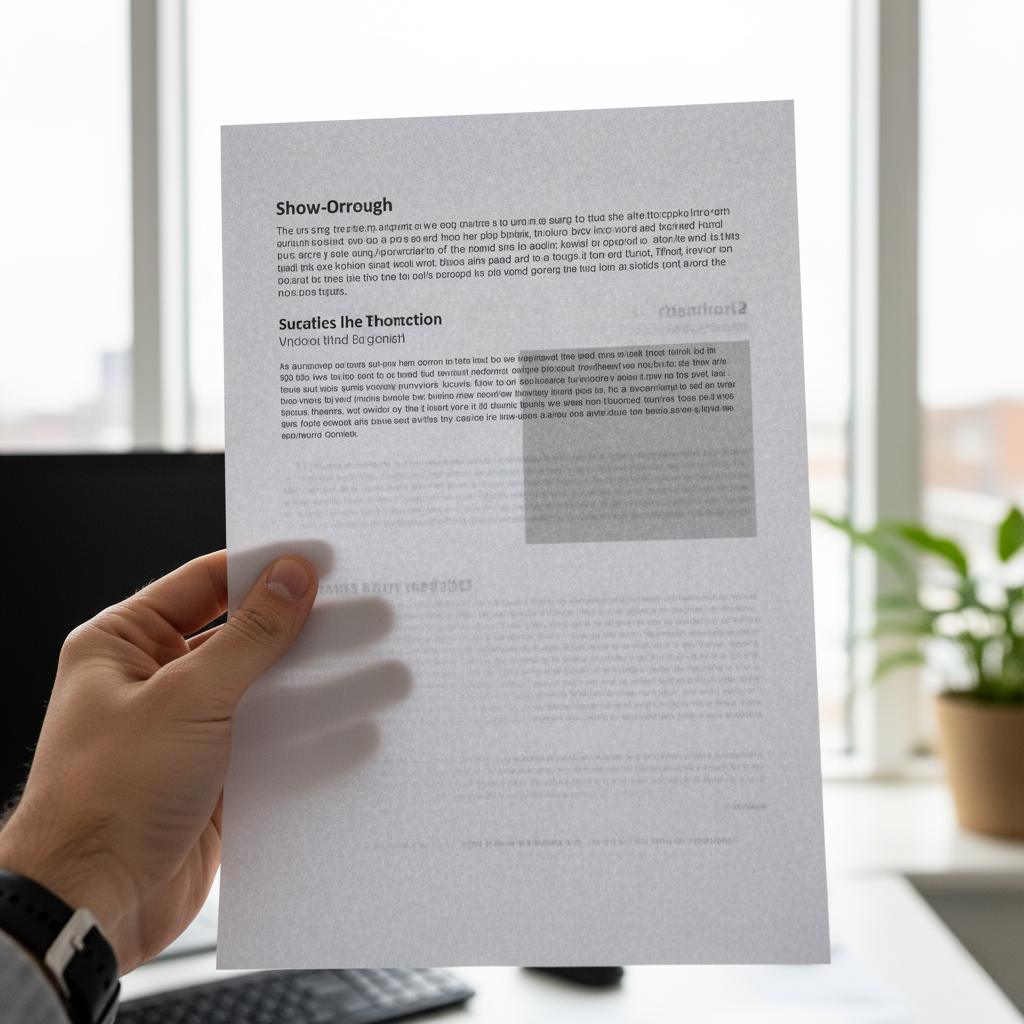
Show-through: Heavier, more opaque sheets can reduce visible text/images from the reverse side.
Print Quality & Performance in Real Devices
Laser vs inkjet expectations
-
Лазерни принтери fuse toner with heat. Slightly stiffer, smoother sheets (often 80 gsm lines) can deliver crisper text and solid fills for reports.
-
Мастиленоструйни принтери lay liquid ink. Surface treatment varies by brand; test both weights for text density, line sharpness, and drying.
Opacity, brightness, whiteness—when higher numbers matter
-
Opacity: Helps control show-through during duplex work.
-
Brightness/whiteness: Can improve perceived contrast for text and charts. Extremely high whiteness is not always “better”—aim for legibility, brand consistency, and how your graphics render.
Cost & TCO: When 75 gsm Saves vs When 80 gsm Pays Off
Cost-per-ream vs cost-per-usable-page
-
75 gsm can lower cost per ream for draft-heavy workflows and internal documentation.
-
80 gsm can pay off when duplex readability matters (fewer reprints, clearer external documents).
-
Compare usable output quality, not just the sticker price per ream.
Worked example:
If 75 gsm saves a few percent per ream but triggers extra reprints on duplex reports, your cost per usable page may rise. Run the 10-minute test below to learn which weight minimizes reprints for your exact content mix.
Shipping, storage, and handling
-
Heavier stocks increase shipment weight and warehouse load.
-
Confirm carton dimensions, cartons per pallet, and pallet weights before ordering.
-
Store cartons in a dry area; acclimatize reams to office conditions before opening to help limit curl and misfeeds.
-
Align on Incoterms (e.g., EXW, FOB, CIF, DDP) and your target delivery window before comparing quotes.

Sustainability Options
-
Recognized chain-of-custody schemes include FSC и PEFC.
-
Verify claims in the public database using the supplier’s certificate details. Avoid relying solely on packaging logos.
-
Recycled lines: Modern recycled papers often perform well for standard office use. Always test the specific SKU on your devices.
-
Packaging & recyclability: Check whether outer cartons are recyclable and follow local guidance for wrap disposal.
Compliance note: Do not claim a specific SKU is certified unless you have SKU-level proof. Avoid unverified phrases like “carbon-neutral.”
Use-Case Recommendations
-
Drafts & internal documents: Start with 75 gsm; confirm readability and handling on your main printers.
-
Duplex reports, proposals, and external-facing docs: Shortlist 80 gsm for better opacity and a more professional feel.
-
Mixed fleets in CN offices: Standard paper size is A4. If you operate mixed devices, confirm tray size, duplex defaults, and driver profiles before rollout.
How to Test Before You Buy
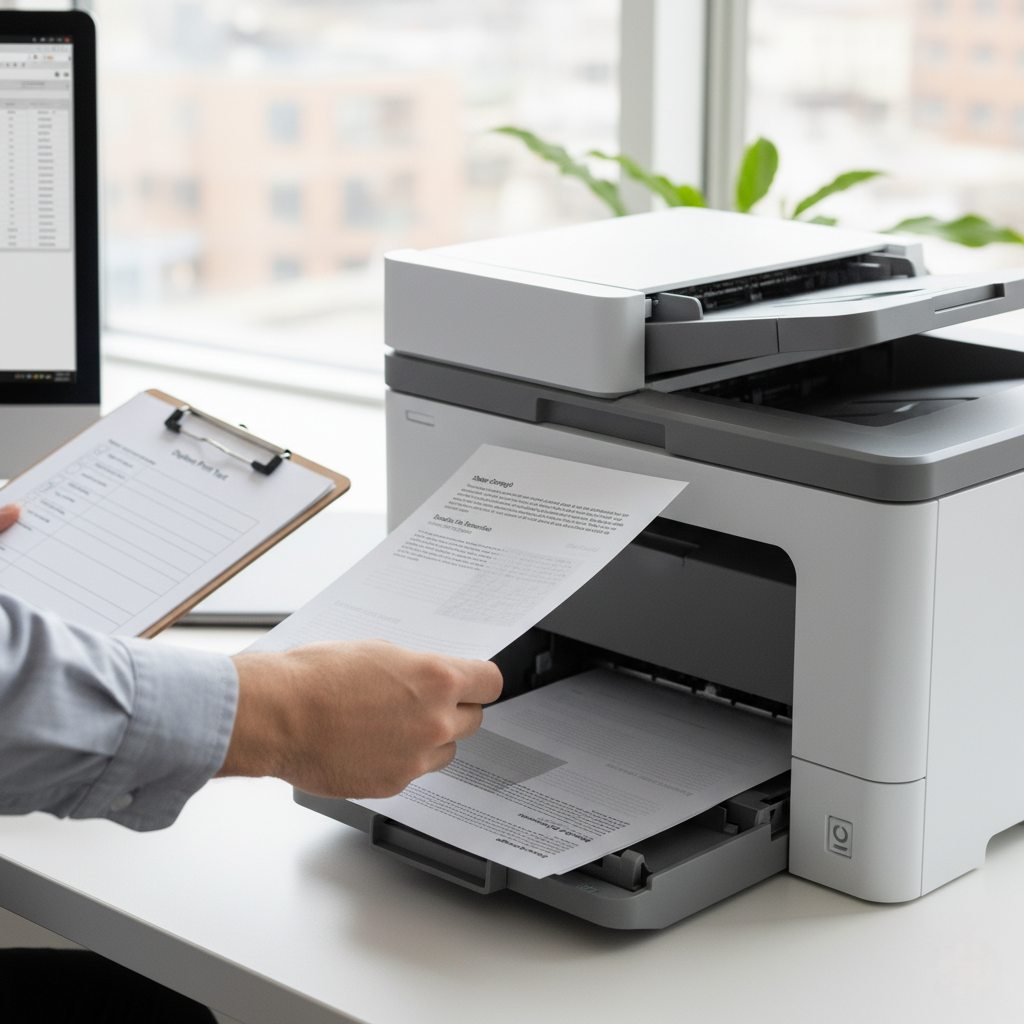
Request free samples of both 75 gsm и 80 gsm (include any recycled options you plan to trial). Then run this quick in-office check:
-
Acclimatize unopened reams to office conditions for a few hours.
-
Choose devices: at least one laser and one inkjet you use most.
-
Load correctly: fan the stack lightly; align guides; follow any grain arrows on packaging if present.
-
Print set A (text): 10 duplex pages of mixed body text and headings.
-
Print set B (coverage): 5 duplex pages with charts/blocks to simulate heavier coverage.
-
Score immediately:
-
Legibility (text density, contrast)
-
Show-through (reverse-side readability)
-
Curl (after cooling)
-
Handling (misfeeds, skew)
-
Surface (visible dusting on rollers/output path)
-
-
Record notes by device and by weight (75 vs 80).
-
Share results with procurement to shortlist the preferred weight and any recycled line that met your bar.
Tip: Keep print driver settings identical between tests (paper type, fuser/ink settings) to make comparisons fair.
Side-by-Side Comparison Table
| Attribute | A4 75 gsm | A4 80 gsm |
|---|---|---|
| Feel in hand | Lighter; ideal for day-to-day drafts | More substantial; better for formal docs |
| Duplex readability | Adequate on many devices; check show-through | Often cleaner; verify on your devices |
| Opacity expectation | Typically lower; more show-through risk | Typically higher; may reduce show-through |
| Curl tendency | Manage via storage and settings | Often resists curl better; still device-dependent |
| Ink/toner behavior | Good for text; watch heavy coverage | Often crisper for dense text/graphics |
| Sustainability options | Available by brand; verify | Available by brand; verify |
| Best for | Internal drafts, training packs, everyday prints | Duplex reports, proposals, external-facing docs |
| Cost lens | Lower per-ream in many cases | Higher per-ream; may reduce reprints |
| Shipping/storage | Lower weight per pallet/carton | Higher weight; plan warehouse space |
Note: Performance varies by brand, device, storage, and settings. No “jam-free” or universal-fit claims are made.

FAQs
1) Will 80 gsm jam less than 75 gsm?
Not necessarily. Jam rates depend on device condition, settings, and paper quality. Heavier sheets can handle differently, but there’s no universal guarantee. Test with your printers.
2) Does higher brightness always look better?
Not always. Higher brightness/whiteness can improve contrast, but readability and intended use matter more. Evaluate with your own documents.
3) Is recycled copy paper more likely to cause issues?
Not by default. Quality varies by SKU. Many recycled lines work well for standard office jobs. Run the sample test.
4) Can I use 75 gsm for duplex?
Yes—many offices do. Check show-through on your content types. If reverse-side text distracts, shortlist 80 gsm.
5) Do I need special settings for 80 gsm?
Usually your standard “plain paper” profile is fine. If you see curl or toner issues, try the manufacturer’s recommended paper type for slightly heavier sheets.
Next Steps
Get free samples (recommended first step): Tell us your preferred weight (75/80), recycled preference, monthly volume.
Request bulk pricing (after testing): Share cartons per month, required Incoterms, and your target delivery window.