

What “Cheapest Copy Paper” Should Mean for Office Buyers
For a procurement team, the cheapest copy paper is not simply the ream with the smallest number on a product page. It is the lowest acceptable delivered or pickup-adjusted cost per usable sheet in your actual devices, storage conditions, and document workflows. A sheet is only “cheap” if it feeds correctly, matches the requested size, arrives in usable packaging, and produces acceptable internal or customer-facing documents.
Usable sheet, not advertised ream price
Start by separating the sales label from the operating result. A single ream, multi-pack, or carton may look inexpensive until freight, pickup labor, membership costs, damaged wrapping, or unusable sheets are included. The buyer’s benchmark should be: compliant paper specification plus final acquisition cost divided by usable sheets.
This definition also protects budget reductions from becoming service problems. If the paper is too thin for duplex printing, incorrectly sized, poorly wrapped, or unsuitable for the printer fleet, the office may spend more time clearing jams, reprinting pages, and placing emergency orders. For routine office restocking, the goal is not to buy premium paper by default. It is to identify the lowest-cost option that stays inside your minimum operating requirements.
Use this definition in stakeholder conversations as well. When a department asks for the cheapest copy paper, clarify whether they mean lowest shelf price, lowest invoice total, or lowest compliant cost after delivery and waste. That one distinction makes supplier quotes easier to compare.
Build a Cost Screen for Copy Paper Offers
A fair comparison starts by normalizing every offer to the same unit: final cost per usable sheet. This matters because a single ream, a two-ream pack, a five-ream pack, and a 10-ream carton can all appear in search results with different sheet counts, fee structures, and delivery conditions. Do not compare the advertised item price alone.
Use a simple procurement formula
Total order cost should include the advertised product price, shipping or delivery charges, pickup-related labor if your team must collect it, membership or account fees when they are required for access to the offer, minimum-order charges, and any known handling or damage allowance. Usable sheets should start with the stated sheet count and subtract sheets that are not usable because of damage, incorrect size, or other quality issues identified during receiving.

| Offer type | Normalize by | Procurement note |
|---|---|---|
| Single ream | 500 sheets if stated | Useful for low volume, but unit cost may be higher after fees. |
| Multi-pack | Total sheets across all reams | Compare pack count carefully; similar packaging can hide different quantities. |
| Carton | Total carton sheet count | Often easier to compare for offices, but storage and damage risk still matter. |
The final screen is: total order cost divided by usable sheets. If two offers have different delivery methods, evaluate them separately. A pickup offer may remove freight charges but add employee time, mileage, or scheduling friction. A shipped carton may look higher on the invoice but reduce internal handling if it arrives directly where paper is stored.
Minimum Spec Guardrails: Do Not Go Below These to Save Cents
The lowest copy paper offer should only be considered after the minimum specification is fixed. Otherwise, suppliers, retail listings, or internal requesters may compare paper that is not actually equivalent. For most US office environments, the first guardrail is usually letter size, 8.5 x 11, unless a department has a separate legal-size or specialty requirement. Confirm the stated sheet count as well; a low package price is not comparable if one offer contains fewer sheets.
Set the floor before comparing price
Paper weight is another guardrail. Many offices use 20 lb copy paper for everyday black-and-white printing, but buyers should confirm that weight against their copier and printer fleet, duplex expectations, and document purpose. For deeper specification guidance, review 20 pound copy paper as an everyday office spec before allowing a cheaper substitute.
Brightness should also be defined as a minimum expectation rather than left open-ended. A lower-brightness sheet may be acceptable for internal drafts, while customer-facing packets, reports, or forms may need a cleaner appearance. Do not assume that every low-cost listing has the same whiteness, opacity, or surface feel.
Finally, confirm compatibility language for copier, laser, inkjet, and duplex use where relevant. If the office uses mixed devices, a multipurpose paper may reduce purchasing complexity, but the listing or quote should still state the intended equipment fit. These guardrails prevent small savings from becoming wrong-size orders, user complaints, or unnecessary reprints.
Ream, Multi-Pack, Carton, or Bulk Pallet: Use a Quantity Decision Tree
Quantity is where many cheapest copy paper decisions go wrong. A larger pack can reduce unit cost, but only if the office uses the paper before it is damaged, misplaced, or over-ordered. Build the decision around usage rate, storage space, replenishment frequency, and the cost of handling emergency purchases.
Choose the pack size that matches consumption
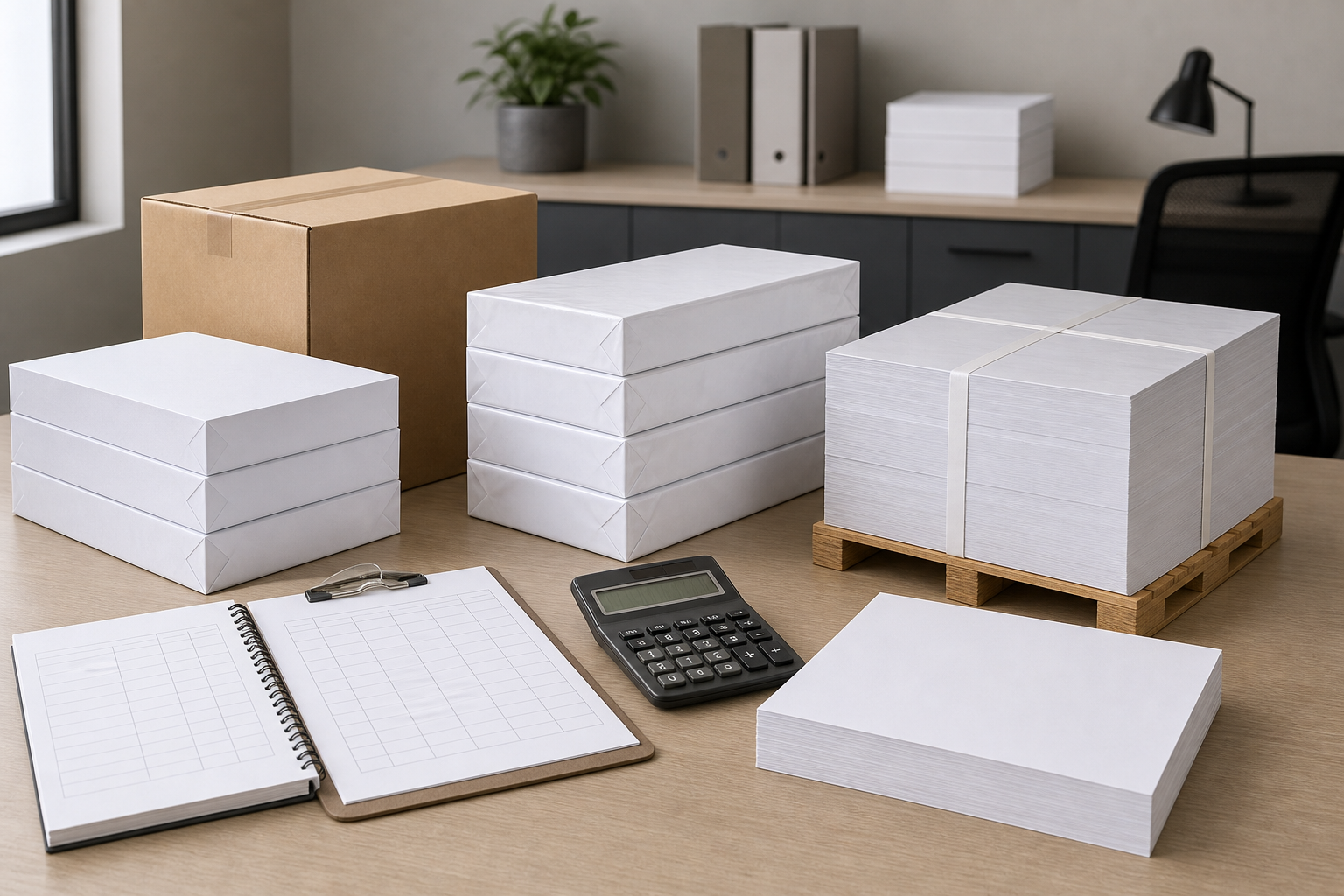
- Single ream: Use only when volume is low, storage is limited, or a department is testing a paper before broader adoption. It may not be the lowest unit cost after delivery or pickup effort.
- Multi-pack: Consider when several teams share paper but do not justify full carton storage. Confirm the total ream count and sheet count before comparing.
- 10-ream carton: Consider when monthly use is predictable and storage is clean, dry, and accessible. A copy paper 10 ream case can make quote comparison easier because the buyer is usually evaluating a 5,000-sheet order format.
- Bulk pallet or larger order: Consider only when volume, receiving capacity, and inventory controls support it. Otherwise, savings can be lost through damage, split accountability, or paper sitting unused.
The decision tree should also include reorder timing. If paper runs out frequently, a slightly larger standard order may reduce urgent buying. If paper sits for months in a humid or crowded area, smaller replenishment cycles may protect usable-sheet value better than chasing the lowest bulk price.
Low-Cost Buying Channels Evaluated by Procurement Friction, Not Hype
No buying channel is always the cheapest once cost per usable sheet is calculated. Marketplaces, office supply retailers, warehouse clubs, local pickup options, and B2B suppliers can all be competitive in different situations. The better question is which channel gives your team the clearest comparable cost, the fewest ordering exceptions, and the most repeatable restocking process.
Compare channels by workflow impact
Online marketplaces may offer broad selection and quick comparison, but listings can vary in sheet count, seller identity, packaging condition, and substitution clarity. Buyers should document the exact item specification and avoid comparing listings that use different quantities or paper grades.
Office supply retailers can be convenient for account ordering, local pickup, or office delivery, but the final cost screen should still include delivery terms, pickup labor, and any order thresholds. A visible sale price is not enough if the same order creates extra internal handling.
Warehouse clubs may be attractive for common pack sizes, but membership requirements, limited specification options, and pickup logistics should be included in the comparison. A pack can look inexpensive while still being less suitable for repeat purchasing controls.
B2B bulk suppliers should be evaluated on quote clarity, carton consistency, communication, and repeat-order accuracy. The buyer should ask whether the quote identifies size, weight, brightness expectation, sheet count, packaging unit, and final delivered or pickup-adjusted cost. Procurement friction is not just paperwork; it is the cost of correcting unclear orders.
False Economy Triggers That Can Make Cheap Paper Expensive
The lowest listed price can become expensive when paper creates waste or slows work. Procurement teams should treat quality risk as part of the cost screen, not as an afterthought. The issue is not whether budget paper can work; it often can when it matches the office requirement. The risk is accepting a product that is cheaper because it falls outside the real operating need.
Watch for cost erosion after purchase
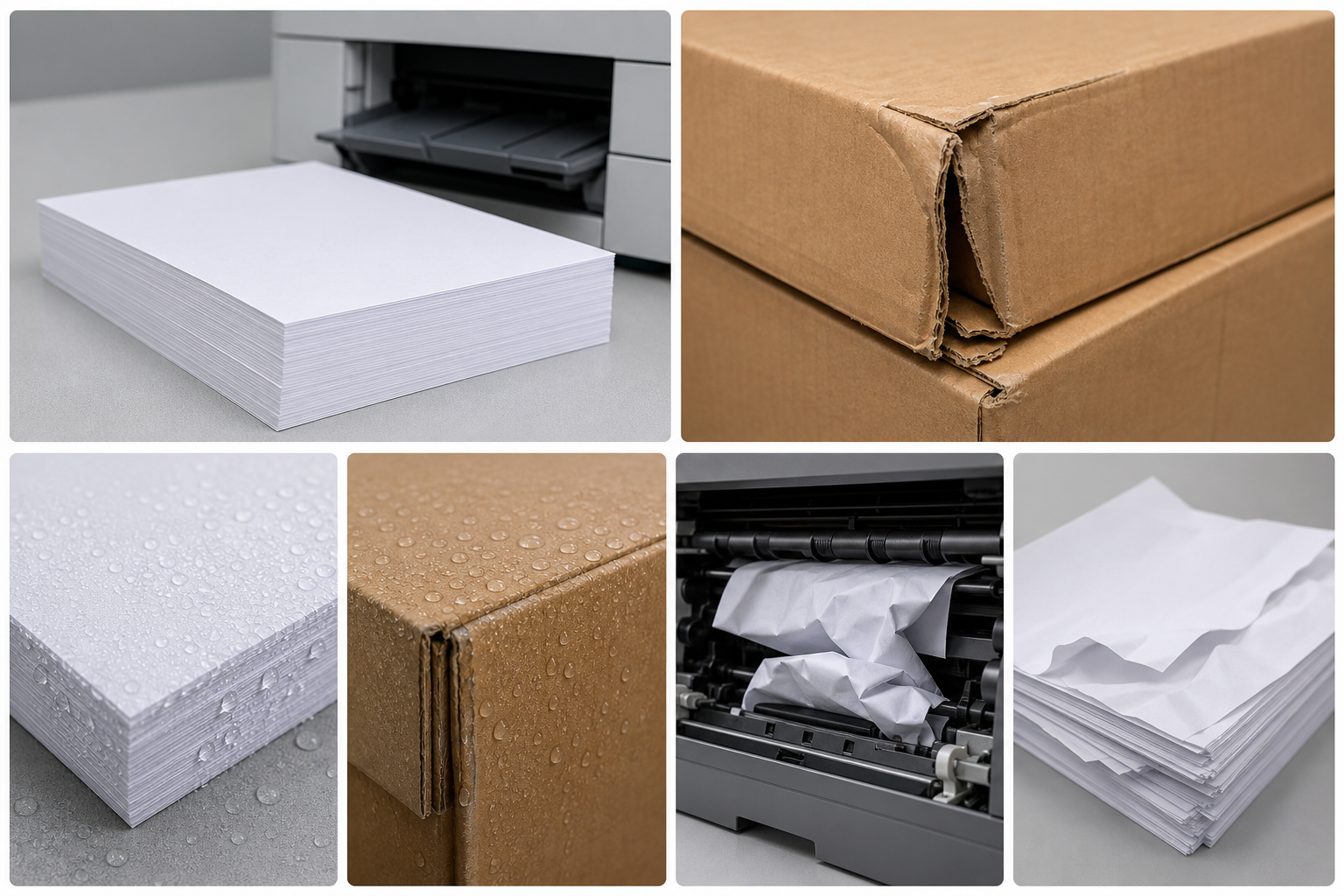
Jams, misfeeds, curling, and poor feeding can consume staff time and toner through reprints. Wrong-size paper, such as ordering legal when letter was required or vice versa, can sit unused while another order is placed. A lower or higher weight substitution may also affect duplexing, tray settings, or document feel.
Packaging condition matters as well. Torn wrappers, crushed corners, or cartons exposed to moisture can reduce the number of usable sheets before the paper reaches the printer. If an offer is unusually low, receiving teams should inspect packaging before distributing reams across departments.
Appearance is another cost factor. Paper that is acceptable for internal drafts may not be suitable for client packets, HR documents, school communications, invoices, or forms where legibility and presentation matter. Reused paper can reduce waste for internal draft printing or one-sided review copies, but it should be kept out of routine copier trays if it is curled, stapled, torn, damp, or printed in a way that could confuse the next user. For regular business printing, clean compatible paper is usually the safer procurement standard.
Convert the Lowest-Price Search Into an Order-Ready Buying Rule
The most useful outcome of a cheapest copy paper search is not a vague instruction to “buy whatever is cheapest.” It is an order rule that tells suppliers and internal approvers what must be held constant before price is compared. This prevents a low bid from winning by changing size, sheet count, weight, brightness expectation, packaging unit, or compatibility.
Write the requirement before requesting quotes
A practical RFQ or purchase request can read: Quote the lowest-priced compliant copy paper at final delivered or pickup-adjusted cost per usable sheet for letter-size 8.5 x 11 office paper, stated sheet count, required paper weight, defined brightness preference, and compatibility with our copier/printer environment. Identify any proposed substitution before shipment or pickup.
Substitution rules should be written before the preferred low-cost item is unavailable. State whether another brand, brightness level, carton format, or pack size is acceptable, and whether approval is required before changing weight or size. If internal requests are unclear, use a standard intake phrase to clarify paper copy requirements before the buyer converts the request into a purchase order.
Before issuing the PO, compare available copy paper options using your required size, weight, brightness preference, monthly volume, and delivery or pickup constraints. That comparison lets your team choose the lowest compliant cost per sheet rather than simply accepting the lowest advertised ream price.
Frequently Asked Questions
How do buyers compare copy paper quotes when one includes freight and another requires pickup?
Convert both options to final cost per usable sheet. For pickup, include staff time, mileage, scheduling friction, and any handling required after collection; for delivery, include freight, surcharges, unloading limits, and minimum-order conditions.
Should cheap copy paper be evaluated per sheet or per 1,000 sheets?
Use cost per usable sheet for the actual calculation, then present it per 1,000 sheets if that is easier for approvals or vendor comparisons. The key is to use the same denominator for every ream, multipack, carton, or bulk quote.
What minimum specification belongs in a lowest-cost copy paper RFQ?
Lock the required size, basis weight, brightness expectation, sheet count, packaging unit, and copier, laser, inkjet, or duplex compatibility before price is compared. If recycled content or certification is required by policy, include that as a non-negotiable requirement.
What approval rule prevents bad substitutions on low-cost copy paper orders?
Require supplier notice before shipment or pickup if the quoted item is unavailable. Any substitute should match the approved size, weight, compatibility, packaging unit, and usable sheet count, with changes to core specs requiring buyer approval.
How should damaged or unusable sheets affect copy paper cost comparisons?
Damaged, damp, incorrectly sized, or otherwise unusable sheets should be removed from the usable-sheet count. A lower invoice price can lose value if receiving damage, poor packaging, or device problems increase waste.
Can reused paper be included in an office paper-saving policy?
Yes, but only for controlled internal drafts or one-sided review copies. Keep reused sheets out of shared routine printer trays if they are curled, stapled, torn, damp, confidential, or likely to confuse users.