
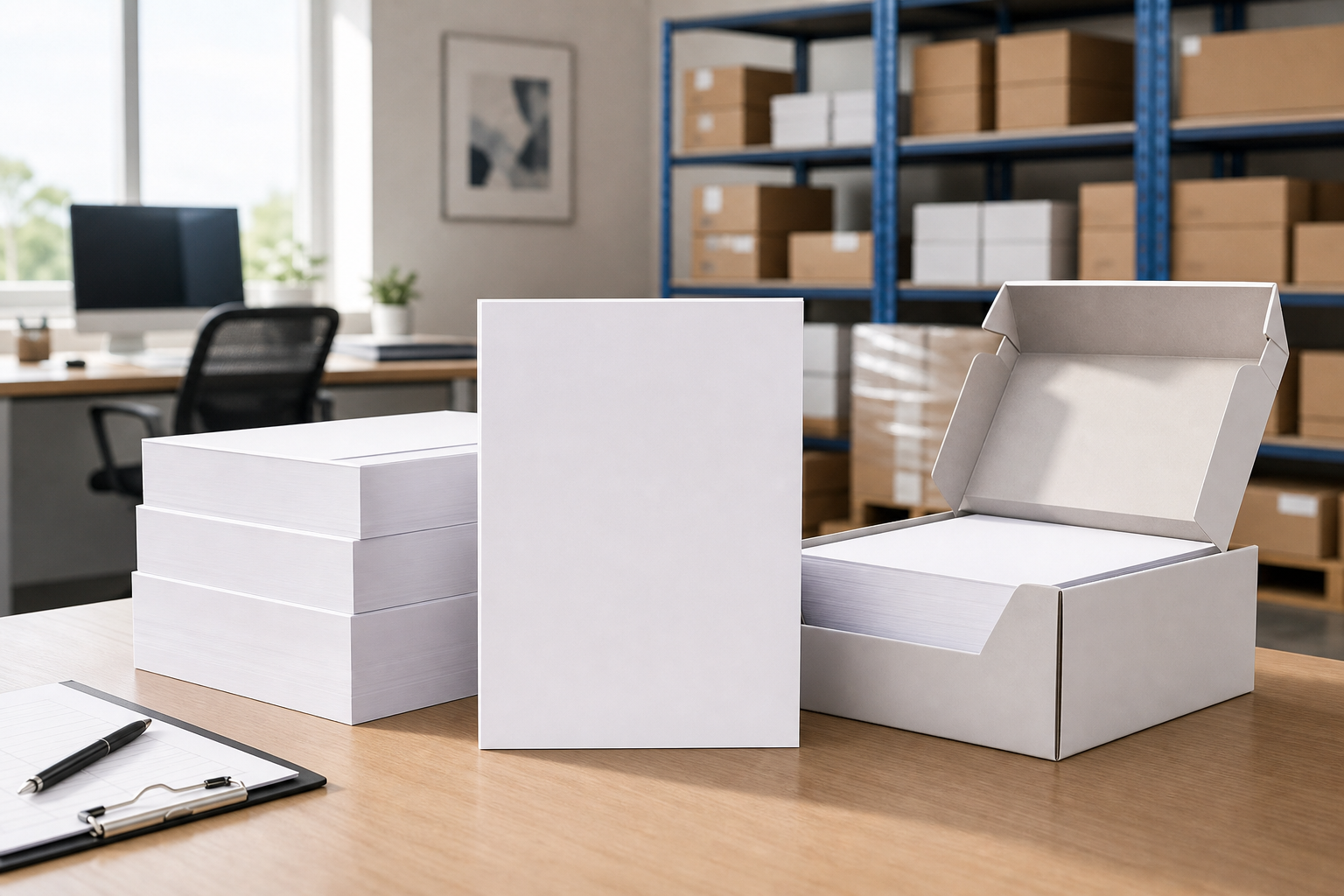
Normal US Copy Paper Is 8.5 x 11 Letter Size
In a US office, a request for normal size copy paper almost always means Letter-size copy paper: 8.5 x 11 inches. In metric terms, that is approximately 216 x 279 mm, or 21.6 x 27.9 cm. Use this size for everyday printer and copier work such as internal memos, invoices, reports, HR forms, meeting packets, school or training handouts, and general administrative documents.
If someone asked you to load paper into a copier, replenish a supply cabinet, or create a routine PO, Letter is the assumption to verify first. Do not convert the request to A4 simply because a website labels A4 as standard printer paper.
The purchasing problem is that “normal” is not a formal specification. A supplier, online catalog, or purchasing system may list paper by “Letter,” “8.5 x 11,” “8-1/2 x 11,” or “216 x 279 mm.” These descriptions point to the same US Letter format. If the listing says A4, Legal, Ledger, or Tabloid, it is not the default normal copy paper size for most US office trays.
When receiving cartons or reams, check the face label and carton label before loading stock into shared supply rooms. The size is usually printed near weight, brightness, sheet count, or usage terms such as copy, printer, multipurpose, laser, or inkjet. For procurement control, approve the size first, then confirm the remaining attributes. This sequence prevents the common error of buying the right paper type in the wrong-size sheet format.
Translate ‘Normal Size’ into an Orderable Office Paper Specification
For a purchase request, do not rely on normal copy paper alone. Convert it into a line that an approver and supplier can validate: Letter-size copy paper, 8.5 x 11 in, white, for office printers/copiers. If your system uses metric fields, add approximately 216 x 279 mm rather than replacing the Letter wording; this helps US buyers and international teams read the same requirement.
Fields to verify before checkout
- Size: Letter, 8.5 x 11 in, or 8-1/2 x 11 in.
- Product category: copy paper, printer paper, or multipurpose office paper.
- Quantity: ream, carton, or case count listed separately from size.
- Printer use: compatible with the equipment your office uses, if the listing specifies it.
Keep the size line separate from brand preferences, paper weight, brightness, recycled content, finish, color, and ream quantity. That separation matters when an item is substituted, reordered, or copied into an ERP catalog. This is also useful for recurring orders, where older notes may be copied without rereading the full listing. A supplier can match weight and brightness but still ship A4 or Legal if the purchase note does not lock down the sheet dimensions.
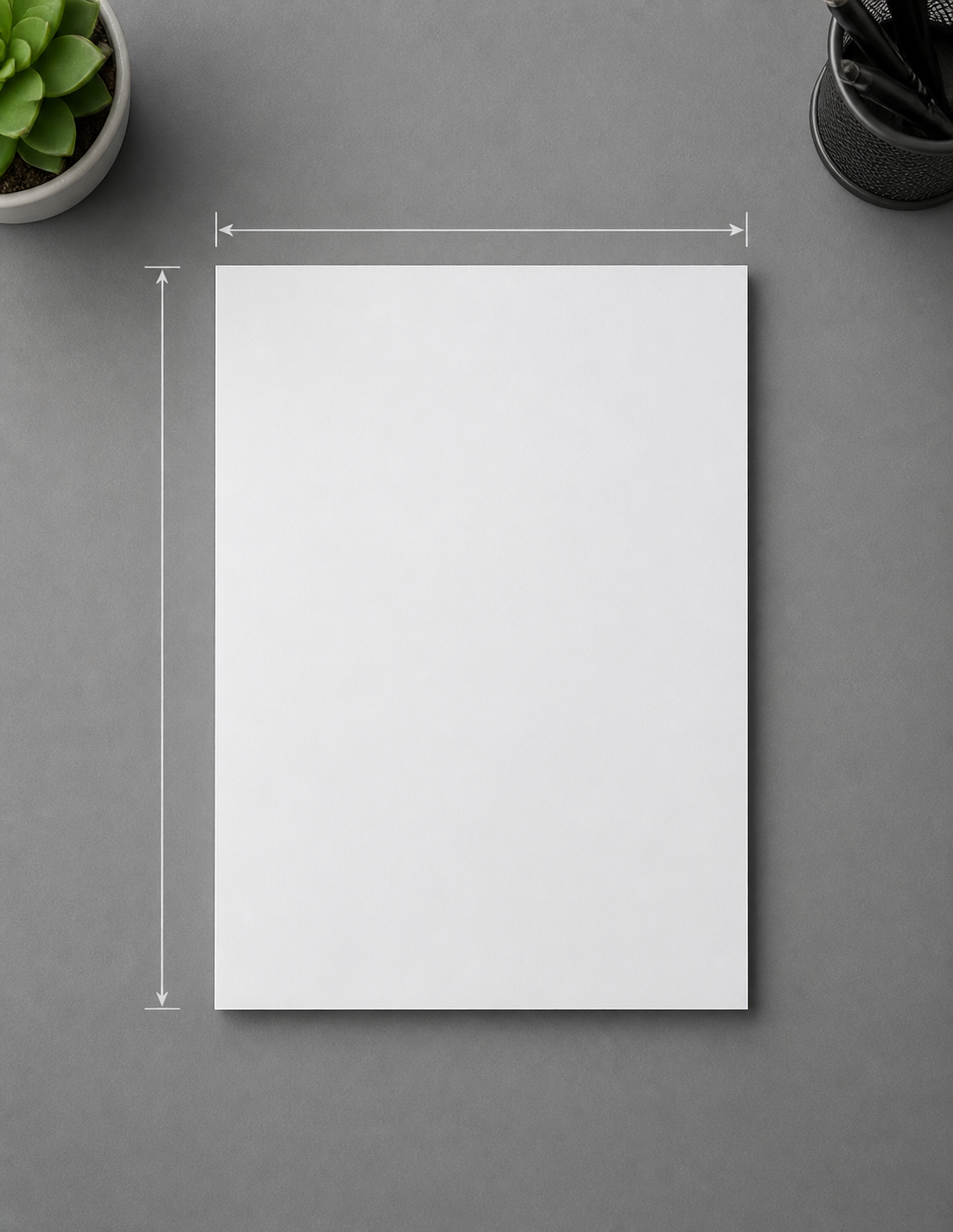
If the request came from someone copying a paper rather than managing inventory, confirm whether they need paper stock or a completed copy task. For stock orders, the size specification should still lead the request because it determines what fits the trays and page setup.
Normal Size in Inches, CM, MM, and Pixels
Normal US copy paper has fixed physical dimensions, but digital files can describe the same sheet in different pixel dimensions. For buying paper, use the physical dimensions. For scanning, PDF preparation, design templates, or image uploads, calculate pixels from the chosen resolution.
| Einheit | Normal US Letter size |
|---|---|
| Inches | 8.5 x 11 in |
| Millimeters | About 216 x 279 mm |
| Centimeters | About 21.6 x 27.9 cm |
Pixels are different. A sheet of paper does not have a built-in pixel size. The pixel count depends on DPI or PPI, which describes how many pixels are used per inch. The formula is simple: inches multiplied by DPI or PPI. At 300 PPI, an 8.5 x 11 in Letter page calculates to 2550 x 3300 pixels; at 150 PPI, it calculates to 1275 x 1650 pixels. Both describe the same physical sheet, but with different digital detail.
This distinction helps teams avoid two separate mistakes. Procurement should not order paper based on a pixel dimension, because paper is purchased by physical size. Creative, scanning, or records teams should not assume that every Letter-size document has the same pixel count, because the file’s resolution settings determine that value. When a vendor portal or design tool asks for a canvas size, the paper order still remains Letter; only the digital file setting changes.
When Normal Is Not Letter: A4, Legal, and 11 x 17 Exceptions
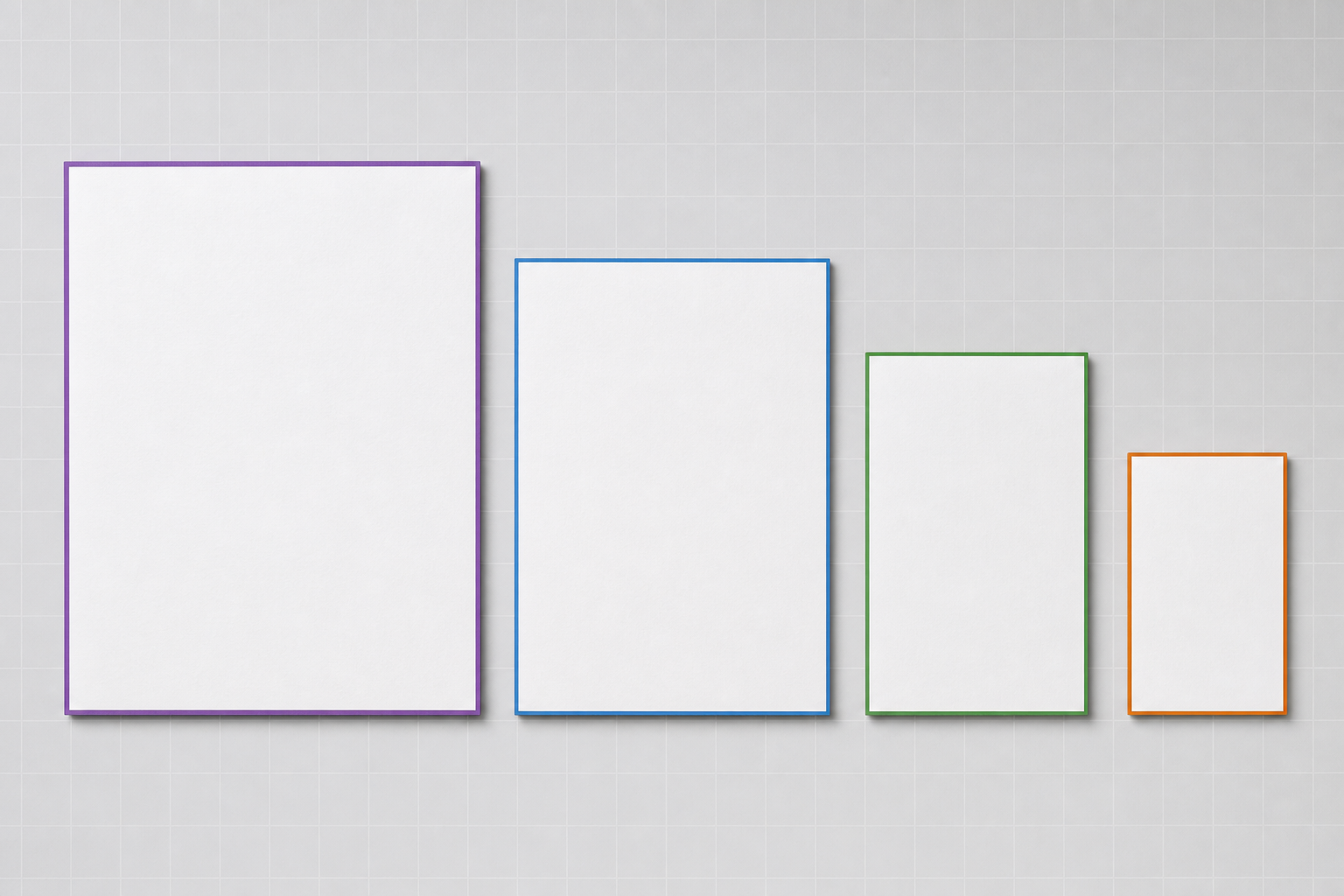
For US routine printing, Letter remains the default. Other sizes should be treated as named exceptions, not vague substitutes for normal size copy paper. This prevents offices from mixing unlike stock in the same storage bin or ordering a format that does not match device trays.
| Größe | Dimensions | Use it instead of Letter when… |
|---|---|---|
| Brief | 8.5 x 11 in | The request is routine US office printing. |
| A4 | 8.27 x 11.69 in, or 210 x 297 mm | An international template, overseas office, or file setting requires A4. |
| Legal | 8.5 x 14 in | Longer contracts, forms, or department documents require extra length. |
| Tabloid/Ledger | 11 x 17 in | Large spreadsheets, diagrams, folded layouts, or oversized printing require it. |
A4 is close to Letter but not interchangeable in every workflow. It is narrower and longer than Letter, and it is common outside the United States. Choose A4 when a downloaded template, overseas branch standard, international client package, or device setting explicitly requires A4. If an online listing shows A4 but the office asked for normal US copy paper, pause before ordering.
Legal paper is still 8.5 inches wide, but its 14-inch length changes filing, tray, and page setup requirements. It is typically a separate purchasing line for contracts, longer business forms, or department-specific forms. Tabloid or Ledger at 11 x 17 inches is a larger format for spreadsheets, diagrams, folded documents, and oversized layouts. For departments that need that size, keep it separate from Letter stock; our guide to 11 x 17 copy paper case near me covers the larger-format buying context without treating it as the office default.
Do Not Confuse 8.5 x 11 Size with Weight, Brightness, Sheet Count, or Paper Type
Once you confirm Letter size, keep it separate from every other paper attribute. 8.5 x 11 tells you the sheet dimensions; it does not tell you how thick the paper feels, how bright it appears, how many sheets are included, or whether the paper is best suited for routine copying, color presentations, forms, or specialty applications.
- Gewicht: Terms such as 20 lb describe paper weight, not sheet dimensions.
- Helligkeit: Brightness affects appearance and contrast, but it does not identify the size.
- Sheet or ream count: A 500-sheet ream can contain Letter, A4, Legal, or another size.
- Finish and paper type: Multipurpose, recycled, smooth, or premium descriptions are separate from dimensions.
- Printer compatibility: Laser or inkjet suitability does not automatically mean Letter size.
This separation is especially important in purchase approvals. A requisition that says 20 lb copy paper may define a common office weight, but it does not define the size unless Letter or 8.5 x 11 is also written. If weight selection is part of the discussion, review a separate spec resource such as the guide to 20 pound copy paper after the sheet size has been confirmed.
The same logic applies to cases and reams. A 500-sheet ream can be Letter, A4, Legal, or another size; the sheet count does not standardize the dimensions. Ask suppliers and internal requesters to preserve size as its own field in quotes, POs, receiving notes, and reorder templates. That practice makes substitutions easier to review and helps receiving teams catch wrong-size cartons before the paper reaches printer rooms.
Where Normal-Size Paper Mistakes Happen in Office Workflows
Most wrong-size paper issues are not caused by a lack of paper-size knowledge. They happen when the size is lost between the purchase request, online catalog, supply room, printer tray, and document settings. Build a quick verification step into each handoff.
Online ordering and catalog filters
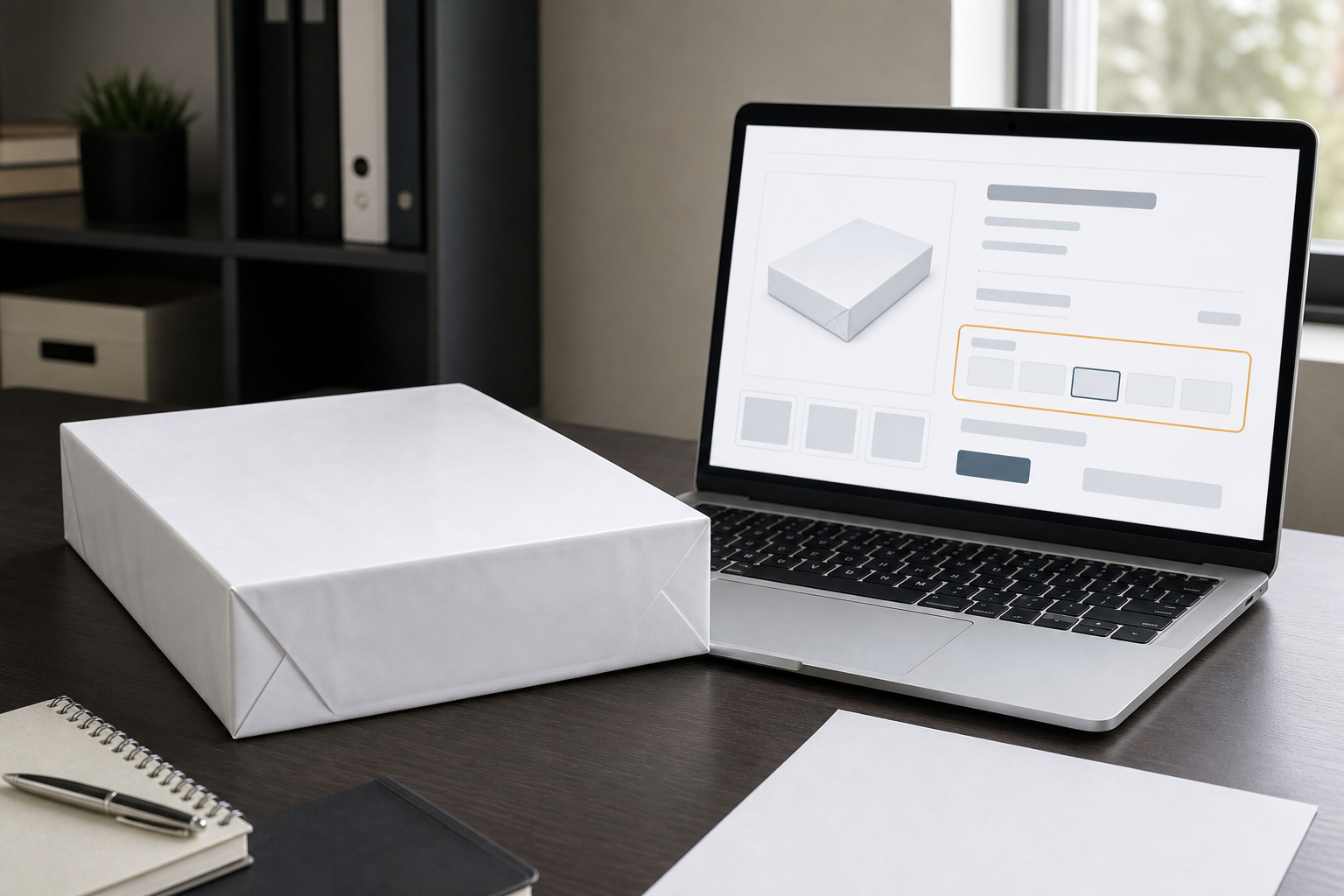
Catalog pages often show similar product images for Letter, A4, Legal, and Tabloid. Filters may default to size, quantity, or brand in ways that are easy to overlook. Before checkout, confirm that the listing title and specification table both say Letter or 8.5 x 11. Do not rely only on the product photo.
Printer trays and device settings
Tray guides should be positioned for the loaded sheet, and the printer control panel or managed print software should identify the tray as Letter when Letter is loaded. If a tray is physically holding Letter paper but the device thinks it contains A4 or Legal, users may see prompts, scaling issues, or jobs routed to another tray.
Page setup and downloaded files
Documents can carry their own page-size settings. Downloaded PDFs, browser print screens, templates from international sources, and word-processing files may default to A4 even when the office uses Letter. Before printing a large batch, check the page setup, scaling setting, and selected tray. A short test print is often less costly than discovering a mismatch after forms, packets, or meeting materials have been produced on the wrong size.
Standardize the Default Paper-Size Wording Before Approval
A US office can reduce paper-size errors by making Letter the default wording, not an assumption. Put the approved size phrase in purchasing templates, catalog favorites, department request forms, and reorder notes. A practical default line is: Letter-size copy paper, 8.5 x 11 in, white, for office printers/copiers. Additional specifications can follow, but they should not replace the size.
For approval workflows, treat A4, Legal, and 11 x 17 as separate named requests. If an employee asks for normal paper but attaches an A4 PDF template, clarify whether the requirement is the physical paper size or only the document layout. If a legal team asks for contract paper, confirm whether it needs 8.5 x 14 Legal or standard Letter for electronic filing. If an operations team asks for larger spreadsheets or folded layouts, route 11 x 17 to a separate purchasing line.
Before you place or approve an order, use the confirmed 8.5 x 11 Letter-size specification when requesting normal office copy paper, and separate any A4, Legal, or 11 x 17 needs before ordering. Then finalize weight, brightness, printer compatibility, color, and quantity as secondary attributes. This order of decisions gives buyers, approvers, suppliers, and receiving teams a clear way to identify the correct product and reject wrong-size substitutions before they disrupt office printing.
Häufig gestellte Fragen
If an online catalog says Letter size, is that normal copy paper for a US office?
Usually yes. For US office ordering, Letter, 8.5 x 11 in, 8-1/2 x 11, and about 216 x 279 mm all indicate the standard sheet size; still verify the size field before checkout.
What wording should I use in a purchase request for normal size copy paper?
Write the size first: 8.5 x 11 inch Letter copy paper for office printers and copiers. Keep quantity, weight, brightness, recycled content, and brand preferences in separate fields so the size cannot be changed by mistake.
Should metric purchasing systems use 216 x 279 mm or 21.6 x 27.9 cm for Letter paper?
Both are acceptable approximate conversions for US Letter paper. In a US-facing catalog or requisition, pair the metric dimensions with the word Letter so buyers do not confuse it with A4, which is 210 x 297 mm.
Why does my printer show an A4 warning when I loaded normal copy paper?
The tray setting or the document page setup may still be set to A4 while the physical paper is Letter. Change the tray and file settings to Letter, then test one page before sending a large print job.
How many pixels should normal copy paper be for a scan or design file?
There is no universal pixel size because paper has physical dimensions and pixels depend on DPI or PPI. Multiply 8.5 and 11 by the chosen resolution; for example, 300 DPI produces 2550 x 3300 pixels.
If paper is 8.5 inches wide, is it automatically normal Letter size?
No. Legal paper is also 8.5 inches wide but extends to 14 inches long, so both width and length must be checked. Routine US copy paper should show the full 8.5 x 11 inch Letter size.