
Quick Answer: Standard US Copy Paper Weight and What the Label Does Not Mean
In US office buying, standard copy paper is typically 20 lb bond paper. Many product labels and supplier listings also show this as roughly 75 gsm, but confirm the exact GSM, sheet size, sheet count, and grade on the label or product data sheet before comparing options.
The important point for buyers: the 20 lb label is not the physical weight of one sheet, one 500-sheet office ream, or a case. It is a basis-weight label tied to the bond paper category. That convention helps US buyers compare copy paper inside the same category, but it can mislead when someone uses it to estimate shipping, storage, or handling load.
For everyday office printing—drafts, internal memos, general copier jobs, forms, and routine correspondence—20 lb is usually the baseline specification buyers encounter first. If your team mainly prints black-and-white documents with moderate coverage, this weight is often enough. If documents need stronger opacity, a more substantial hand feel, or better presentation quality, 24 lb, 28 lb, or heavier bond paper may be worth comparing.
If your buying task is specifically to standardize everyday office paper, a deeper spec-focused reference on 20 pound copy paper can help. For this article, treat copy paper weight as a measurement language: first decode the label, then decide whether that weight fits the document outcome and equipment use.
Copy Paper Weight Chart: Bond lb, Approximate GSM, Office Use, and Buyer Cautions
Use this chart as a shortlist tool for copy and printer bond paper only. The GSM values are approximate references that may vary by manufacturer, finish, and product line; rely on the product label when exact comparison matters.
| Bond lb label | Approx. GSM reference | Typical office fit | Buyer caution |
|---|---|---|---|
| 16 lb | Often near 60 gsm | Light internal drafts or temporary documents | May feel thin; check show-through and copier approval |
| 20 磅 | Often around 75 gsm | Everyday printing, copying, forms, and internal documents | Standard choice, but opacity and smoothness still vary |
| 24 磅 | Often around 90 gsm | Duplex documents, reports, correspondence, and packets | Confirm printer handling and stack height |
| 28 磅 | Often around 105 gsm | Proposals, handouts, and higher-quality office output | May affect tray capacity, mailing weight, and finishing |
| 32 磅 | May be around 120 gsm | Resumes, formal reports, and presentation documents | Check equipment limits before routine use |
| 36 lb | May be around 135 gsm | Premium bond applications and heavier handouts | Not always suitable for all copiers or high-volume runs |
The practical buying rule is to compare within the same paper type. A 24 lb bond sheet does not mean the same thing as 24 lb cover stock, and a heavier number should not automatically override printer compatibility, opacity, or finish requirements. For multi-department offices, identify the few outcomes that represent most usage: low-cost internal printing, reliable duplex reading, and client-facing feel.
Decode the Label: Basis Weight, lb, and GSM Without False Precision
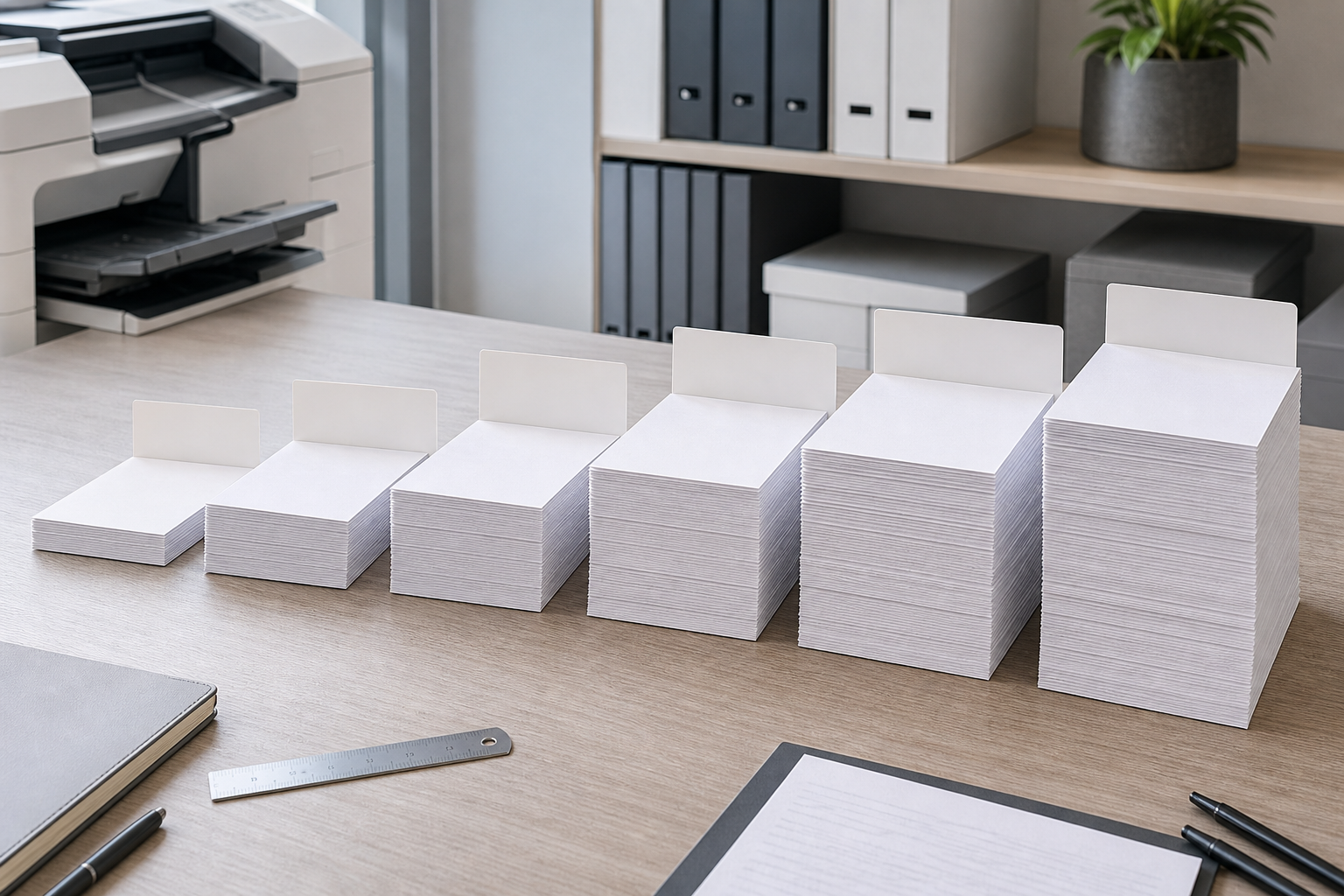
Paper weight in pounds is a basis-weight convention. For bond paper, the label describes the weight of 500 sheets at the category’s standard parent size before the paper is cut down to office sizes. That is why 20 lb copy paper does not mean a single sheet weighs 20 pounds, and it also does not mean the ream on your shelf weighs exactly 20 pounds.
This convention is useful only when the buyer is comparing similar paper categories. Bond, text, and cover papers use different parent-sheet assumptions, so their pound numbers are not directly interchangeable. A buyer comparing only the number may accidentally treat a text-weight or cover-weight listing as if it were normal office copy paper.
Where GSM helps
GSM means grams per square meter. Because it is based on area rather than a paper category’s parent-sheet convention, GSM is easier for comparing paper across sheet sizes or international listings. US copy paper listings often lead with lb because that is familiar in office purchasing, while some labels also include GSM for cross-reference.
Do not force exact universal conversions. A 20 lb bond product is commonly associated with about 75 gsm, and 28 lb copy paper is commonly associated with about 105 gsm, but finishes, manufacturing tolerances, and product definitions can affect the listed value. Use lb to confirm the familiar US bond category and GSM to compare mass per area. When the two do not align with expectations, pause and verify the full product description before approving a substitute.
Choose Copy Paper Weight by Document Outcome, Not Generic Specs
Once the labels make sense, match copy paper weight to what the document must accomplish. For lowest-cost internal use, high-volume copying, training packets, and drafts, 20 lb bond is usually the first weight to evaluate. It keeps the specification familiar and avoids overbuying a heavier sheet for files that are read briefly, routed internally, or archived without presentation requirements.
Duplex readability
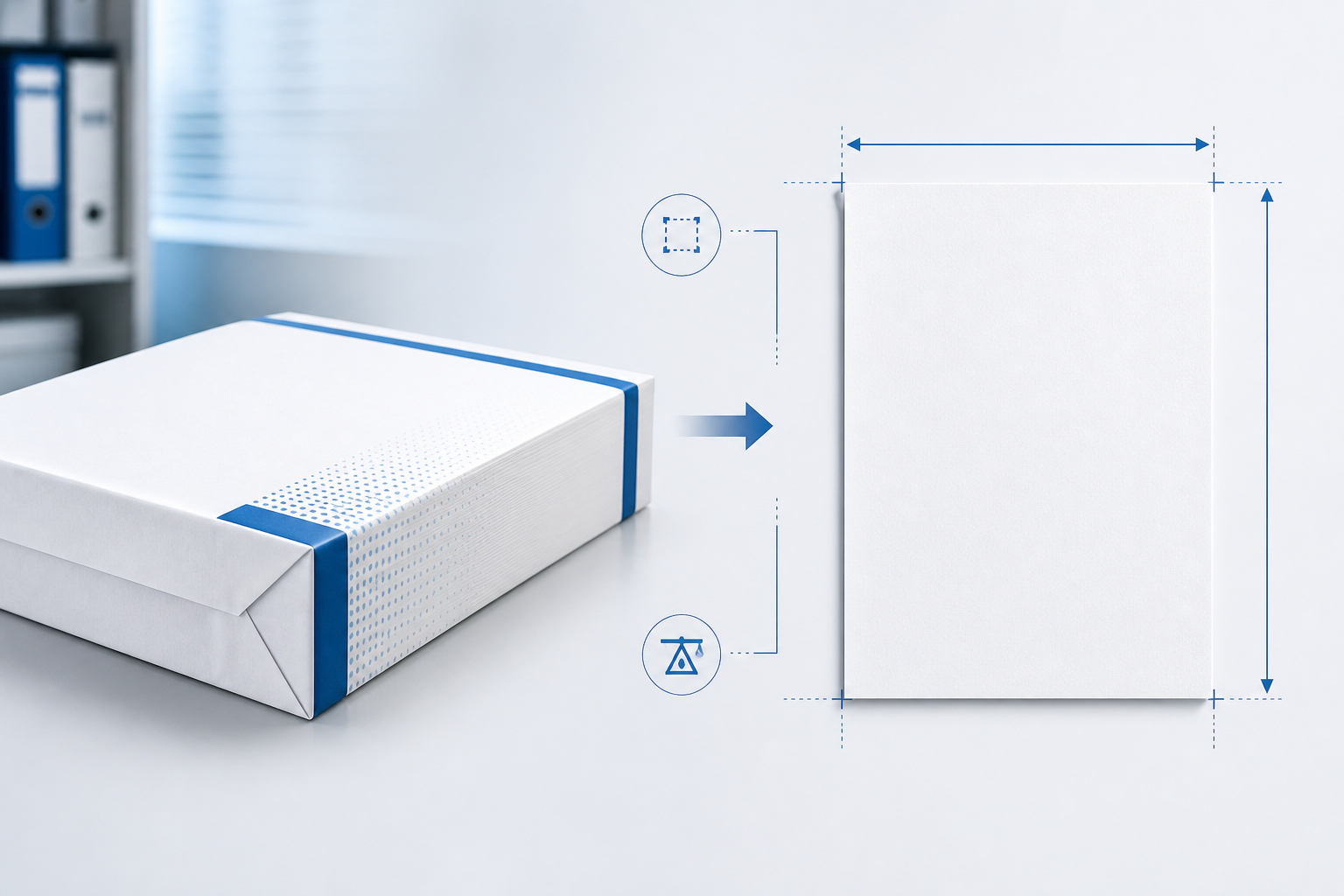
For double-sided reports, policy packets, onboarding materials, and internal manuals, buyer concern shifts from the label to show-through. A 24 lb bond sheet often gives a more substantial feel and may improve opacity, but the right choice depends on the actual product’s opacity, brightness, finish, and printer behavior. Test or sample when duplex readability affects user experience.
Client-facing feel
For proposals, resumes, executive packets, certificates of completion, or customer handouts, 24 lb, 28 lb, or heavier bond paper may be considered for handling feel and perceived quality. Heavier paper can make a document feel less disposable, but it also changes stack height, mailing weight, tray capacity, and equipment handling.
Documents with heavier ink or toner coverage may also benefit from a heavier or more opaque sheet, especially when charts, dark blocks, or full-page graphics are common. For broader paper-selection context beyond weight alone, see this guide to choose copy paper for office printing. Keep the primary decision anchored in the document outcome: ordinary office use, duplex readability, presentation feel, or heavier coverage.
Estimate Actual Sheet, Ream, Carton, or Case Weight Safely
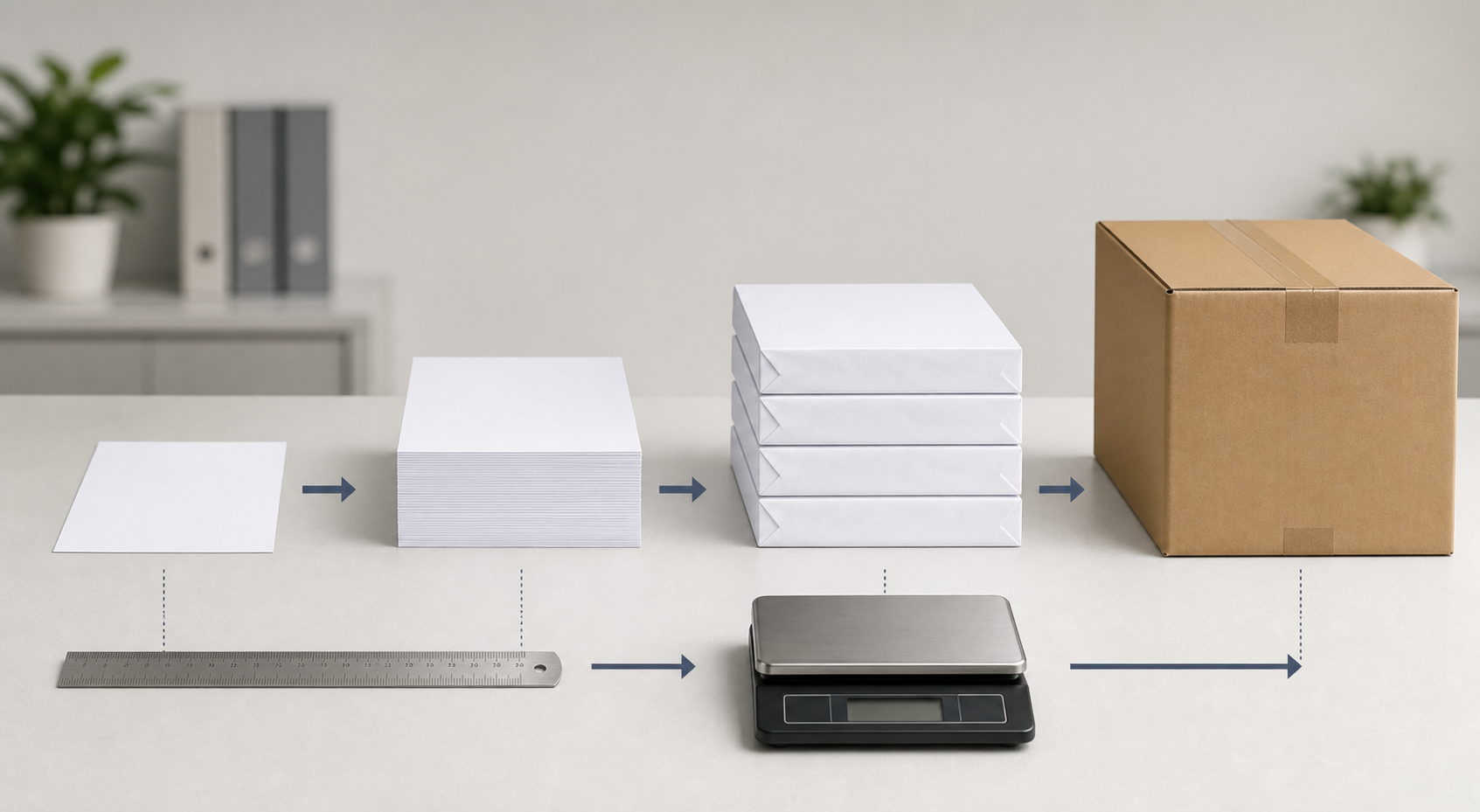
The label weight is not enough to estimate physical handling weight. To estimate the real weight of copy paper in grams or kilograms, use GSM, sheet size, and sheet count.
| Step | What to do |
|---|---|
| 1. Find sheet area | Convert width and length to meters, then multiply them. |
| 2. Apply GSM | Multiply sheet area by GSM to estimate grams per sheet. |
| 3. Apply sheet count | Multiply grams per sheet by the number of sheets in a ream, carton, or case. |
| 4. Convert units | Divide grams by 1,000 for kilograms; convert to pounds if needed for shipping or storage planning. |
For example logic, an office buyer estimating a 500-sheet ream should not start with 20 lb; they should start with the sheet dimensions, such as 8.5 x 11 copy paper size specifications, and the GSM printed on the listing. The same formula scales up to cartons or cases, provided the sheet count is known.
For freight planning, storage limits, ergonomic handling, or mailroom estimates, product data sheets and supplier listing details are safer than assumed conversions. Packaging, wrappers, cartons, pallets, moisture content, and stated sheet count can all affect gross shipping weight. Use the formula for a planning estimate; use verified product or shipment documentation for operational decisions.
Weight, Thickness, Opacity, and Printer Handling Are Different Signals
A heavier copy paper often feels more substantial, but weight is not the same as thickness. Thickness is commonly discussed as caliper and depends on fiber composition, compression, finish, and manufacturing choices. Two 20 lb bond papers can meet the same weight label while feeling different in stiffness, smoothness, and stack height.
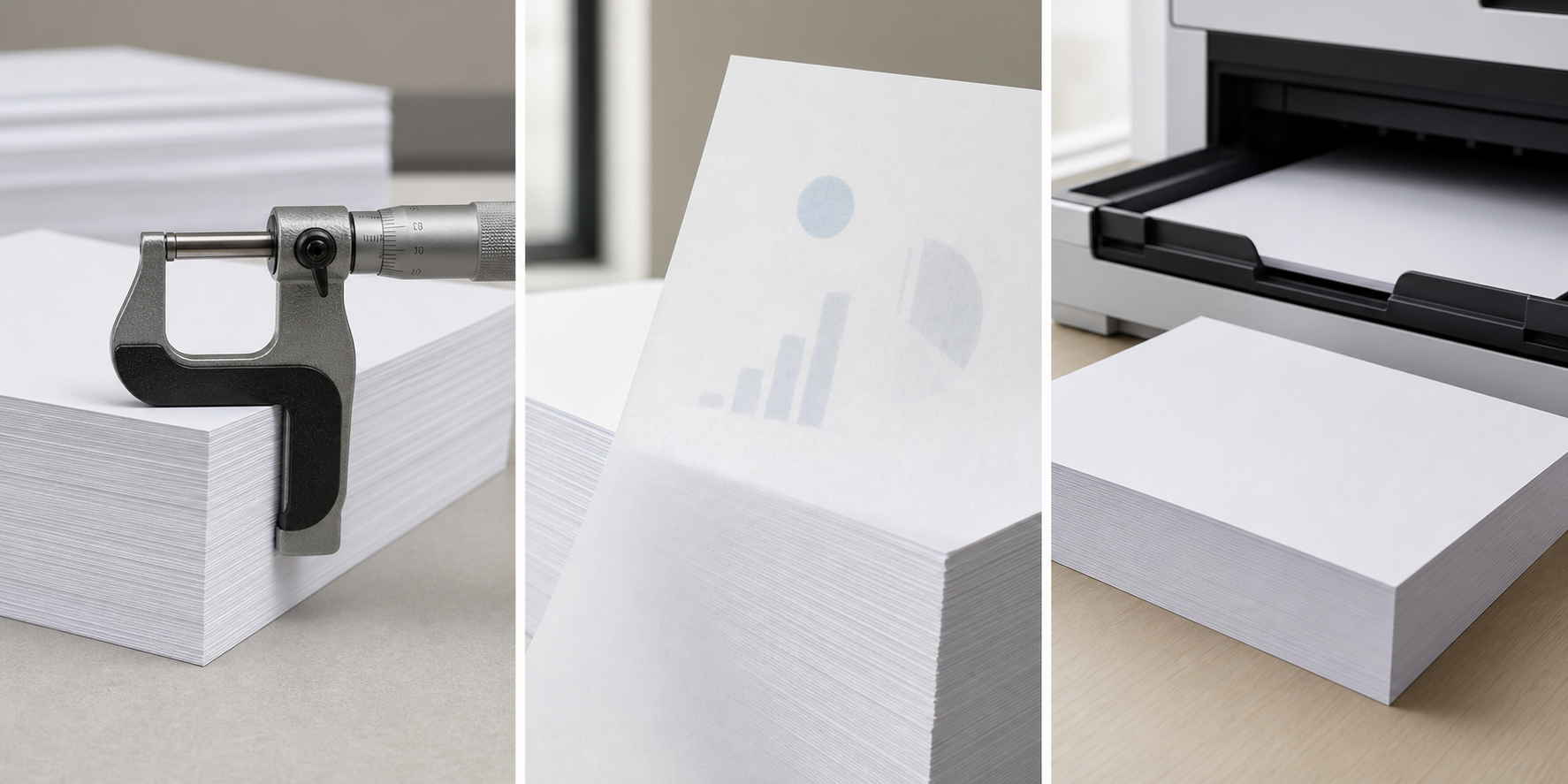
Opacity is another separate signal. It describes how much printing or background shows through the sheet. Duplex documents, legal forms, manuals, and reports with dense text may need better opacity even if the labeled weight stays in a common office range. Conversely, a heavier sheet with poor opacity would not solve the buyer’s actual problem.
Printer and copier handling
Weight also affects feeding, curling, tray capacity, duplex operation, and finishing. Very light paper can be more prone to show-through or handling issues in some environments, while heavier bond paper can alter stack thickness and may need confirmation against copier, MFP, printer, folder, or mail inserter specifications. The safe approach is to read the equipment’s accepted paper-weight range and compare it with the product’s stated weight and GSM.
Do not buy by thickness assumptions alone. If a listing or department request asks for 20 lb paper thickness, treat that as a prompt to check the product’s actual caliper or data sheet, not as a universal measurement. Weight gives you one clue; performance comes from the combined profile of caliper, opacity, stiffness, finish, moisture control, and equipment compatibility.
Read Weight-Related Listing Lines Before You Compare Options
When a buyer moves from learning copy paper weight to comparing products, the first risk is comparing incomplete listing lines. Before looking at price, confirm that each option is the same paper type and size, then read the weight label in context. A useful listing line should let you identify the paper category, lb weight, any GSM reference, sheet size, sheet count, and packaging unit.
- Paper category: confirm it is bond, copy, printer, or multipurpose office paper rather than text, cover, cardstock, or specialty media.
- Weight: read 20 lb, 24 lb, 28 lb, or heavier bond as a performance signal, not a physical case-weight estimate.
- GSM: use it to compare mass per area, especially when the listing includes metric labeling.
- Size and count: verify letter, legal, ledger, or another size, plus sheets per ream and reams per carton or case.
- Performance details: check opacity, brightness, finish, printer compatibility notes, and any available data sheet when output quality matters.
Treat a substitution from 20 lb to 24 lb or 28 lb as a change in document feel, opacity potential, stack height, and equipment behavior—not merely a harmless number change. The same caution applies when a supplier, marketplace listing, or internal requester uses lb and GSM inconsistently.
Use this weight-decoding framework to narrow your preferred copy paper weight first. Then compare available copy paper options by the exact weight, sheet size, sheet count, and product specifications shown on each listing, rather than by headline wording alone.
Frequently Asked Questions
What is the normal copy paper weight in the US?
Most US office copy paper is sold as 20 lb bond paper. It is a label used within the bond paper category, and many products list an approximate metric reference near 75 gsm; the product label is the final source.
Does 20 lb copy paper mean a ream weighs 20 pounds?
No. The 20 lb number is basis weight, based on 500 sheets at a standard parent size for bond paper before cutting. A physical office ream's weight changes with sheet size, GSM, sheet count, packaging, and moisture.
What GSM should I look for when comparing copy paper?
For everyday paper, common references run from about 75 gsm for 20 lb bond to about 105 gsm for 28 lb bond. Use GSM as a mass-per-area reference, especially across sheet sizes, but avoid treating approximations as exact replacements for the manufacturer's spec.
Is copy paper weight the same as paper thickness?
No. Weight measures mass under a paper-weight convention, while thickness, or caliper, depends on fiber, finish, compression, and manufacturing. If a job requires a certain feel or printer clearance, check caliper and equipment specs as well as lb or GSM.
How do I estimate the weight of a ream or case of copy paper?
Use sheet area in square meters × GSM × number of sheets to estimate grams, then convert to kilograms or pounds. Add packaging weight separately and use the product data sheet for shipping, storage, or handling decisions.
Is 24 lb copy paper better than 20 lb for duplex printing?
It can be better when show-through or handling feel matters, because 24 lb bond often has more substance than 20 lb. Still, opacity, finish, printer settings, and equipment limits determine performance, so compare actual product specs or test a sample.