

Start with a Ream-to-Pallet Decision Map for Bulk Copy Paper
Bulk copy paper buying should start with the unit of purchase, not a sale banner. A ream-to-pallet map gives procurement teams a shared language before they compare supplier listings, request quotes, or route approvals. The goal is to decide how much paper the organization can use, receive, and store without creating stockouts or slow-moving inventory.
Define each buying unit in sheet-count terms. A ream is often presented as a small pack for department-level use, but the sheet count still needs to be confirmed. A case or carton contains multiple reams; a copy paper 10 ream case is one common business format, but buyers should verify the total sheets on the actual listing. A multi-case order is several cartons purchased together for shared supply closets or recurring usage. A pallet is a larger receiving and storage decision, not simply a bigger discount line.
| Buying unit | Useful purchasing situation | Main control point |
|---|---|---|
| Ream | Small top-up, spec test, or isolated department need | Confirm sheet count and approved specification |
| Case or carton | Routine office, classroom, or copy-room replenishment | Confirm reams per case and total sheets |
| Multi-case order | Multiple departments or predictable recurring demand | Coordinate storage, labeling, and reorder timing |
| Pallet | Centralized purchasing or high-volume copy rooms | Confirm receiving ability, storage space, and usage cadence |
Match the unit to user count, department spread, and stockout tolerance. A smaller site may need dependable case replenishment, while a school district, administrative center, or copy room may need a planned multi-case or pallet conversation.
Estimate Bulk Copy Paper Needs from Monthly Page Volume
The last order size is a weak planning basis for bulk copy paper. It may reflect a one-time shortage, a temporary sale, or a department that ordered outside the normal process. Start with expected monthly page output from copier reports, print management tools, purchasing history, or department estimates. If reports count impressions rather than physical sheets, account for duplex printing before converting demand into reams or cases.
Demand conversion method
- List monthly pages by department, site, classroom group, or copy-room user base.
- Convert expected pages into physical sheets using the way your printers and copiers report usage.
- Divide the expected sheet need by the confirmed sheet count on each supplier listing.
- Add the paper needed during supplier lead time so the reorder point is not set at zero.
- Add safety stock for seasonal peaks such as enrollment periods, audits, board packets, training cycles, or year-end reporting.
A useful purchase request might read: expected monthly volume, estimated sheets needed before the next replenishment, preferred case count, and minimum reserve. For example, buyers should not assume that every carton has the same sheet count or that every case description uses the same language. Confirm whether the listing is a ream, case, multi-case bundle, or pallet before comparing offers. The output of this exercise is a quantity specification that can be reviewed by finance, facilities, and department heads before supplier selection begins.
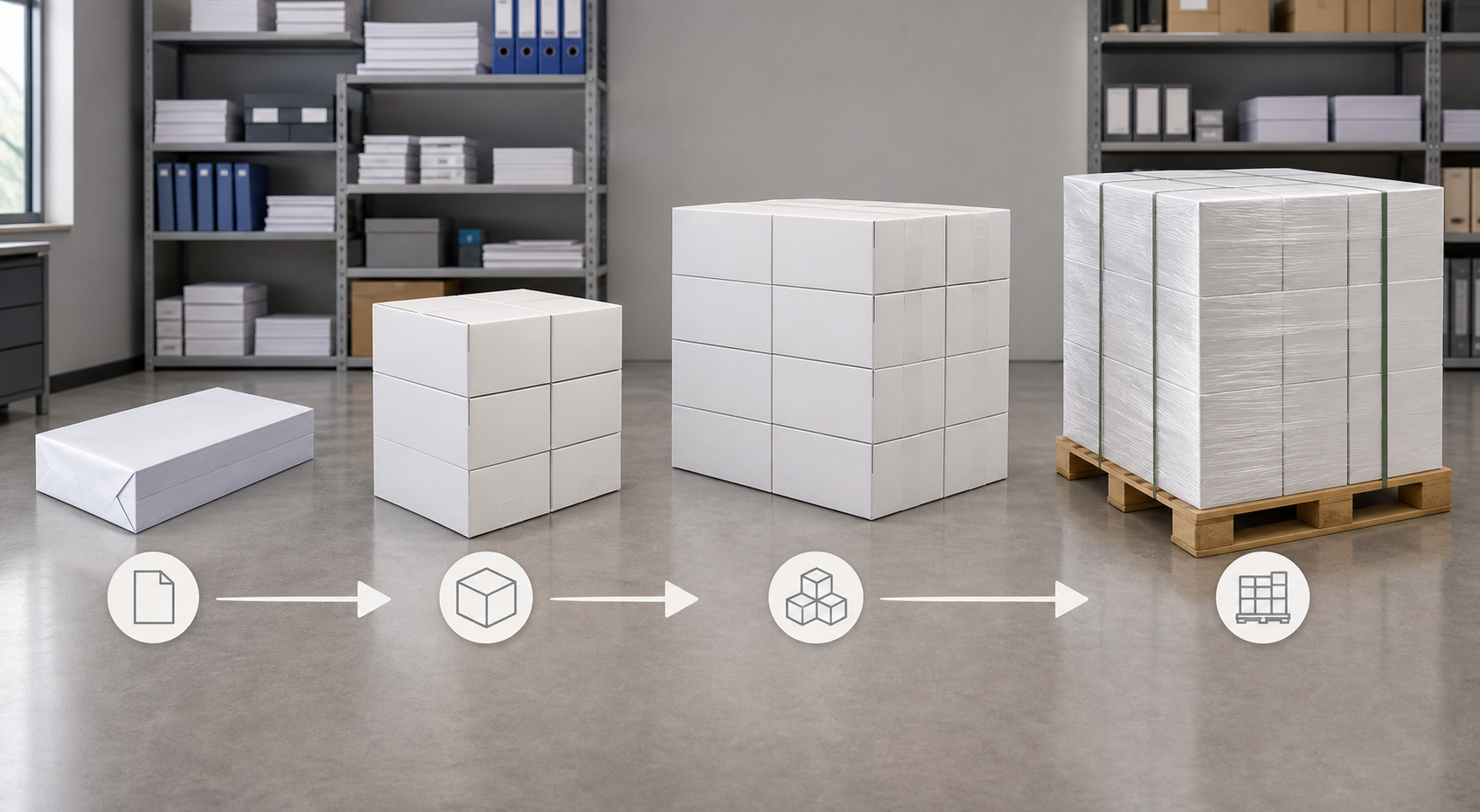
Balance Case, Multi-Case, and Pallet Buying Risks
A larger bulk copy paper order can reduce buying frequency, but it also changes the operational risk. Procurement should compare case, multi-case, and pallet formats by continuity, storage, receiving, and cash tied up in inventory. The lowest apparent unit cost is not helpful if the order cannot be received, stored dry, or used before packaging damage becomes a problem.
Format choices to weigh
- Single case: A case may be enough for a small office, individual department, classroom pod, or low-volume administrative team. It works best when usage is predictable and reordering is easy before the reserve supply is exhausted.
- Multi-case order: Multiple cases can improve continuity without the receiving complexity of a pallet. This format may fit offices with several departments, schools with distributed classrooms, or facilities teams replenishing several copy areas from one storage point.
- Pallet order: A pallet may fit high-volume copy rooms, centralized purchasing, or organizations with steady monthly demand. It should be evaluated only after confirming receiving access, storage footprint, handling process, and the ability to rotate inventory.
Risk cuts both ways. Too little paper creates rush orders, staff interruptions, and possible substitutions. Too much paper ties up budget, occupies storage, and increases exposure to crushed cartons or humidity damage. A practical bulk copy paper decision sets the smallest order size that reliably covers demand through the next planned replenishment cycle, plus an agreed reserve for peaks.
Standardize One Everyday Bulk Copy Paper Specification
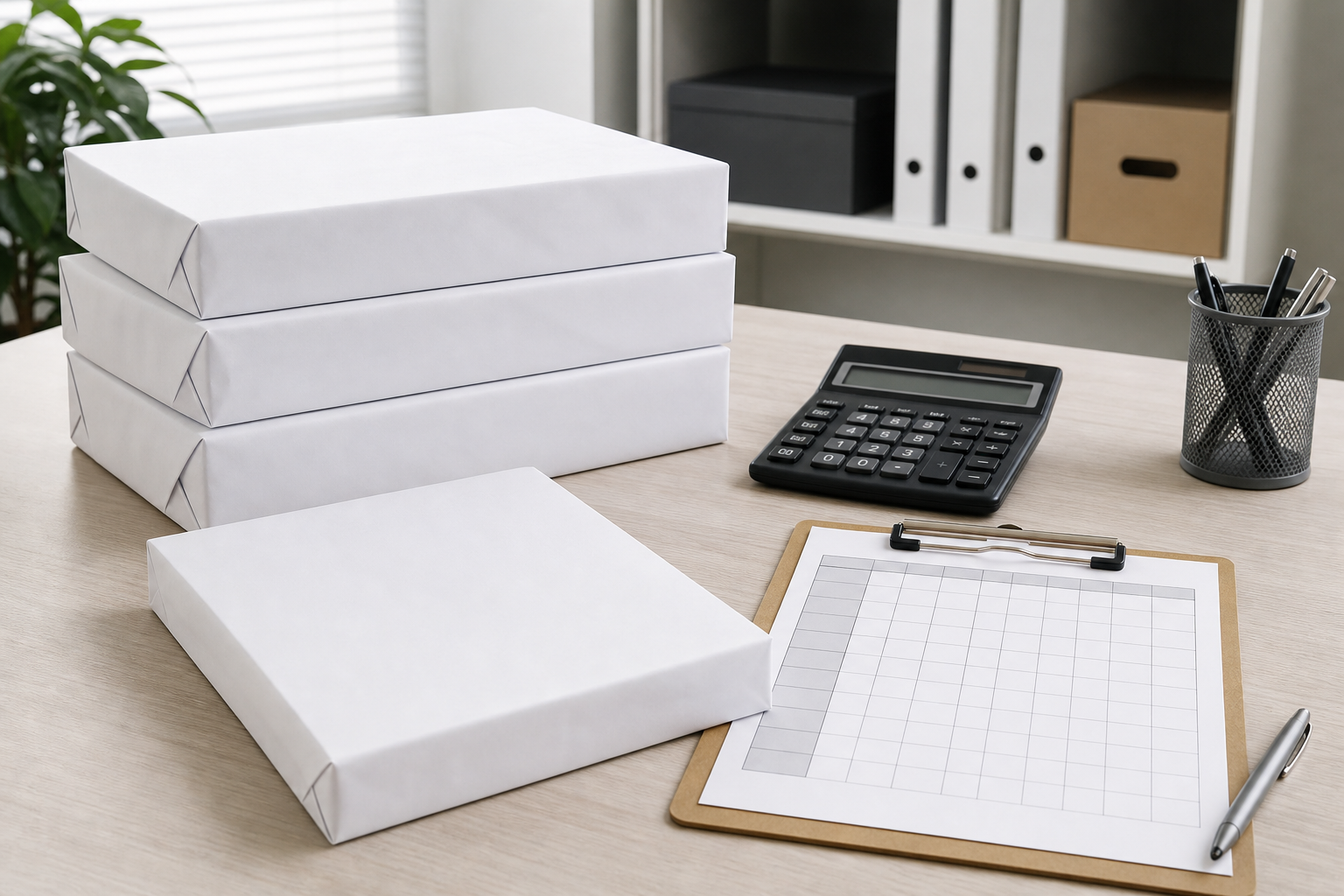
Bulk purchasing works best when routine users agree on one everyday copy paper specification before the order is placed. Without a standard, departments may compare different sheet sizes, weights, brightness levels, or packaging formats and believe they are evaluating the same product. The standard should be written clearly enough that a substitute can be accepted or rejected without a long email chain.
Specification fields to lock down
- Sheet size: Identify the default size for routine printing and copying, commonly letter-size in US office workflows, while separating larger formats.
- Paper weight: Record the approved weight, such as 20 lb only if that is the chosen requirement for the organization.
- Brightness and opacity: Set a target range if sharper text, reduced show-through, or customer-facing documents matter.
- Equipment compatibility: Confirm that the paper is suitable for the printers, copiers, and multifunction devices that will use it.
- Documented claims: Include recycled content or certification requirements only when they are stated by the product listing or supplier documentation.
Keep exceptions out of the everyday bulk copy paper line. Oversized work may require a separate 11 x 17 copy paper case request. Colored paper, heavier presentation paper, and carbon copy paper serve different use cases and should not be blended into the routine office paper order. Separating these lines reduces substitution confusion and makes usage planning cleaner.

Model Bulk Copy Paper Landed Cost per Sheet or Ream
Headline case or pallet pricing can hide important cost differences. For bulk copy paper, normalize every offer to a comparable price per sheet or per ream, then add the costs and risks required to get usable paper into the copy room. This method helps finance and purchasing compare suppliers without relying only on an advertised bulk price.
| Cost input | How to evaluate it |
|---|---|
| Product price | Divide the quoted product cost by confirmed sheets or reams, not by package name alone. |
| Freight and delivery | Ask whether freight, delivery coordination, unloading requirements, or access limitations change the total cost. |
| Minimums and handling | Check whether order minimums, handling fees, or packaging requirements affect the practical order size. |
| Quality and fit risk | Consider the cost of unsuitable paper, substitutions, crushed cartons, or specifications that do not match equipment needs. |
Landed cost should also reflect internal handling. A lower price may not be better if the order arrives in a format that requires extra staff time, blocks storage access, or creates partial-carton confusion across departments. Ask suppliers to clarify carton condition expectations, substitution policy, case labeling, and whether product descriptions will remain consistent across repeat orders. The best comparison is not the cheapest listing; it is the offer that delivers the right sheet count, paper specification, packaging condition, and receiving fit at the lowest controllable total cost.
Plan Receiving, Storage, and Carton Handling Constraints
Bulk copy paper is a logistics purchase as much as an office supply purchase. Before approving a multi-case or pallet order, confirm that the receiving site can accept the format being requested. A front office, school reception area, shared mailroom, or upper-floor copy room may have different constraints than a warehouse dock or facilities area.
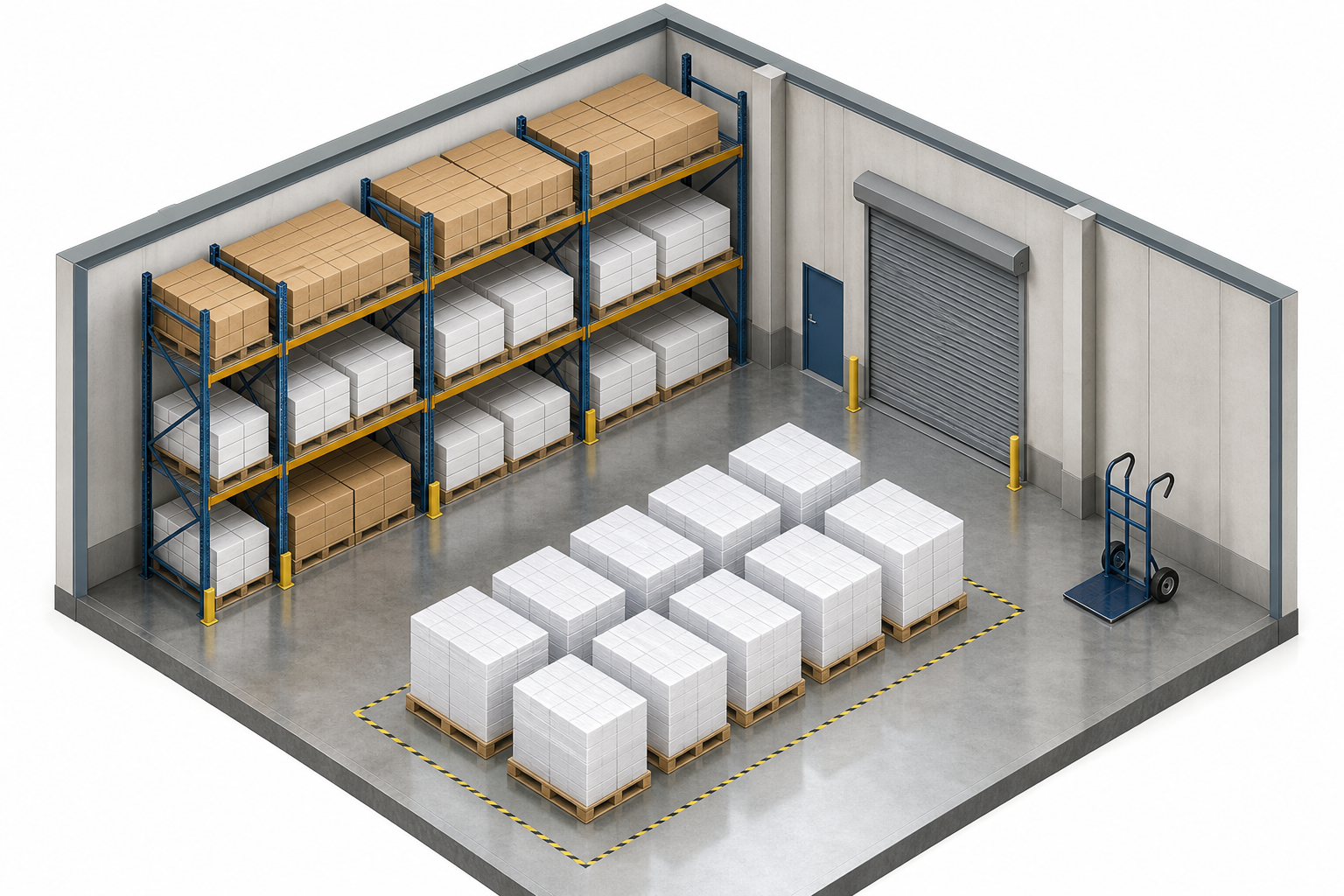
Receiving gates to confirm
- Whether the site can receive individual cases, stacked cartons, or palletized freight.
- Where the delivery can be unloaded, inspected, and moved without blocking normal traffic.
- Who will verify carton count, visible damage, labeling, and any substitution before the order is accepted internally.
- Whether elevators, doors, aisles, carts, or storage rooms can handle the selected order format.
Storage conditions should be part of the order decision. Paper should be kept dry, flat, and away from humidity exposure, floor moisture, and areas where cartons may be crushed or opened casually. Keep labels visible so users can pull the approved paper rather than mixing specifications. For shared supply areas, simple rotation helps prevent old cartons from sitting behind new deliveries. If the site cannot store a pallet safely or cannot move cartons from receiving to the copy room, a scheduled multi-case buying pattern may be more practical than a larger bulk order.
Write the Supplier Request Using Order-Spec Fields
Once demand, specifications, and logistics are defined, convert the plan into supplier request fields. Sending the same fields to each supplier reduces vague responses and makes quotes or availability checks easier to compare. It also gives internal approvers a clear record of why a case, multi-case, or pallet format was selected.
| Request field | Information to provide or ask for |
|---|---|
| Demand profile | Monthly page volume, user groups, departments, reorder point, and seasonal peaks. |
| Quantity format | Preferred ream, case, multi-case, or pallet format, plus confirmed sheet count per listing. |
| Paper specification | Sheet size, paper weight, brightness target, opacity need, equipment compatibility, and documented recycled-content or certification requirements if applicable. |
| Fulfillment controls | Lead time, stock consistency, substitution approval, case labeling, packaging condition, and delivery coordination requirements. |
| Commercial process | Purchase order requirements, invoicing details, receiving contact, and any internal approval timing. |
When requesting a bulk copy paper quote or availability check, use these order-spec fields rather than asking only for the lowest case price. Include monthly volume, desired sheet size, paper weight, brightness target, case or pallet preference, and receiving constraints in the initial message. That gives the supplier a clearer request and helps the buyer identify offers that fit the organization’s actual print demand, storage limits, and procurement process.
Questions fréquemment posées
How should a business estimate bulk copy paper for a purchase order?
Use printer or copier usage reports, department estimates, and any duplex-printing adjustments to estimate physical sheets needed. Then divide by the verified sheet count on each listing and add lead-time demand plus a practical reserve.
How can buyers compare cases, multi-case orders, and pallets fairly?
Normalize each option to confirmed sheets or reams, then compare storage space, receiving access, handling effort, stockout risk, and budget tied up in inventory. The best format is the one that covers planned use without creating avoidable logistics problems.
What should be included in a bulk copy paper RFQ?
Include monthly volume, preferred quantity format, sheet size, paper weight, brightness target, equipment compatibility, substitution rules, packaging expectations, delivery constraints, purchase order details, and invoicing requirements.
How do different carton sizes affect total landed cost?
Package names such as case, carton, or pallet do not always mean the same sheet count. Convert every quote to price per sheet or ream, then add freight, handling, minimums, delivery coordination, and the risk of unusable or substituted paper.
When should a copy room avoid pallet ordering?
Avoid pallet ordering when the site lacks dry storage, safe movement paths, receiving capacity, or steady print demand. A planned multi-case schedule may be safer if volume is uneven or storage space is limited.
Should specialty paper be ordered with everyday bulk copy paper?
Specialty paper can share a purchase order only as separate line items with its own specifications and quantities. Larger sizes, colored sheets, business forms, or presentation media should not be blended into the everyday copy paper line.